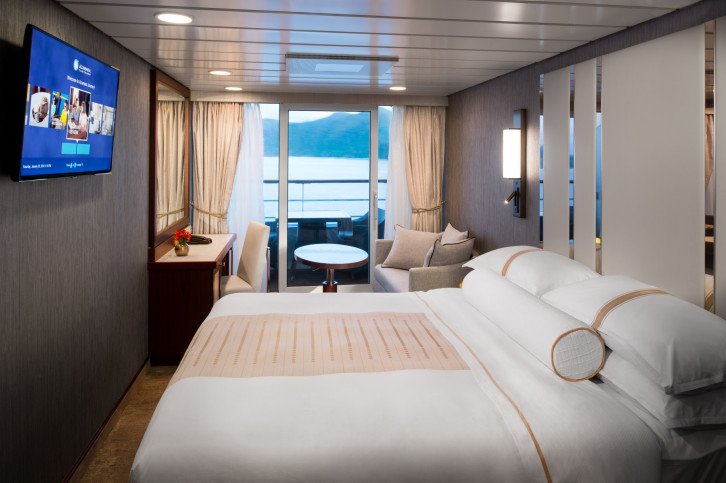


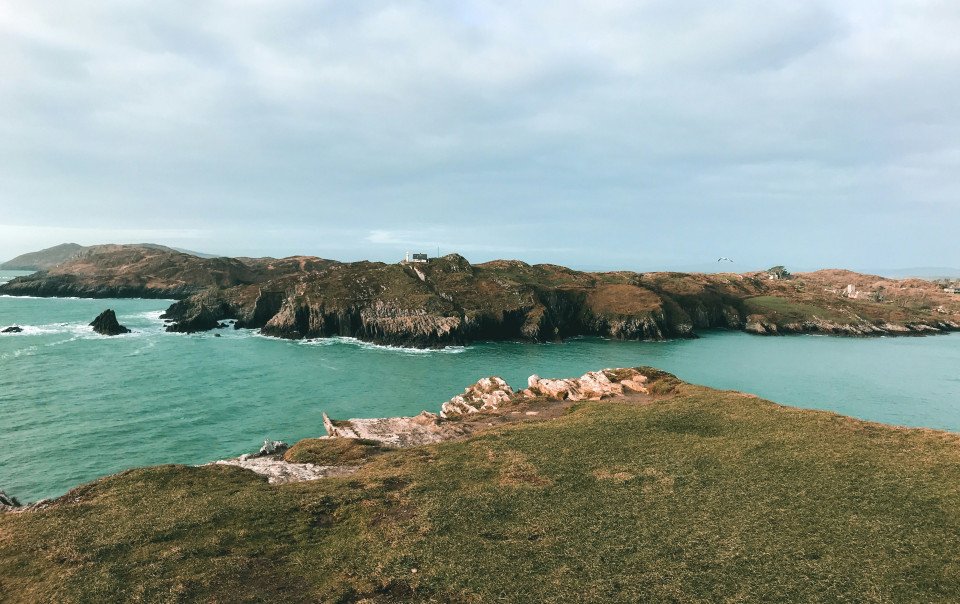
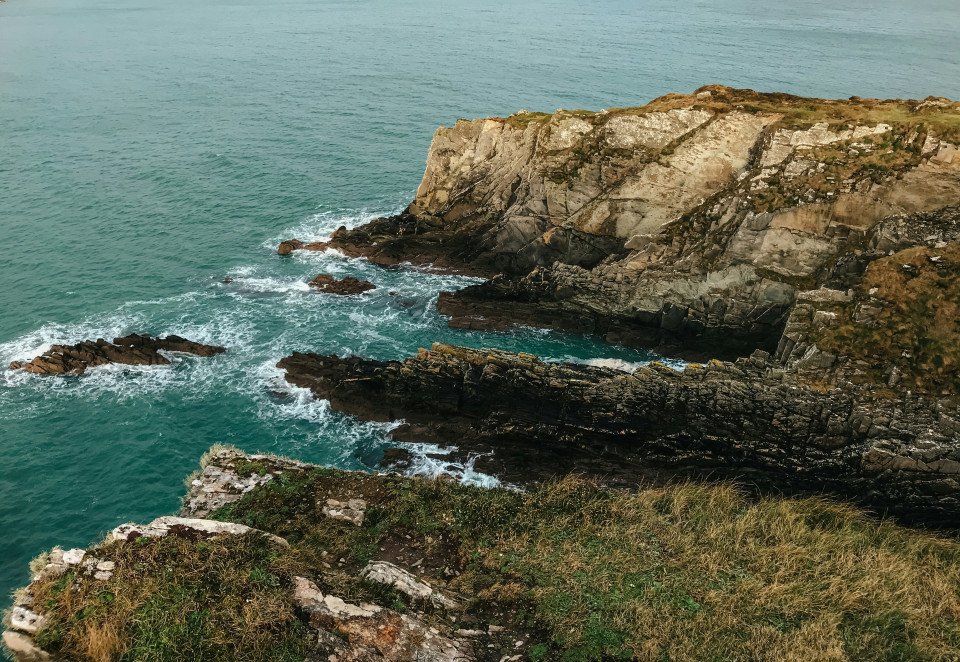
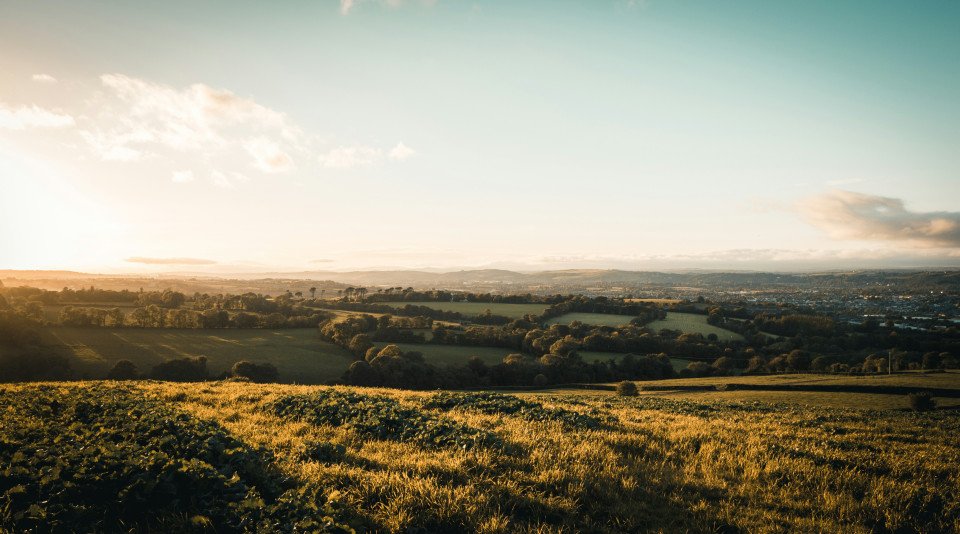
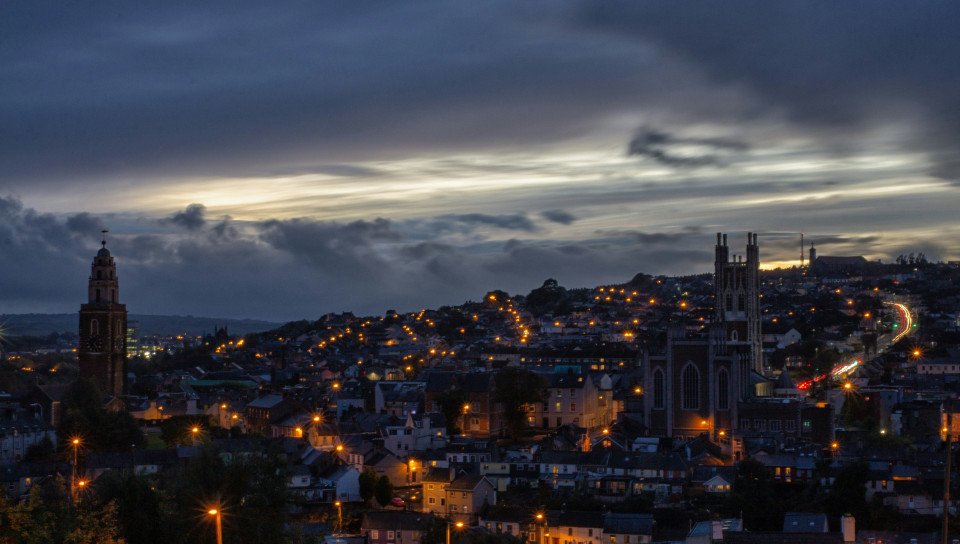
Scotland & Ireland Combination Cruise: Aberdeen, Dublin & Belfast
Copenhagen | Gothenburg | Leith | Dundee | Aberdeen | Invergordon | Oban | Glasgow | Douglas | Dublin | Cork | Bantry | Foynes | Galway | More...
Want to add a hotel stay or change your flights?
Just call our team of cruise specialists to help build your dream cruise holiday today!
Prices based on 2 people sharing. Cruise only price does not include flights. Fly-cruise price may vary by chosen UK airport.
Prices based on 1 solo passenger. Cruise only price does not include flights. Fly-cruise price may vary by chosen UK airport.
Prices based on 3 people sharing. Cruise only price does not include flights. Fly-cruise price may vary by chosen UK airport.
Prices based on 4 people sharing. Cruise only price does not include flights. Fly-cruise price may vary by chosen UK airport.
(Prices correct as of today’s date, are updated daily, are subject to change and represent genuine availability at time of update).
Cruise only holidays are financially protected by ABTA. Fly cruise holidays are financially protected by Azamara Cruises under ATOL number 10372
Please click here to check the essential travel requirements before booking this cruise.
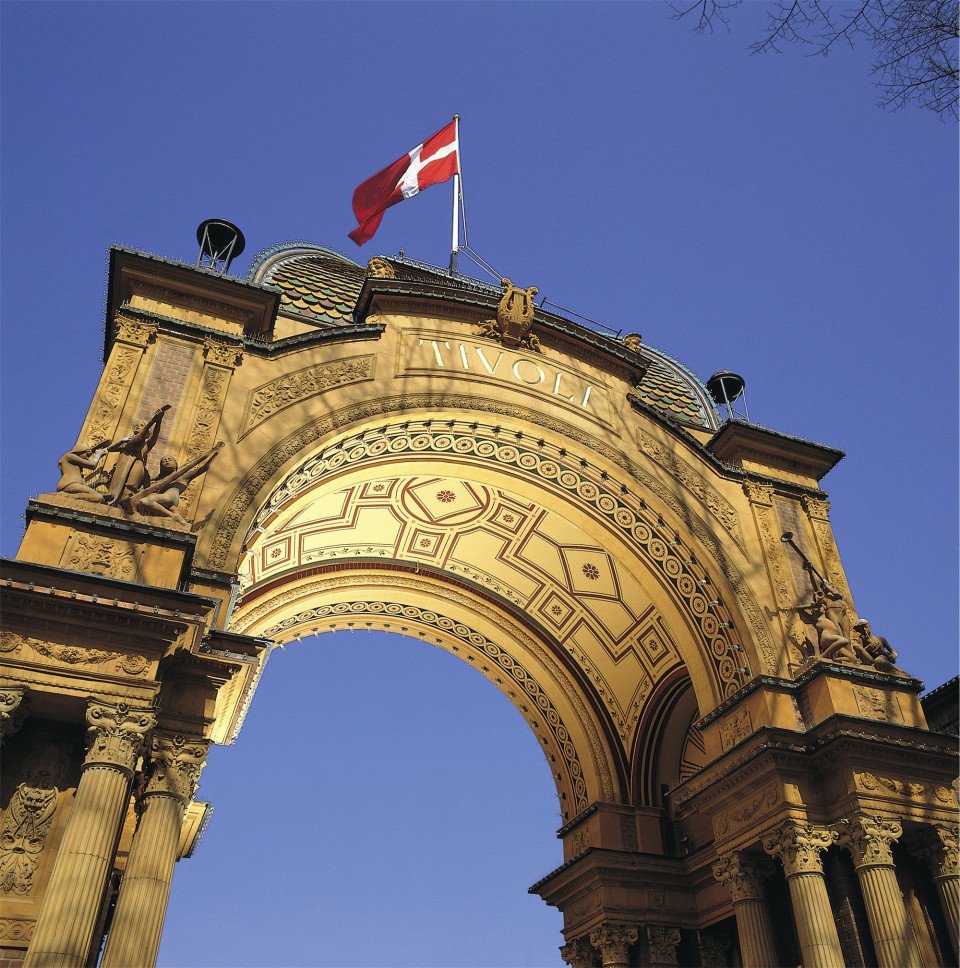
Copenhagen
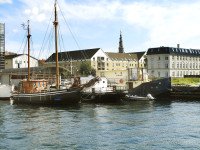
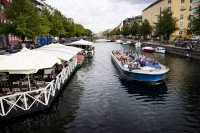
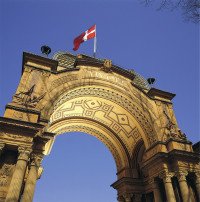
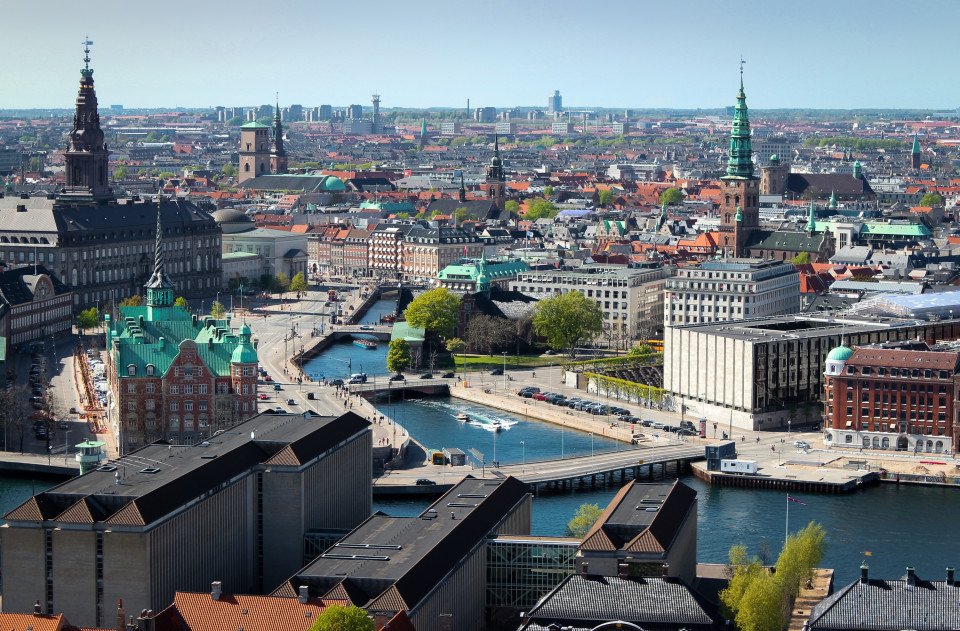
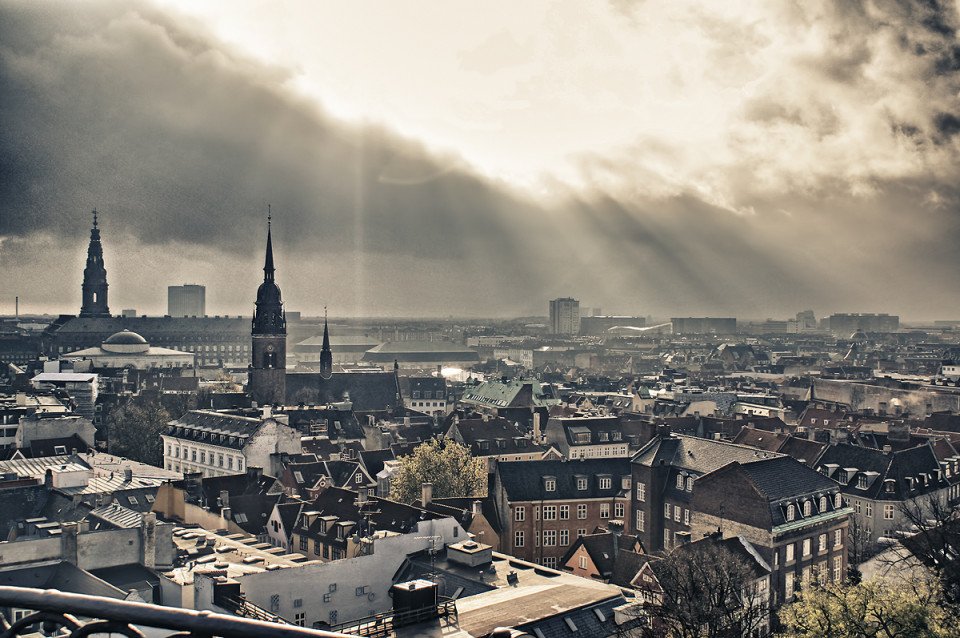
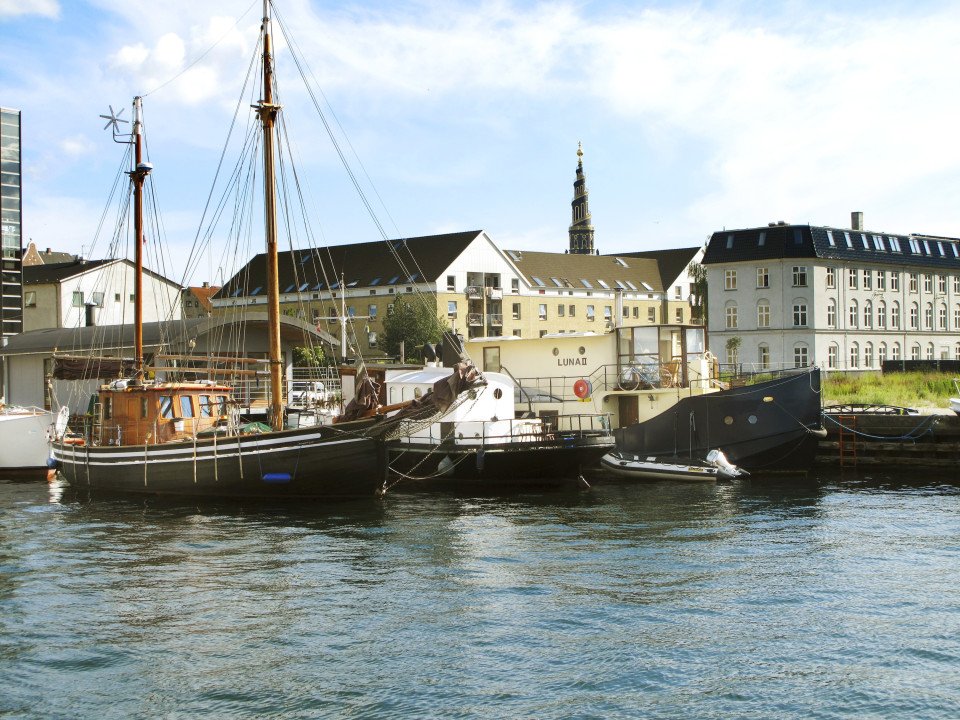
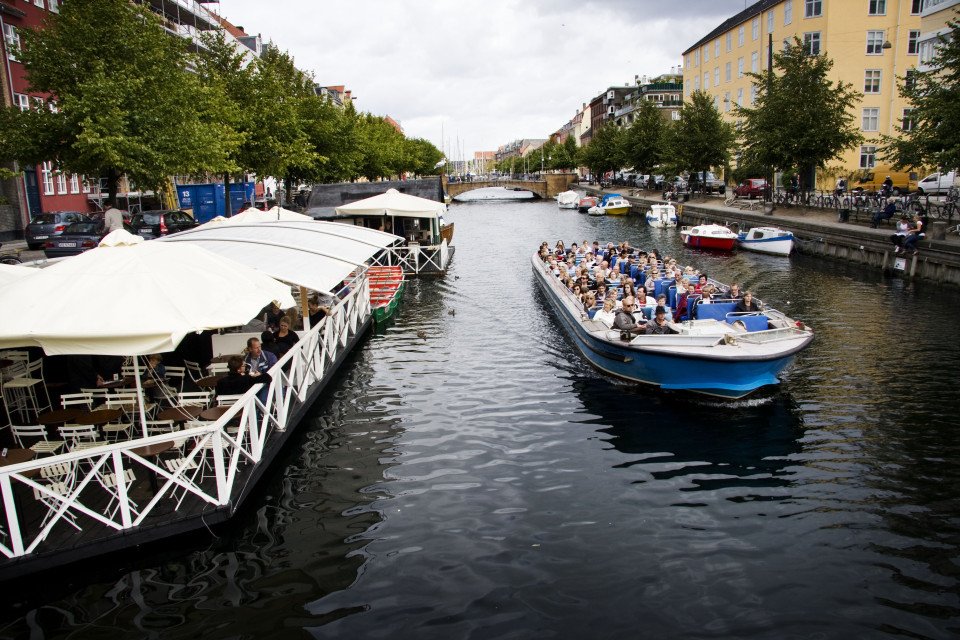
By the 11th century, Copenhagen was already an important trading and fishing centre and today you will find an attractive city which, although the largest in Scandinavia, has managed to retain its low-level skyline. Discover some of the famous attractions including Gefion Fountain and... By the 11th century, Copenhagen was already an important trading and fishing centre and today you will find an attractive city which, although the largest in Scandinavia, has managed to retain its low-level skyline. Discover some of the famous attractions including Gefion Fountain and Amalienborg Palace, perhaps cruise the city’s waterways, visit Rosenborg Castle or explore the medieval fishing village of Dragoer. Once the home of Hans Christian Andersen, Copenhagen features many reminders of its fairytale heritage and lives up to the reputation immortalised in the famous song ‘Wonderful Copenhagen’. Read More
Gothenburg
Don't tell the residents of Göteborg that they live in Sweden's "second city," but not because they will get upset (people here are known for their amiability and good humor). They just may not understand what you are talking about. People who call Göteborg (pronounced YOO-teh-bor; mo... Don't tell the residents of Göteborg that they live in Sweden's "second city," but not because they will get upset (people here are known for their amiability and good humor). They just may not understand what you are talking about. People who call Göteborg (pronounced YOO-teh-bor; most visitors stick with the simpler "Gothenburg") home seem to forget that the city is diminutive in size and status compared to Stockholm.Spend a couple of days here and you'll forget, too. You'll find it's easier to ask what Göteborg hasn't got to offer rather than what it has. Culturally it is superb, boasting a fine opera house and theater, one of the country's best art museums, as well as a fantastic applied-arts museum. There's plenty of history to soak up, from the ancient port that gave the city its start to the 19th-century factory buildings and workers' houses that helped put it on the commercial map. For those looking for nature, the wild-west coast and tame green fields are both within striking distance. And don't forget the food. Since its inception in 1983, more than half of the "Swedish Chef of the Year" competition winners were cooking in Göteborg. Read More
Leith
Leith is a vibrant district located in Edinburgh, Scotland, known for its rich maritime history and lively atmosphere. Once a bustling port, Leith has transformed into a trendy area filled with an eclectic mix of restaurants, bars, and shops along its picturesque waterfront. Key attra... Leith is a vibrant district located in Edinburgh, Scotland, known for its rich maritime history and lively atmosphere. Once a bustling port, Leith has transformed into a trendy area filled with an eclectic mix of restaurants, bars, and shops along its picturesque waterfront. Key attractions include the historic Leith Docks, the Royal Yacht Britannia, and the scenic Water of Leith walkway. The district boasts a diverse community and hosts various cultural events throughout the year. With its blend of history, modern amenities, and stunning views of the Firth of Forth, Leith is a dynamic destination that attracts both locals and visitors. Read More
Leith
Leith is a vibrant district located in Edinburgh, Scotland, known for its rich maritime history and lively atmosphere. Once a bustling port, Leith has transformed into a trendy area filled with an eclectic mix of restaurants, bars, and shops along its picturesque waterfront. Key attra... Leith is a vibrant district located in Edinburgh, Scotland, known for its rich maritime history and lively atmosphere. Once a bustling port, Leith has transformed into a trendy area filled with an eclectic mix of restaurants, bars, and shops along its picturesque waterfront. Key attractions include the historic Leith Docks, the Royal Yacht Britannia, and the scenic Water of Leith walkway. The district boasts a diverse community and hosts various cultural events throughout the year. With its blend of history, modern amenities, and stunning views of the Firth of Forth, Leith is a dynamic destination that attracts both locals and visitors. Read More
Dundee
Dundee
Aberdeen
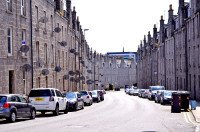
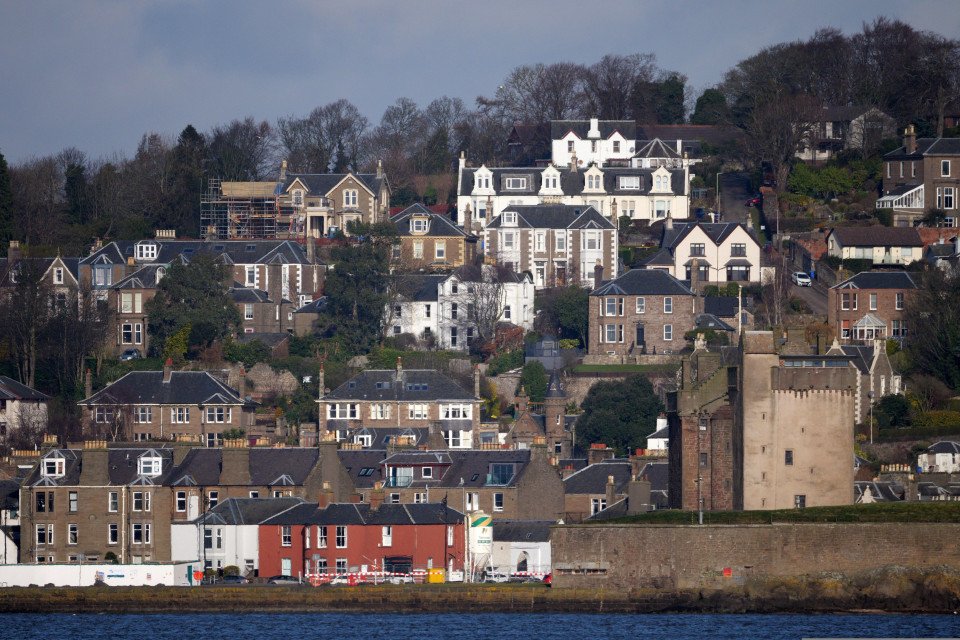
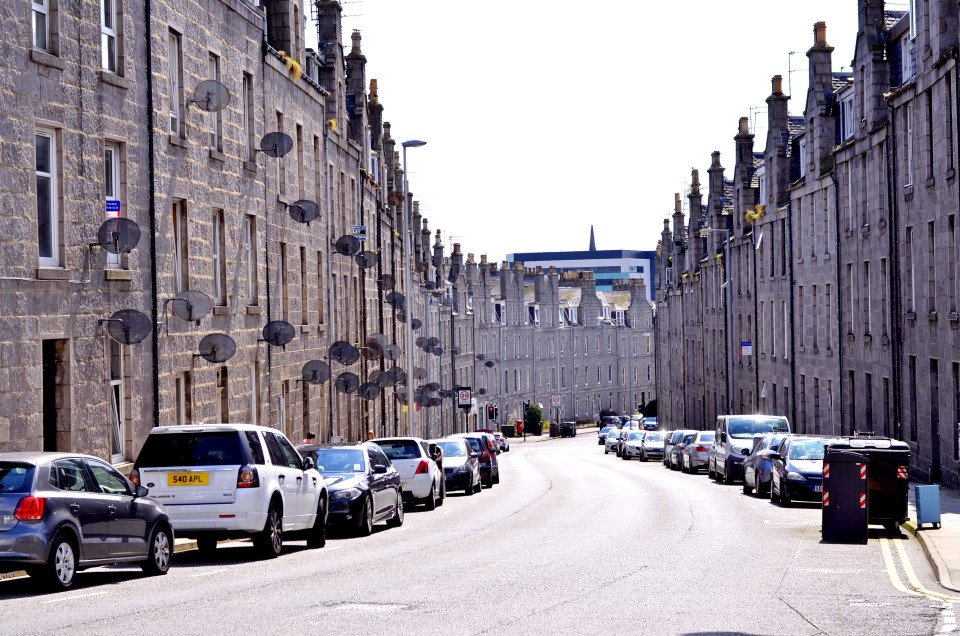
With close to 220,000 inhabitants, Aberdeen is Scotland's third most populous city. Locally quarried grey granite was used during the mid-18th to mid-20th centuries for many of Aberdeen's buildings, and hence the nicknames it has earned as the Granite City, or the Grey City. Aberdeen... With close to 220,000 inhabitants, Aberdeen is Scotland's third most populous city. Locally quarried grey granite was used during the mid-18th to mid-20th centuries for many of Aberdeen's buildings, and hence the nicknames it has earned as the Granite City, or the Grey City. Aberdeen granite was also used to build the terraces of the Houses of Parliament and Waterloo Bridge in London. Since the discovery of North Sea oil in the 1970s, Aberdeen has also been called the Oil Capital of Europe or the Energy Capital of Europe. It is no wonder that because of the oil fields in the North Sea, Aberdeen's seaport is very important. The Heliport with its flights to the oil fields is one of the busiest commercial heliports in the world. Read More
Invergordon
The port of Invergordon is your gateway to the Great Glen, an area of Scotland that includes Loch Ness and the city of Inverness. Inverness, the capital of the Highlands, has the flavor of a Lowland town, its winds blowing in a sea-salt air from the Moray Firth. The Great Glen is also... The port of Invergordon is your gateway to the Great Glen, an area of Scotland that includes Loch Ness and the city of Inverness. Inverness, the capital of the Highlands, has the flavor of a Lowland town, its winds blowing in a sea-salt air from the Moray Firth. The Great Glen is also home to one of the world's most famous monster myths: in 1933, during a quiet news week, the editor of a local paper decided to run a story about a strange sighting of something splashing about in Loch Ness. But there's more to look for here besides Nessie, including inland lochs, craggy and steep-sided mountains, rugged promontories, deep inlets, brilliant purple and emerald moorland, and forests filled with astonishingly varied wildlife, including mountain hares, red deer, golden eagles, and ospreys. Read More
Oban
Oban, "little bay" in Gaelic, today has a resident population of 8,500 and is the unofficial capital of the West Highlands - the "Gateway to the Isles." The panoramic views of the mountains, lochs and islands which have captivated artists, authors, composers, and poets for centuries a... Oban, "little bay" in Gaelic, today has a resident population of 8,500 and is the unofficial capital of the West Highlands - the "Gateway to the Isles." The panoramic views of the mountains, lochs and islands which have captivated artists, authors, composers, and poets for centuries are as striking now as they were when Dunollie Castle, a ruined keep which has stood sentinel over the narrow entrance to the sheltered bay for around six hundred years, was the northern outpost of the Dalriadic Scots. It is no surprise to find Oban in the 21st-century remains a magnet for travellers from all over the world. The town's present day popularity owes much to the Victorians, and as early as 1812, when the Comet steamship linked Oban with Glasgow, the town played host to intrepid travellers touring Staffa - the inspiration for Mendelssohn's Hebridean Overture - and Iona - home of Scottish Christianity since St Columba stepped ashore in AD563. Indeed once Oban had the royal seal of approval from Queen Victoria, who called it "one of the finest spots we have seen," the town's destiny as an endearingly enchanting holiday destination was as firmly set as the lava columns of Fingal's Cave in Oban is justifiably known as the “gateway to the Isles.” The town's south pier is the embarkation point for car ferries to Mull, Coll, Tiree, Barra, South Uist, Colonsay, Lismore and Islay. From these islands you can travel further a field to Iona, Staffa and to many of the smaller less well known isles. Read More
Glasgow
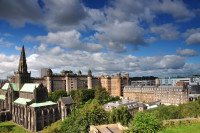
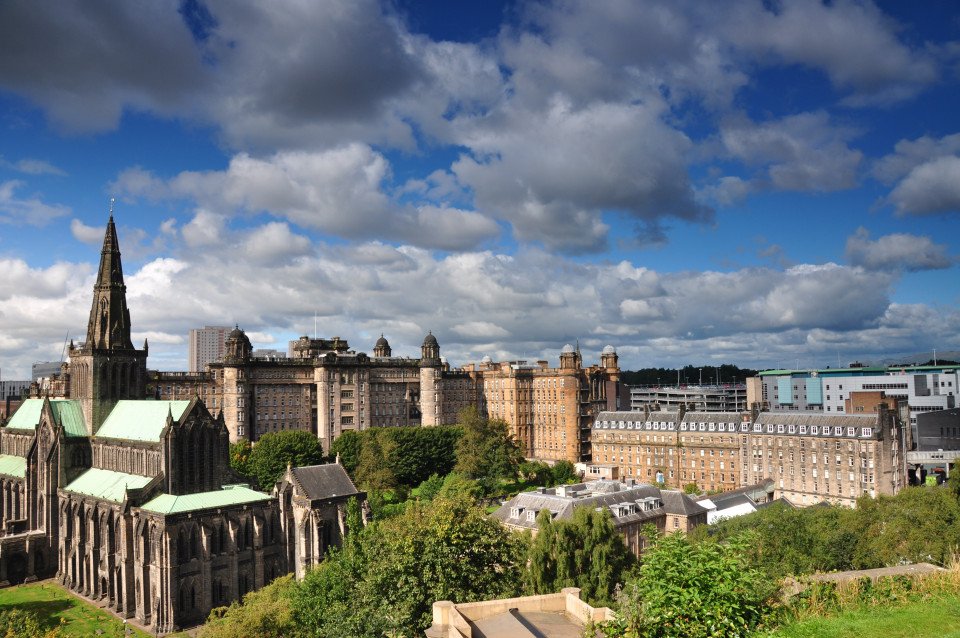
Start your adventure in Scotland’s largest city, Glasgow which is overflowing with historic landmarks and a vibrant culture. The distinct architecture is reminiscent classic 19th-century fused together with modern early 20th-century dubbed ‘Glasgow Style’. The checkerboard layout make... Start your adventure in Scotland’s largest city, Glasgow which is overflowing with historic landmarks and a vibrant culture. The distinct architecture is reminiscent classic 19th-century fused together with modern early 20th-century dubbed ‘Glasgow Style’. The checkerboard layout makes the city easy to navigate with lively street entertainment around every corner. Read More
Douglas
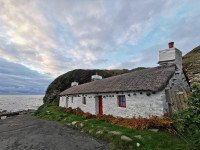
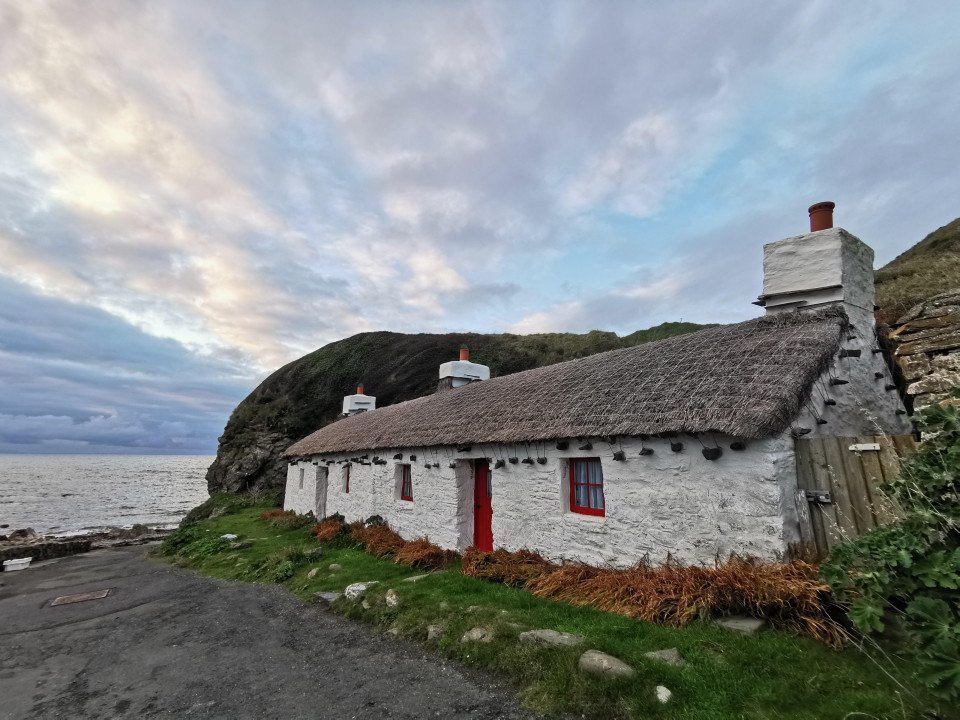
The Isle of Man, situated in the Irish Sea off the west coast of England, is a mountainous, cliff-fringed island and one of Britain’s most beautiful spots. Measuring just 30 miles by 13 miles, the Isle of Man remains semi-autonomous. With its own postage stamps, laws, currency, and th... The Isle of Man, situated in the Irish Sea off the west coast of England, is a mountainous, cliff-fringed island and one of Britain’s most beautiful spots. Measuring just 30 miles by 13 miles, the Isle of Man remains semi-autonomous. With its own postage stamps, laws, currency, and the Court of Tynwald (the world’s oldest democratic parliament), the Isle of Man is rich with history and lore.Inhabited from Neolithic times, the island became a refuge for Irish missionaries after the 5th Century. Norsemen took the island during the 9th Century and sold it to Scotland in 1266. However, since the 14th Century, it has been held by England. Manx, the indigenous Celtic language, is still spoken by a small minority. The Isle of Man has no income tax, which has encouraged many Britains to regard the island as a refuge. Otherwise, it is populated by Gaelic farmers, fishermen, and the famous tailless manx cats. The varied landscape features austere moorlands and wooded glens, interspersed by fine castles, narrow-gauge railways, and scores of standing stones with Celtic crosses. The hilly terrain rises to a height of 2,036 feet at Mount Snaefell, which dominates the center of the island. Read More
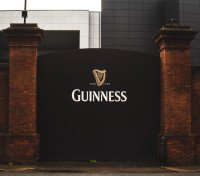
Dublin
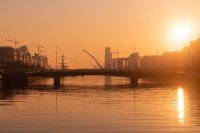
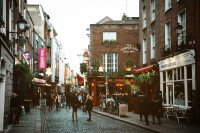
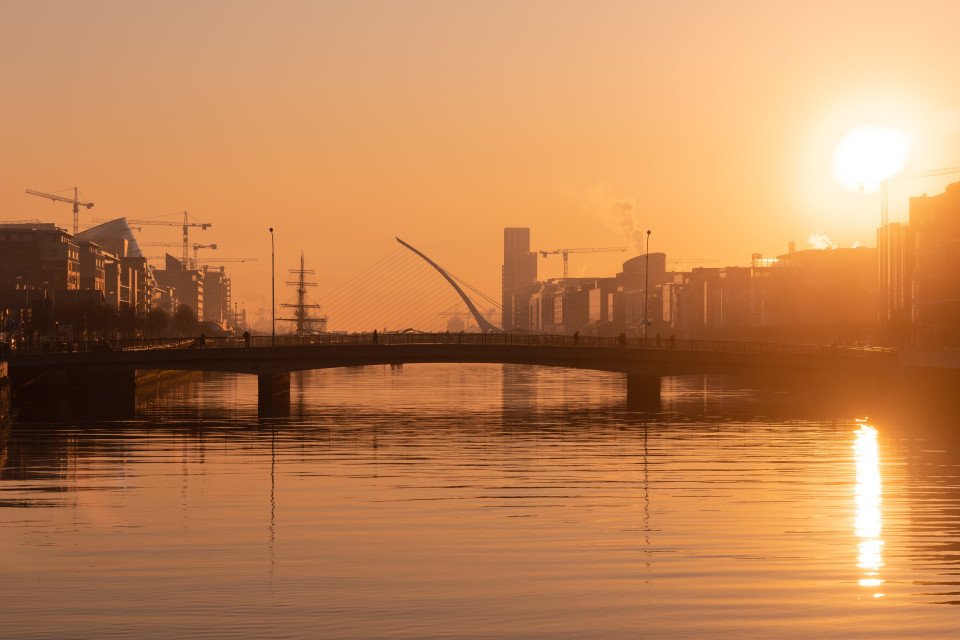
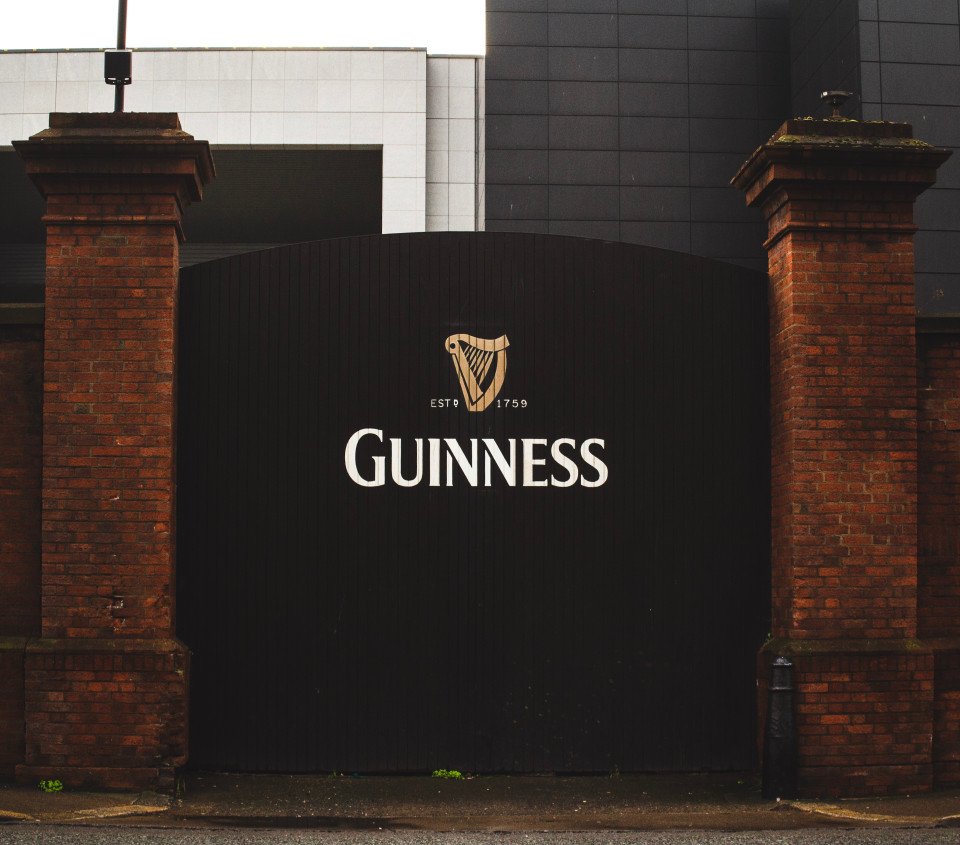
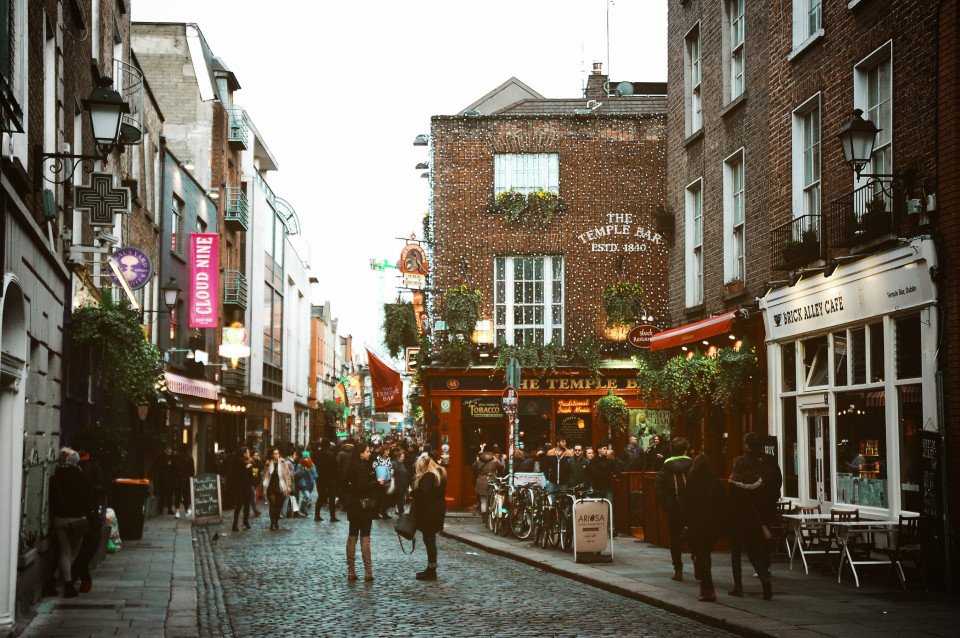
Dublin is making a comeback. The decade-long "Celtic Tiger" boom era was quickly followed by the Great Recession, but The Recovery has finally taken a precarious hold. For visitors, this newer and wiser Dublin has become one of western Europe's most popular and delightful urban destin... Dublin is making a comeback. The decade-long "Celtic Tiger" boom era was quickly followed by the Great Recession, but The Recovery has finally taken a precarious hold. For visitors, this newer and wiser Dublin has become one of western Europe's most popular and delightful urban destinations. Whether or not you're out to enjoy the old or new Dublin, you'll find it a colossally entertaining city, all the more astonishing considering its intimate size.It is ironic and telling that James Joyce chose Dublin as the setting for his famous Ulysses, Dubliners, and A Portrait of the Artist as a Young Man because it was a "center of paralysis" where nothing much ever changed. Which only proves that even the greats get it wrong sometimes. Indeed, if Joyce were to return to his once-genteel hometown today—disappointed with the city's provincial outlook, he left it in 1902 at the age of 20—and take a quasi-Homeric odyssey through the city (as he so famously does in Ulysses), would he even recognize Dublin as his "Dear Dirty Dumpling, foostherfather of fingalls and dotthergills"?For instance, what would he make of Temple Bar—the city's erstwhile down-at-the-heels neighborhood, now crammed with cafés and trendy hotels and suffused with a nonstop, international-party atmosphere? Or the simple sophistication of the open-air restaurants of the tiny Italian Quarter (named Quartier Bloom after his own creation), complete with sultry tango lessons? Or of the hot–cool Irishness, where every aspect of Celtic culture results in sold-out theaters, from Once, the cult indie movie and Broadway hit, to Riverdance, the old Irish mass-jig recast as a Las Vegas extravaganza? Plus, the resurrected Joyce might be stirred by the songs of Hozier, fired up by the sultry acting of Michael Fassbender, and moved by the award-winning novels of Colum McCann. As for Ireland's capital, it's packed with elegant shops and hotels, theaters, galleries, coffeehouses, and a stunning variety of new, creative little restaurants can be found on almost every street in Dublin, transforming the provincial city that suffocated Joyce into a place almost as cosmopolitan as the Paris to which he fled. And the locals are a hell of a lot more fun! Now that the economy has finally turned a corner, Dublin citizens can cast a cool eye over the last 20 crazy years. Some argue that the boomtown transformation of their heretofore-tranquil city has permanently affected its spirit and character. These skeptics (skepticism long being a favorite pastime in the capital city) await the outcome of "Dublin: The Sequel," and their greatest fear is the possibility that the tattered old lady on the Liffey has become a little less unique, a little more like everywhere else.Oh ye of little faith: the rare ole gem that is Dublin is far from buried. The fundamentals—the Georgian elegance of Merrion Square, the Norman drama of Christ Church Cathedral, the foamy pint at an atmospheric pub—are still on hand to gratify. Most of all, there are the locals themselves: the nod and grin when you catch their eye on the street, the eagerness to hear half your life story before they tell you all of theirs, and their paradoxically dark but warm sense of humor. It's expected that 2016 will be an extra-special year in the capital, as centenary celebrations of the fateful 1916 Easter Rising will dominate much of the cultural calendar. Read More
Dublin
Dublin is making a comeback. The decade-long "Celtic Tiger" boom era was quickly followed by the Great Recession, but The Recovery has finally taken a precarious hold. For visitors, this newer and wiser Dublin has become one of western Europe's most popular and delightful urban destin... Dublin is making a comeback. The decade-long "Celtic Tiger" boom era was quickly followed by the Great Recession, but The Recovery has finally taken a precarious hold. For visitors, this newer and wiser Dublin has become one of western Europe's most popular and delightful urban destinations. Whether or not you're out to enjoy the old or new Dublin, you'll find it a colossally entertaining city, all the more astonishing considering its intimate size.It is ironic and telling that James Joyce chose Dublin as the setting for his famous Ulysses, Dubliners, and A Portrait of the Artist as a Young Man because it was a "center of paralysis" where nothing much ever changed. Which only proves that even the greats get it wrong sometimes. Indeed, if Joyce were to return to his once-genteel hometown today—disappointed with the city's provincial outlook, he left it in 1902 at the age of 20—and take a quasi-Homeric odyssey through the city (as he so famously does in Ulysses), would he even recognize Dublin as his "Dear Dirty Dumpling, foostherfather of fingalls and dotthergills"?For instance, what would he make of Temple Bar—the city's erstwhile down-at-the-heels neighborhood, now crammed with cafés and trendy hotels and suffused with a nonstop, international-party atmosphere? Or the simple sophistication of the open-air restaurants of the tiny Italian Quarter (named Quartier Bloom after his own creation), complete with sultry tango lessons? Or of the hot–cool Irishness, where every aspect of Celtic culture results in sold-out theaters, from Once, the cult indie movie and Broadway hit, to Riverdance, the old Irish mass-jig recast as a Las Vegas extravaganza? Plus, the resurrected Joyce might be stirred by the songs of Hozier, fired up by the sultry acting of Michael Fassbender, and moved by the award-winning novels of Colum McCann. As for Ireland's capital, it's packed with elegant shops and hotels, theaters, galleries, coffeehouses, and a stunning variety of new, creative little restaurants can be found on almost every street in Dublin, transforming the provincial city that suffocated Joyce into a place almost as cosmopolitan as the Paris to which he fled. And the locals are a hell of a lot more fun! Now that the economy has finally turned a corner, Dublin citizens can cast a cool eye over the last 20 crazy years. Some argue that the boomtown transformation of their heretofore-tranquil city has permanently affected its spirit and character. These skeptics (skepticism long being a favorite pastime in the capital city) await the outcome of "Dublin: The Sequel," and their greatest fear is the possibility that the tattered old lady on the Liffey has become a little less unique, a little more like everywhere else.Oh ye of little faith: the rare ole gem that is Dublin is far from buried. The fundamentals—the Georgian elegance of Merrion Square, the Norman drama of Christ Church Cathedral, the foamy pint at an atmospheric pub—are still on hand to gratify. Most of all, there are the locals themselves: the nod and grin when you catch their eye on the street, the eagerness to hear half your life story before they tell you all of theirs, and their paradoxically dark but warm sense of humor. It's expected that 2016 will be an extra-special year in the capital, as centenary celebrations of the fateful 1916 Easter Rising will dominate much of the cultural calendar. Read More
Cork
Cork City received its first charter in 1185 from Prince John of Norman England, and it takes its name from the Irish word corcaigh, meaning "marshy place." The original 6th-century settlement was spread over 13 small islands in the River Lee. Major development occurred during the 17t... Cork City received its first charter in 1185 from Prince John of Norman England, and it takes its name from the Irish word corcaigh, meaning "marshy place." The original 6th-century settlement was spread over 13 small islands in the River Lee. Major development occurred during the 17th and 18th centuries with the expansion of the butter trade, and many attractive Georgian-design buildings with wide bowfront windows were constructed during this time. As late as 1770 Cork's present-day main streets—Grand Parade, Patrick Street, and the South Mall—were submerged under the Lee. Around 1800, when the Lee was partially dammed, the river divided into two streams that now flow through the city, leaving the main business and commercial center on an island, not unlike Paris's Île de la Cité. As a result, the city has a number of bridges and quays, which, although initially confusing, add greatly to the port's unique character. Cork can be very "Irish" (hurling, Gaelic football, televised plowing contests, music pubs, and peat smoke). But depending on what part of town you're in, Cork can also be distinctly un-Irish—the sort of place where hippies, gays, and farmers drink at the same pub. Read More
Bantry
Foynes
Galway
Galway is a city in the West of Ireland in the province of Connacht. It lies on the River Corrib between Lough Corrib and Galway Bay and is surrounded by County Galway. It is the fourth most populous urban area in the Republic of Ireland and the sixth most populous city in the island... Galway is a city in the West of Ireland in the province of Connacht. It lies on the River Corrib between Lough Corrib and Galway Bay and is surrounded by County Galway. It is the fourth most populous urban area in the Republic of Ireland and the sixth most populous city in the island of Ireland. It is both a picturesque and lively city with a wonderful avant-garde culture and a fascinating mixture of locally owned speciality shops, often featuring locally made crafts. Indeed local handcrafts are a feature of the entire region including hand knits, pottery, glass, jewellery and woodwork. The city’s hub is 18th-century Eyre Square, a popular meeting spot surrounded by shops, and traditional pubs that often offer live Irish folk music. Nearby, stone-clad cafes, boutiques and art galleries line the winding lanes of the Latin Quarter, which retains portions of the medieval city walls. The city bears the nickname "The City of the Tribes" because "fourteen tribes" of merchant families led the city in its Hiberno-Norman period. The merchants would have seen themselves as Irish gentry and loyal to the King. They later adopted the term as a badge of honour and pride in defiance of the town's Cromwellian occupier. Read More
Killybegs
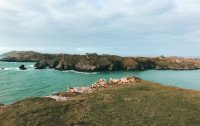
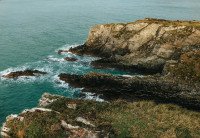
Killybegs The days start early in Killybegs, as this quiet fishing town rumbles to life, and ships with red and blue paint peeling from their hulls quietly depart, ready for a morning's hard work at sea. Located in a scenic part of County Donegal, Killybegs is Ireland's fishing capita... Killybegs The days start early in Killybegs, as this quiet fishing town rumbles to life, and ships with red and blue paint peeling from their hulls quietly depart, ready for a morning's hard work at sea. Located in a scenic part of County Donegal, Killybegs is Ireland's fishing capital, and the salty breeze and pretty streets serve as a revitalising medicine for visitors. The town is also your gateway to some of the country's most majestic coastal scenery, which is dotted with flashing white lighthouses, keeping watch over invigorating seascapes. Killybegs enjoys a privileged position on the coast of north west of Ireland, close to the spectacular Slieve League - a titanic mountain, which explodes upwards from frothing ocean. Walk as close as you dare to the coastline’s sheer drops, or admire the folding cliffs from the best vantage point, down on the water. Read More
Belfast
Before English and Scottish settlers arrived in the 1600s, Belfast was a tiny village called Béal Feirste ("sandbank ford") belonging to Ulster's ancient O'Neill clan. With the advent of the Plantation period (when settlers arrived in the 1600s), Sir Arthur Chichester, from Devon in s... Before English and Scottish settlers arrived in the 1600s, Belfast was a tiny village called Béal Feirste ("sandbank ford") belonging to Ulster's ancient O'Neill clan. With the advent of the Plantation period (when settlers arrived in the 1600s), Sir Arthur Chichester, from Devon in southwestern England, received the city from the English Crown, and his son was made Earl of Donegall. Huguenots fleeing persecution from France settled near here, bringing their valuable linen-work skills. In the 18th century, Belfast underwent a phenomenal expansion—its population doubled every 10 years, despite an ever-present sectarian divide. Although the Anglican gentry despised the Presbyterian artisans—who, in turn, distrusted the native Catholics—Belfast's growth continued at a dizzying speed. The city was a great Victorian success story, an industrial boomtown whose prosperity was built on trade, especially linen and shipbuilding. Famously (or infamously), the Titanic was built here, giving Belfast, for a time, the nickname "Titanic Town." Having laid the foundation stone of the city's university in 1845, Queen Victoria returned to Belfast in 1849 (she is recalled in the names of buildings, streets, bars, monuments, and other places around the city), and in the same year, the university opened under the name Queen's College. Nearly 40 years later, in 1888, Victoria granted Belfast its city charter. Today its population is nearly 300,000, tourist numbers have increased, and this dramatically transformed city is enjoying an unparalleled renaissance.This is all a welcome change from the period when news about Belfast meant reports about "the Troubles." Since the 1994 ceasefire, Northern Ireland's capital city has benefited from major hotel investment, gentrified quaysides (or strands), a sophisticated new performing arts center, and major initiatives to boost tourism. Although the 1996 bombing of offices at Canary Wharf in London disrupted the 1994 peace agreement, the ceasefire was officially reestablished on July 20, 1997, and this embattled city began its quest for a newfound identity.Since 2008, the city has restored all its major public buildings such as museums, churches, theaters, City Hall, Ulster Hall—and even the glorious Crown Bar—spending millions of pounds on its built heritage. A gaol that at the height of the Troubles held some of the most notorious murderers involved in paramilitary violence is now a major visitor attraction.Belfast's city center is made up of three roughly contiguous areas that are easy to navigate on foot. From the south end to the north, it's about an hour's leisurely walk. Read More
Belfast
Before English and Scottish settlers arrived in the 1600s, Belfast was a tiny village called Béal Feirste ("sandbank ford") belonging to Ulster's ancient O'Neill clan. With the advent of the Plantation period (when settlers arrived in the 1600s), Sir Arthur Chichester, from Devon in s... Before English and Scottish settlers arrived in the 1600s, Belfast was a tiny village called Béal Feirste ("sandbank ford") belonging to Ulster's ancient O'Neill clan. With the advent of the Plantation period (when settlers arrived in the 1600s), Sir Arthur Chichester, from Devon in southwestern England, received the city from the English Crown, and his son was made Earl of Donegall. Huguenots fleeing persecution from France settled near here, bringing their valuable linen-work skills. In the 18th century, Belfast underwent a phenomenal expansion—its population doubled every 10 years, despite an ever-present sectarian divide. Although the Anglican gentry despised the Presbyterian artisans—who, in turn, distrusted the native Catholics—Belfast's growth continued at a dizzying speed. The city was a great Victorian success story, an industrial boomtown whose prosperity was built on trade, especially linen and shipbuilding. Famously (or infamously), the Titanic was built here, giving Belfast, for a time, the nickname "Titanic Town." Having laid the foundation stone of the city's university in 1845, Queen Victoria returned to Belfast in 1849 (she is recalled in the names of buildings, streets, bars, monuments, and other places around the city), and in the same year, the university opened under the name Queen's College. Nearly 40 years later, in 1888, Victoria granted Belfast its city charter. Today its population is nearly 300,000, tourist numbers have increased, and this dramatically transformed city is enjoying an unparalleled renaissance.This is all a welcome change from the period when news about Belfast meant reports about "the Troubles." Since the 1994 ceasefire, Northern Ireland's capital city has benefited from major hotel investment, gentrified quaysides (or strands), a sophisticated new performing arts center, and major initiatives to boost tourism. Although the 1996 bombing of offices at Canary Wharf in London disrupted the 1994 peace agreement, the ceasefire was officially reestablished on July 20, 1997, and this embattled city began its quest for a newfound identity.Since 2008, the city has restored all its major public buildings such as museums, churches, theaters, City Hall, Ulster Hall—and even the glorious Crown Bar—spending millions of pounds on its built heritage. A gaol that at the height of the Troubles held some of the most notorious murderers involved in paramilitary violence is now a major visitor attraction.Belfast's city center is made up of three roughly contiguous areas that are easy to navigate on foot. From the south end to the north, it's about an hour's leisurely walk. Read More
Fowey
Nestled in the mouth of a wooded estuary, Fowey (pronounced Foy) is still very much a working china-clay port as well as a focal point for the sailing fraternity. Increasingly, it's also a favored home of the rich and famous. Good and varied dining and lodging options abound; these ar... Nestled in the mouth of a wooded estuary, Fowey (pronounced Foy) is still very much a working china-clay port as well as a focal point for the sailing fraternity. Increasingly, it's also a favored home of the rich and famous. Good and varied dining and lodging options abound; these are most in demand during Regatta Week in mid- to late August and the annual Fowey Festival of Words and Music in mid-May. The Bodinnick and Polruan ferries take cars as well as foot passengers across the river for the coast road on to Looe.A few miles west of Fowey are a pair of very different gardens: the Eden Project, a futuristic display of plants from around the world, and the Lost Gardens of Heligan, a revitalized reminder of the Victorian age. Read More
Portsmouth
Portsmouth is a town in Dominica, a mountainous Caribbean island nation. Its palm-dotted shore edges onto Prince Rupert Bay. North of town, Cabrits National Park is home to Fort Shirley, once manned by 18th-century British colonialists. The park marks one end of the Waitukubuli Nation... Portsmouth is a town in Dominica, a mountainous Caribbean island nation. Its palm-dotted shore edges onto Prince Rupert Bay. North of town, Cabrits National Park is home to Fort Shirley, once manned by 18th-century British colonialists. The park marks one end of the Waitukubuli National Trail, which spans the length of Dominica. On nearby reefs, the coral formations of the Toucari Caves shelter turtles and lobsters. Read More
Copenhagen
Gothenburg
At Sea
Leith
Leith
Dundee
Dundee
Aberdeen
Invergordon
At Sea
Oban
Glasgow
Douglas
Dublin
Dublin
Cork
Bantry
Foynes
Galway
Killybegs
Belfast
Belfast
At Sea
Fowey
Portsmouth
Copenhagen
Copenhagen
By the 11th century, Copenhagen was already an important trading and fishing centre and today you will find an attractive city which, although the largest in Scandinavia, has managed to retain its low-level skyline. Discover some of the famous attractions including Gefion Fountain and... By the 11th century, Copenhagen was already an important trading and fishing centre and today you will find an attractive city which, although the largest in Scandinavia, has managed to retain its low-level skyline. Discover some of the famous attractions including Gefion Fountain and Amalienborg Palace, perhaps cruise the city’s waterways, visit Rosenborg Castle or explore the medieval fishing village of Dragoer. Once the home of Hans Christian Andersen, Copenhagen features many reminders of its fairytale heritage and lives up to the reputation immortalised in the famous song ‘Wonderful Copenhagen’. Read More
Gothenburg
Gothenburg
Don't tell the residents of Göteborg that they live in Sweden's "second city," but not because they will get upset (people here are known for their amiability and good humor). They just may not understand what you are talking about. People who call Göteborg (pronounced YOO-teh-bor; mo... Don't tell the residents of Göteborg that they live in Sweden's "second city," but not because they will get upset (people here are known for their amiability and good humor). They just may not understand what you are talking about. People who call Göteborg (pronounced YOO-teh-bor; most visitors stick with the simpler "Gothenburg") home seem to forget that the city is diminutive in size and status compared to Stockholm.Spend a couple of days here and you'll forget, too. You'll find it's easier to ask what Göteborg hasn't got to offer rather than what it has. Culturally it is superb, boasting a fine opera house and theater, one of the country's best art museums, as well as a fantastic applied-arts museum. There's plenty of history to soak up, from the ancient port that gave the city its start to the 19th-century factory buildings and workers' houses that helped put it on the commercial map. For those looking for nature, the wild-west coast and tame green fields are both within striking distance. And don't forget the food. Since its inception in 1983, more than half of the "Swedish Chef of the Year" competition winners were cooking in Göteborg. Read More
At Sea
Leith
Leith
Leith is a vibrant district located in Edinburgh, Scotland, known for its rich maritime history and lively atmosphere. Once a bustling port, Leith has transformed into a trendy area filled with an eclectic mix of restaurants, bars, and shops along its picturesque waterfront. Key attra... Leith is a vibrant district located in Edinburgh, Scotland, known for its rich maritime history and lively atmosphere. Once a bustling port, Leith has transformed into a trendy area filled with an eclectic mix of restaurants, bars, and shops along its picturesque waterfront. Key attractions include the historic Leith Docks, the Royal Yacht Britannia, and the scenic Water of Leith walkway. The district boasts a diverse community and hosts various cultural events throughout the year. With its blend of history, modern amenities, and stunning views of the Firth of Forth, Leith is a dynamic destination that attracts both locals and visitors. Read More
Leith
Leith
Leith is a vibrant district located in Edinburgh, Scotland, known for its rich maritime history and lively atmosphere. Once a bustling port, Leith has transformed into a trendy area filled with an eclectic mix of restaurants, bars, and shops along its picturesque waterfront. Key attra... Leith is a vibrant district located in Edinburgh, Scotland, known for its rich maritime history and lively atmosphere. Once a bustling port, Leith has transformed into a trendy area filled with an eclectic mix of restaurants, bars, and shops along its picturesque waterfront. Key attractions include the historic Leith Docks, the Royal Yacht Britannia, and the scenic Water of Leith walkway. The district boasts a diverse community and hosts various cultural events throughout the year. With its blend of history, modern amenities, and stunning views of the Firth of Forth, Leith is a dynamic destination that attracts both locals and visitors. Read More
Dundee
Dundee
Dundee
Dundee
Aberdeen
Aberdeen
With close to 220,000 inhabitants, Aberdeen is Scotland's third most populous city. Locally quarried grey granite was used during the mid-18th to mid-20th centuries for many of Aberdeen's buildings, and hence the nicknames it has earned as the Granite City, or the Grey City. Aberdeen... With close to 220,000 inhabitants, Aberdeen is Scotland's third most populous city. Locally quarried grey granite was used during the mid-18th to mid-20th centuries for many of Aberdeen's buildings, and hence the nicknames it has earned as the Granite City, or the Grey City. Aberdeen granite was also used to build the terraces of the Houses of Parliament and Waterloo Bridge in London. Since the discovery of North Sea oil in the 1970s, Aberdeen has also been called the Oil Capital of Europe or the Energy Capital of Europe. It is no wonder that because of the oil fields in the North Sea, Aberdeen's seaport is very important. The Heliport with its flights to the oil fields is one of the busiest commercial heliports in the world. Read More
Invergordon
Invergordon
The port of Invergordon is your gateway to the Great Glen, an area of Scotland that includes Loch Ness and the city of Inverness. Inverness, the capital of the Highlands, has the flavor of a Lowland town, its winds blowing in a sea-salt air from the Moray Firth. The Great Glen is also... The port of Invergordon is your gateway to the Great Glen, an area of Scotland that includes Loch Ness and the city of Inverness. Inverness, the capital of the Highlands, has the flavor of a Lowland town, its winds blowing in a sea-salt air from the Moray Firth. The Great Glen is also home to one of the world's most famous monster myths: in 1933, during a quiet news week, the editor of a local paper decided to run a story about a strange sighting of something splashing about in Loch Ness. But there's more to look for here besides Nessie, including inland lochs, craggy and steep-sided mountains, rugged promontories, deep inlets, brilliant purple and emerald moorland, and forests filled with astonishingly varied wildlife, including mountain hares, red deer, golden eagles, and ospreys. Read More
At Sea
Oban
Oban
Oban, "little bay" in Gaelic, today has a resident population of 8,500 and is the unofficial capital of the West Highlands - the "Gateway to the Isles." The panoramic views of the mountains, lochs and islands which have captivated artists, authors, composers, and poets for centuries a... Oban, "little bay" in Gaelic, today has a resident population of 8,500 and is the unofficial capital of the West Highlands - the "Gateway to the Isles." The panoramic views of the mountains, lochs and islands which have captivated artists, authors, composers, and poets for centuries are as striking now as they were when Dunollie Castle, a ruined keep which has stood sentinel over the narrow entrance to the sheltered bay for around six hundred years, was the northern outpost of the Dalriadic Scots. It is no surprise to find Oban in the 21st-century remains a magnet for travellers from all over the world. The town's present day popularity owes much to the Victorians, and as early as 1812, when the Comet steamship linked Oban with Glasgow, the town played host to intrepid travellers touring Staffa - the inspiration for Mendelssohn's Hebridean Overture - and Iona - home of Scottish Christianity since St Columba stepped ashore in AD563. Indeed once Oban had the royal seal of approval from Queen Victoria, who called it "one of the finest spots we have seen," the town's destiny as an endearingly enchanting holiday destination was as firmly set as the lava columns of Fingal's Cave in Oban is justifiably known as the “gateway to the Isles.” The town's south pier is the embarkation point for car ferries to Mull, Coll, Tiree, Barra, South Uist, Colonsay, Lismore and Islay. From these islands you can travel further a field to Iona, Staffa and to many of the smaller less well known isles. Read More
Glasgow
Glasgow
Start your adventure in Scotland’s largest city, Glasgow which is overflowing with historic landmarks and a vibrant culture. The distinct architecture is reminiscent classic 19th-century fused together with modern early 20th-century dubbed ‘Glasgow Style’. The checkerboard layout make... Start your adventure in Scotland’s largest city, Glasgow which is overflowing with historic landmarks and a vibrant culture. The distinct architecture is reminiscent classic 19th-century fused together with modern early 20th-century dubbed ‘Glasgow Style’. The checkerboard layout makes the city easy to navigate with lively street entertainment around every corner. Read More
Douglas
Douglas
The Isle of Man, situated in the Irish Sea off the west coast of England, is a mountainous, cliff-fringed island and one of Britain’s most beautiful spots. Measuring just 30 miles by 13 miles, the Isle of Man remains semi-autonomous. With its own postage stamps, laws, currency, and th... The Isle of Man, situated in the Irish Sea off the west coast of England, is a mountainous, cliff-fringed island and one of Britain’s most beautiful spots. Measuring just 30 miles by 13 miles, the Isle of Man remains semi-autonomous. With its own postage stamps, laws, currency, and the Court of Tynwald (the world’s oldest democratic parliament), the Isle of Man is rich with history and lore.Inhabited from Neolithic times, the island became a refuge for Irish missionaries after the 5th Century. Norsemen took the island during the 9th Century and sold it to Scotland in 1266. However, since the 14th Century, it has been held by England. Manx, the indigenous Celtic language, is still spoken by a small minority. The Isle of Man has no income tax, which has encouraged many Britains to regard the island as a refuge. Otherwise, it is populated by Gaelic farmers, fishermen, and the famous tailless manx cats. The varied landscape features austere moorlands and wooded glens, interspersed by fine castles, narrow-gauge railways, and scores of standing stones with Celtic crosses. The hilly terrain rises to a height of 2,036 feet at Mount Snaefell, which dominates the center of the island. Read More
Dublin
Dublin
Dublin is making a comeback. The decade-long "Celtic Tiger" boom era was quickly followed by the Great Recession, but The Recovery has finally taken a precarious hold. For visitors, this newer and wiser Dublin has become one of western Europe's most popular and delightful urban destin... Dublin is making a comeback. The decade-long "Celtic Tiger" boom era was quickly followed by the Great Recession, but The Recovery has finally taken a precarious hold. For visitors, this newer and wiser Dublin has become one of western Europe's most popular and delightful urban destinations. Whether or not you're out to enjoy the old or new Dublin, you'll find it a colossally entertaining city, all the more astonishing considering its intimate size.It is ironic and telling that James Joyce chose Dublin as the setting for his famous Ulysses, Dubliners, and A Portrait of the Artist as a Young Man because it was a "center of paralysis" where nothing much ever changed. Which only proves that even the greats get it wrong sometimes. Indeed, if Joyce were to return to his once-genteel hometown today—disappointed with the city's provincial outlook, he left it in 1902 at the age of 20—and take a quasi-Homeric odyssey through the city (as he so famously does in Ulysses), would he even recognize Dublin as his "Dear Dirty Dumpling, foostherfather of fingalls and dotthergills"?For instance, what would he make of Temple Bar—the city's erstwhile down-at-the-heels neighborhood, now crammed with cafés and trendy hotels and suffused with a nonstop, international-party atmosphere? Or the simple sophistication of the open-air restaurants of the tiny Italian Quarter (named Quartier Bloom after his own creation), complete with sultry tango lessons? Or of the hot–cool Irishness, where every aspect of Celtic culture results in sold-out theaters, from Once, the cult indie movie and Broadway hit, to Riverdance, the old Irish mass-jig recast as a Las Vegas extravaganza? Plus, the resurrected Joyce might be stirred by the songs of Hozier, fired up by the sultry acting of Michael Fassbender, and moved by the award-winning novels of Colum McCann. As for Ireland's capital, it's packed with elegant shops and hotels, theaters, galleries, coffeehouses, and a stunning variety of new, creative little restaurants can be found on almost every street in Dublin, transforming the provincial city that suffocated Joyce into a place almost as cosmopolitan as the Paris to which he fled. And the locals are a hell of a lot more fun! Now that the economy has finally turned a corner, Dublin citizens can cast a cool eye over the last 20 crazy years. Some argue that the boomtown transformation of their heretofore-tranquil city has permanently affected its spirit and character. These skeptics (skepticism long being a favorite pastime in the capital city) await the outcome of "Dublin: The Sequel," and their greatest fear is the possibility that the tattered old lady on the Liffey has become a little less unique, a little more like everywhere else.Oh ye of little faith: the rare ole gem that is Dublin is far from buried. The fundamentals—the Georgian elegance of Merrion Square, the Norman drama of Christ Church Cathedral, the foamy pint at an atmospheric pub—are still on hand to gratify. Most of all, there are the locals themselves: the nod and grin when you catch their eye on the street, the eagerness to hear half your life story before they tell you all of theirs, and their paradoxically dark but warm sense of humor. It's expected that 2016 will be an extra-special year in the capital, as centenary celebrations of the fateful 1916 Easter Rising will dominate much of the cultural calendar. Read More
Dublin
Dublin
Dublin is making a comeback. The decade-long "Celtic Tiger" boom era was quickly followed by the Great Recession, but The Recovery has finally taken a precarious hold. For visitors, this newer and wiser Dublin has become one of western Europe's most popular and delightful urban destin... Dublin is making a comeback. The decade-long "Celtic Tiger" boom era was quickly followed by the Great Recession, but The Recovery has finally taken a precarious hold. For visitors, this newer and wiser Dublin has become one of western Europe's most popular and delightful urban destinations. Whether or not you're out to enjoy the old or new Dublin, you'll find it a colossally entertaining city, all the more astonishing considering its intimate size.It is ironic and telling that James Joyce chose Dublin as the setting for his famous Ulysses, Dubliners, and A Portrait of the Artist as a Young Man because it was a "center of paralysis" where nothing much ever changed. Which only proves that even the greats get it wrong sometimes. Indeed, if Joyce were to return to his once-genteel hometown today—disappointed with the city's provincial outlook, he left it in 1902 at the age of 20—and take a quasi-Homeric odyssey through the city (as he so famously does in Ulysses), would he even recognize Dublin as his "Dear Dirty Dumpling, foostherfather of fingalls and dotthergills"?For instance, what would he make of Temple Bar—the city's erstwhile down-at-the-heels neighborhood, now crammed with cafés and trendy hotels and suffused with a nonstop, international-party atmosphere? Or the simple sophistication of the open-air restaurants of the tiny Italian Quarter (named Quartier Bloom after his own creation), complete with sultry tango lessons? Or of the hot–cool Irishness, where every aspect of Celtic culture results in sold-out theaters, from Once, the cult indie movie and Broadway hit, to Riverdance, the old Irish mass-jig recast as a Las Vegas extravaganza? Plus, the resurrected Joyce might be stirred by the songs of Hozier, fired up by the sultry acting of Michael Fassbender, and moved by the award-winning novels of Colum McCann. As for Ireland's capital, it's packed with elegant shops and hotels, theaters, galleries, coffeehouses, and a stunning variety of new, creative little restaurants can be found on almost every street in Dublin, transforming the provincial city that suffocated Joyce into a place almost as cosmopolitan as the Paris to which he fled. And the locals are a hell of a lot more fun! Now that the economy has finally turned a corner, Dublin citizens can cast a cool eye over the last 20 crazy years. Some argue that the boomtown transformation of their heretofore-tranquil city has permanently affected its spirit and character. These skeptics (skepticism long being a favorite pastime in the capital city) await the outcome of "Dublin: The Sequel," and their greatest fear is the possibility that the tattered old lady on the Liffey has become a little less unique, a little more like everywhere else.Oh ye of little faith: the rare ole gem that is Dublin is far from buried. The fundamentals—the Georgian elegance of Merrion Square, the Norman drama of Christ Church Cathedral, the foamy pint at an atmospheric pub—are still on hand to gratify. Most of all, there are the locals themselves: the nod and grin when you catch their eye on the street, the eagerness to hear half your life story before they tell you all of theirs, and their paradoxically dark but warm sense of humor. It's expected that 2016 will be an extra-special year in the capital, as centenary celebrations of the fateful 1916 Easter Rising will dominate much of the cultural calendar. Read More
Cork
Cork
Cork City received its first charter in 1185 from Prince John of Norman England, and it takes its name from the Irish word corcaigh, meaning "marshy place." The original 6th-century settlement was spread over 13 small islands in the River Lee. Major development occurred during the 17t... Cork City received its first charter in 1185 from Prince John of Norman England, and it takes its name from the Irish word corcaigh, meaning "marshy place." The original 6th-century settlement was spread over 13 small islands in the River Lee. Major development occurred during the 17th and 18th centuries with the expansion of the butter trade, and many attractive Georgian-design buildings with wide bowfront windows were constructed during this time. As late as 1770 Cork's present-day main streets—Grand Parade, Patrick Street, and the South Mall—were submerged under the Lee. Around 1800, when the Lee was partially dammed, the river divided into two streams that now flow through the city, leaving the main business and commercial center on an island, not unlike Paris's Île de la Cité. As a result, the city has a number of bridges and quays, which, although initially confusing, add greatly to the port's unique character. Cork can be very "Irish" (hurling, Gaelic football, televised plowing contests, music pubs, and peat smoke). But depending on what part of town you're in, Cork can also be distinctly un-Irish—the sort of place where hippies, gays, and farmers drink at the same pub. Read More
Bantry
Bantry
Foynes
Foynes
Galway
Galway
Galway is a city in the West of Ireland in the province of Connacht. It lies on the River Corrib between Lough Corrib and Galway Bay and is surrounded by County Galway. It is the fourth most populous urban area in the Republic of Ireland and the sixth most populous city in the island... Galway is a city in the West of Ireland in the province of Connacht. It lies on the River Corrib between Lough Corrib and Galway Bay and is surrounded by County Galway. It is the fourth most populous urban area in the Republic of Ireland and the sixth most populous city in the island of Ireland. It is both a picturesque and lively city with a wonderful avant-garde culture and a fascinating mixture of locally owned speciality shops, often featuring locally made crafts. Indeed local handcrafts are a feature of the entire region including hand knits, pottery, glass, jewellery and woodwork. The city’s hub is 18th-century Eyre Square, a popular meeting spot surrounded by shops, and traditional pubs that often offer live Irish folk music. Nearby, stone-clad cafes, boutiques and art galleries line the winding lanes of the Latin Quarter, which retains portions of the medieval city walls. The city bears the nickname "The City of the Tribes" because "fourteen tribes" of merchant families led the city in its Hiberno-Norman period. The merchants would have seen themselves as Irish gentry and loyal to the King. They later adopted the term as a badge of honour and pride in defiance of the town's Cromwellian occupier. Read More
Killybegs
Killybegs
Killybegs The days start early in Killybegs, as this quiet fishing town rumbles to life, and ships with red and blue paint peeling from their hulls quietly depart, ready for a morning's hard work at sea. Located in a scenic part of County Donegal, Killybegs is Ireland's fishing capita... Killybegs The days start early in Killybegs, as this quiet fishing town rumbles to life, and ships with red and blue paint peeling from their hulls quietly depart, ready for a morning's hard work at sea. Located in a scenic part of County Donegal, Killybegs is Ireland's fishing capital, and the salty breeze and pretty streets serve as a revitalising medicine for visitors. The town is also your gateway to some of the country's most majestic coastal scenery, which is dotted with flashing white lighthouses, keeping watch over invigorating seascapes. Killybegs enjoys a privileged position on the coast of north west of Ireland, close to the spectacular Slieve League - a titanic mountain, which explodes upwards from frothing ocean. Walk as close as you dare to the coastline’s sheer drops, or admire the folding cliffs from the best vantage point, down on the water. Read More
Belfast
Belfast
Before English and Scottish settlers arrived in the 1600s, Belfast was a tiny village called Béal Feirste ("sandbank ford") belonging to Ulster's ancient O'Neill clan. With the advent of the Plantation period (when settlers arrived in the 1600s), Sir Arthur Chichester, from Devon in s... Before English and Scottish settlers arrived in the 1600s, Belfast was a tiny village called Béal Feirste ("sandbank ford") belonging to Ulster's ancient O'Neill clan. With the advent of the Plantation period (when settlers arrived in the 1600s), Sir Arthur Chichester, from Devon in southwestern England, received the city from the English Crown, and his son was made Earl of Donegall. Huguenots fleeing persecution from France settled near here, bringing their valuable linen-work skills. In the 18th century, Belfast underwent a phenomenal expansion—its population doubled every 10 years, despite an ever-present sectarian divide. Although the Anglican gentry despised the Presbyterian artisans—who, in turn, distrusted the native Catholics—Belfast's growth continued at a dizzying speed. The city was a great Victorian success story, an industrial boomtown whose prosperity was built on trade, especially linen and shipbuilding. Famously (or infamously), the Titanic was built here, giving Belfast, for a time, the nickname "Titanic Town." Having laid the foundation stone of the city's university in 1845, Queen Victoria returned to Belfast in 1849 (she is recalled in the names of buildings, streets, bars, monuments, and other places around the city), and in the same year, the university opened under the name Queen's College. Nearly 40 years later, in 1888, Victoria granted Belfast its city charter. Today its population is nearly 300,000, tourist numbers have increased, and this dramatically transformed city is enjoying an unparalleled renaissance.This is all a welcome change from the period when news about Belfast meant reports about "the Troubles." Since the 1994 ceasefire, Northern Ireland's capital city has benefited from major hotel investment, gentrified quaysides (or strands), a sophisticated new performing arts center, and major initiatives to boost tourism. Although the 1996 bombing of offices at Canary Wharf in London disrupted the 1994 peace agreement, the ceasefire was officially reestablished on July 20, 1997, and this embattled city began its quest for a newfound identity.Since 2008, the city has restored all its major public buildings such as museums, churches, theaters, City Hall, Ulster Hall—and even the glorious Crown Bar—spending millions of pounds on its built heritage. A gaol that at the height of the Troubles held some of the most notorious murderers involved in paramilitary violence is now a major visitor attraction.Belfast's city center is made up of three roughly contiguous areas that are easy to navigate on foot. From the south end to the north, it's about an hour's leisurely walk. Read More
Belfast
Belfast
Before English and Scottish settlers arrived in the 1600s, Belfast was a tiny village called Béal Feirste ("sandbank ford") belonging to Ulster's ancient O'Neill clan. With the advent of the Plantation period (when settlers arrived in the 1600s), Sir Arthur Chichester, from Devon in s... Before English and Scottish settlers arrived in the 1600s, Belfast was a tiny village called Béal Feirste ("sandbank ford") belonging to Ulster's ancient O'Neill clan. With the advent of the Plantation period (when settlers arrived in the 1600s), Sir Arthur Chichester, from Devon in southwestern England, received the city from the English Crown, and his son was made Earl of Donegall. Huguenots fleeing persecution from France settled near here, bringing their valuable linen-work skills. In the 18th century, Belfast underwent a phenomenal expansion—its population doubled every 10 years, despite an ever-present sectarian divide. Although the Anglican gentry despised the Presbyterian artisans—who, in turn, distrusted the native Catholics—Belfast's growth continued at a dizzying speed. The city was a great Victorian success story, an industrial boomtown whose prosperity was built on trade, especially linen and shipbuilding. Famously (or infamously), the Titanic was built here, giving Belfast, for a time, the nickname "Titanic Town." Having laid the foundation stone of the city's university in 1845, Queen Victoria returned to Belfast in 1849 (she is recalled in the names of buildings, streets, bars, monuments, and other places around the city), and in the same year, the university opened under the name Queen's College. Nearly 40 years later, in 1888, Victoria granted Belfast its city charter. Today its population is nearly 300,000, tourist numbers have increased, and this dramatically transformed city is enjoying an unparalleled renaissance.This is all a welcome change from the period when news about Belfast meant reports about "the Troubles." Since the 1994 ceasefire, Northern Ireland's capital city has benefited from major hotel investment, gentrified quaysides (or strands), a sophisticated new performing arts center, and major initiatives to boost tourism. Although the 1996 bombing of offices at Canary Wharf in London disrupted the 1994 peace agreement, the ceasefire was officially reestablished on July 20, 1997, and this embattled city began its quest for a newfound identity.Since 2008, the city has restored all its major public buildings such as museums, churches, theaters, City Hall, Ulster Hall—and even the glorious Crown Bar—spending millions of pounds on its built heritage. A gaol that at the height of the Troubles held some of the most notorious murderers involved in paramilitary violence is now a major visitor attraction.Belfast's city center is made up of three roughly contiguous areas that are easy to navigate on foot. From the south end to the north, it's about an hour's leisurely walk. Read More
At Sea
Fowey
Fowey
Nestled in the mouth of a wooded estuary, Fowey (pronounced Foy) is still very much a working china-clay port as well as a focal point for the sailing fraternity. Increasingly, it's also a favored home of the rich and famous. Good and varied dining and lodging options abound; these ar... Nestled in the mouth of a wooded estuary, Fowey (pronounced Foy) is still very much a working china-clay port as well as a focal point for the sailing fraternity. Increasingly, it's also a favored home of the rich and famous. Good and varied dining and lodging options abound; these are most in demand during Regatta Week in mid- to late August and the annual Fowey Festival of Words and Music in mid-May. The Bodinnick and Polruan ferries take cars as well as foot passengers across the river for the coast road on to Looe.A few miles west of Fowey are a pair of very different gardens: the Eden Project, a futuristic display of plants from around the world, and the Lost Gardens of Heligan, a revitalized reminder of the Victorian age. Read More
Portsmouth
Portsmouth
Portsmouth is a town in Dominica, a mountainous Caribbean island nation. Its palm-dotted shore edges onto Prince Rupert Bay. North of town, Cabrits National Park is home to Fort Shirley, once manned by 18th-century British colonialists. The park marks one end of the Waitukubuli Nation... Portsmouth is a town in Dominica, a mountainous Caribbean island nation. Its palm-dotted shore edges onto Prince Rupert Bay. North of town, Cabrits National Park is home to Fort Shirley, once manned by 18th-century British colonialists. The park marks one end of the Waitukubuli National Trail, which spans the length of Dominica. On nearby reefs, the coral formations of the Toucari Caves shelter turtles and lobsters. Read More
*This holiday is generally suitable for persons with reduced mobility. For customers with reduced mobility or any medical condition that may require special assistance or arrangements to be made, please notify your Cruise Concierge at the time of your enquiry, so that we can provide specific information as to the suitability of the holiday, as well as make suitable arrangements with the Holiday Provider on your behalf.
Copenhagen
Gothenburg
Leith
Leith
Dundee
Dundee
Aberdeen
Invergordon
Oban
Glasgow
Douglas
Dublin
Dublin
Cork
Bantry
Foynes
Galway
Killybegs
Belfast
Belfast
Fowey
Portsmouth
*This holiday is generally suitable for persons with reduced mobility. For customers with reduced mobility or any medical condition that may require special assistance or arrangements to be made, please notify your Cruise Concierge at the time of your enquiry, so that we can provide specific information as to the suitability of the holiday, as well as make suitable arrangements with the Holiday Provider on your behalf.
Whats Included with
Azamara Cruises
Accommodation
Entertainment
Gratuities included
24-hour room service
Complimentary in-room spirits (applicable on plus staterooms & suites)
Butler service in all suites
Self-service laundry
Shuttle service to and from ports and airport where available
Additional amenities for Suite guests
Invite to Azamara's White Night party and buffet
A complimentary AzAmazing Evening excursion (selected sailings)
Beer, Wine & Spirits All Day & Night
Explore Azamara Journey
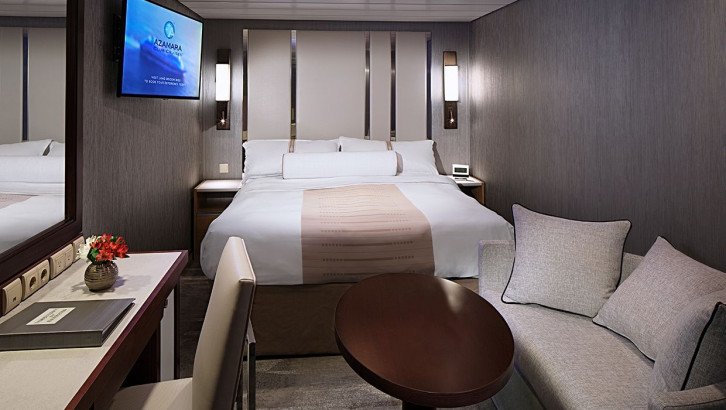
Interior Guarantee
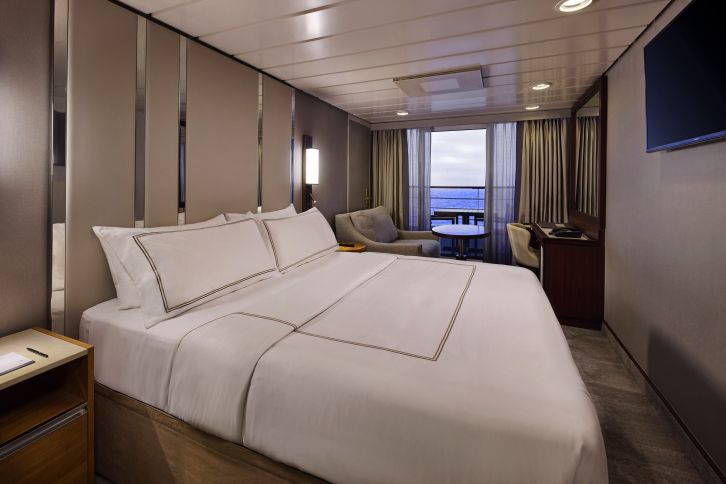
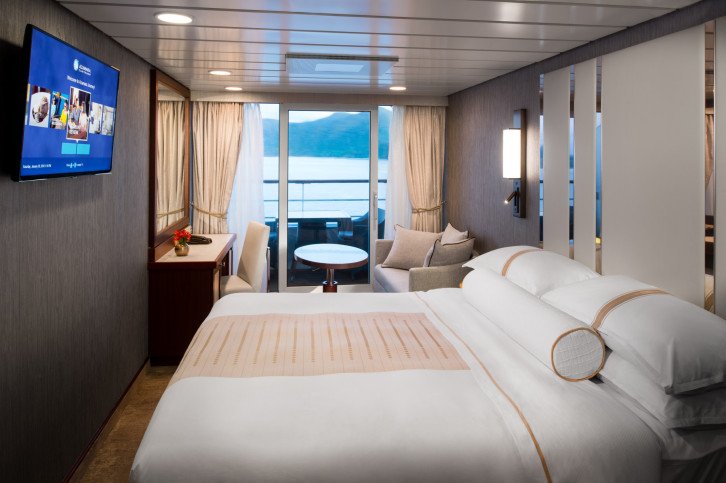
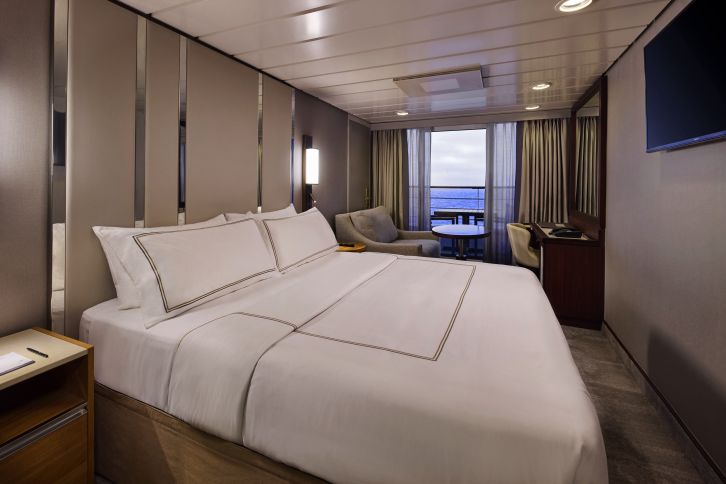
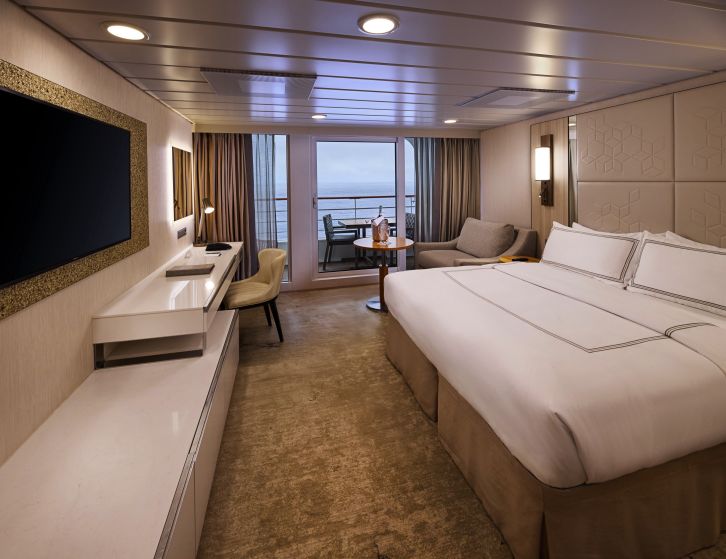
Explore the world in comfort and luxury in this stylish, elegant stateroom featuring all the amenities of a boutique hotel at sea. Relax with plush cotton robes, 24-hour room service, and more.
With the polished style and stellar service of a Club Interior Stateroom, you'll enjoy our plush cotton robes, slippers upon request, French bath products, and 24-hour room service.
Stateroom Features
- Two lower beds convertible to one Queen size bed
- Flat-screen television
- Refrigerator with mini-bar
- Thermostat-controlled air conditioner
- Direct-dial telephone with voicemail
- Writing desk
- In-room safe
- Hand-held hairdryer
- USB ports under bedside reading lamps
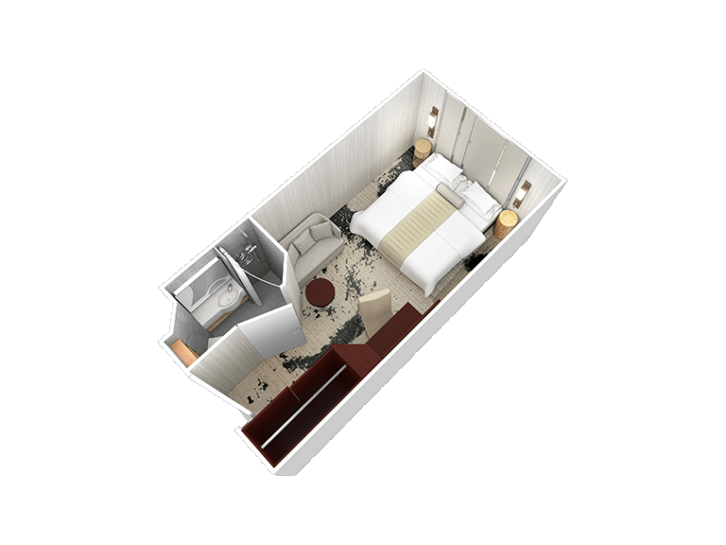
- Stateroom: 158 sq. ft. (14.7 sq. m.)
Included Stateroom Amenities
- Complimentary AzAmazing Evenings® event (on most voyages)
- Gratuities
- Luxurious cotton bed linens with duvet
- Terry bathrobes and slippers
- Select standard spirits, international beers and wine
- 24-hour room service
- Bottled water, soft drinks, specialty coffees and teas
- Fresh-cut flowers
- Self-service laundry
- Tote bag
- Shuttle service to and from port communities, wher
- Use of umbrella
- Concierge services for personal guidance and reservations
- Shoe shine-service
- Turndown treats
- Daily news bulletin
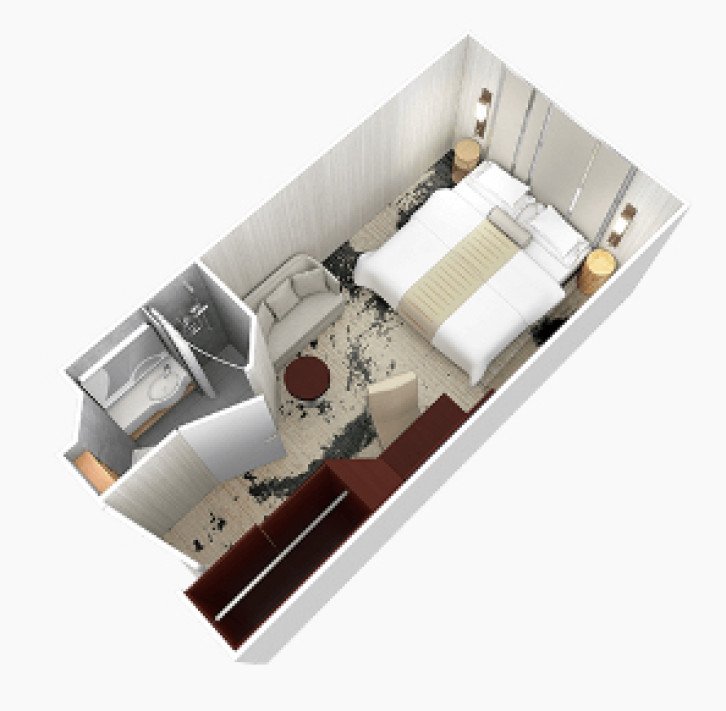
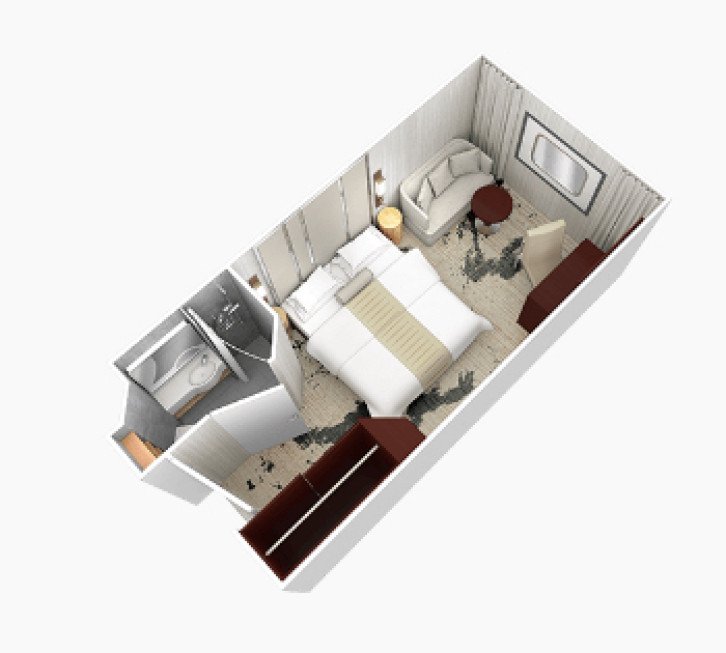
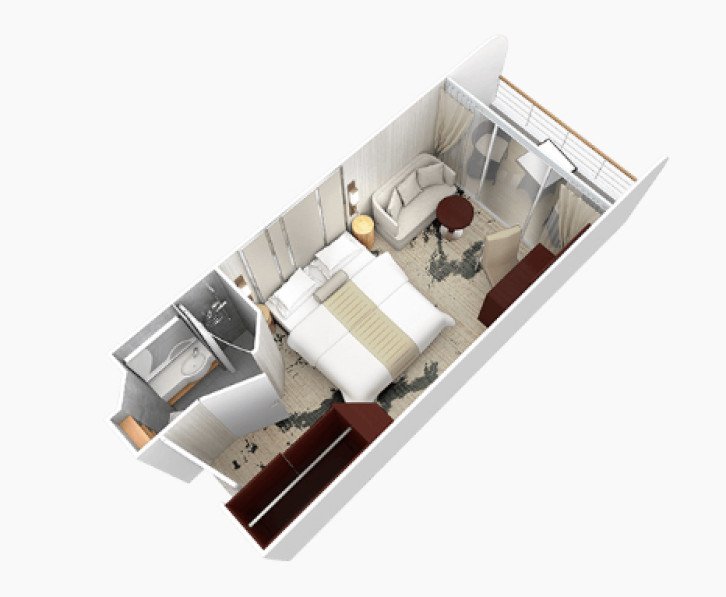
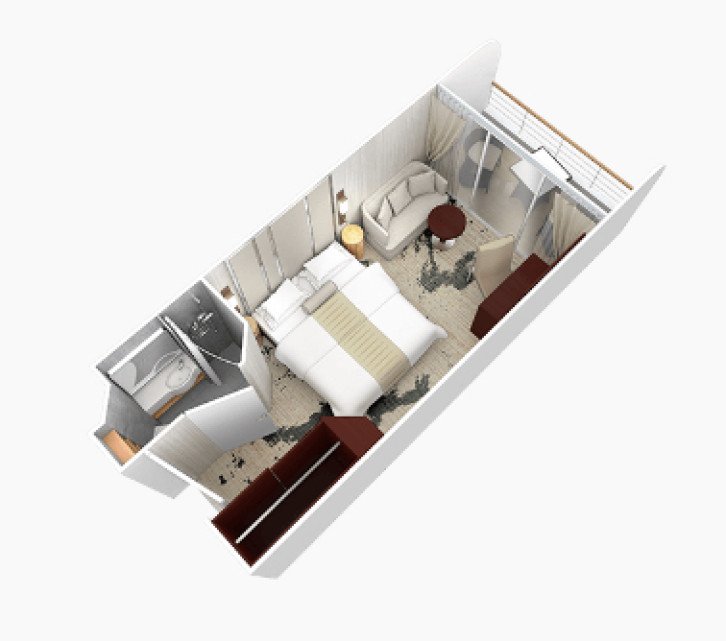
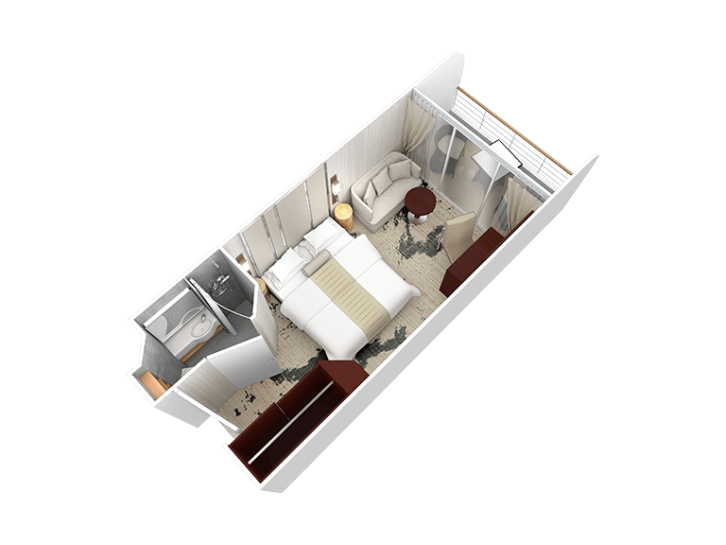
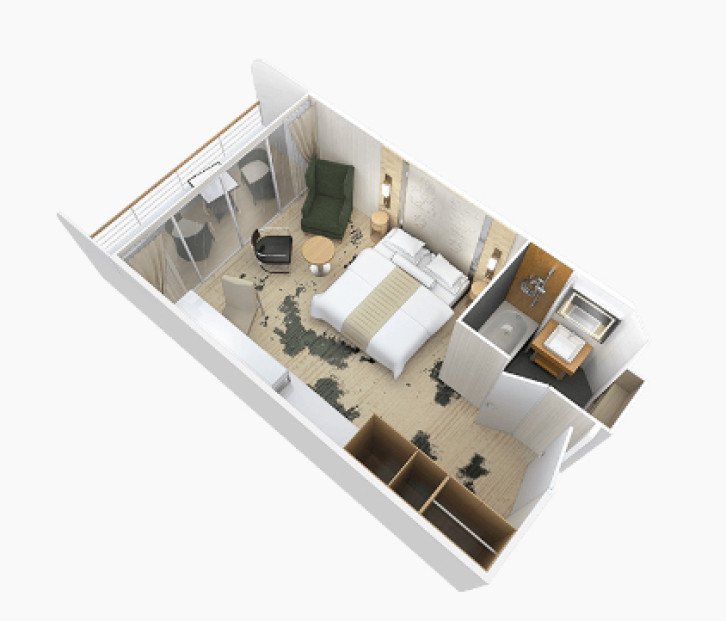
FLOORPLANS
Facilities
- Queen or Twin Configuration
- Shower
- Toiletries Provided
- Room Service Available
- TV
- Wi-Fi (Additional Cost)
- Safe
- Hair Dryer
- Telephone
- Desk
- Air Conditioning
- Mini Bar (Additional Cost)
Interior
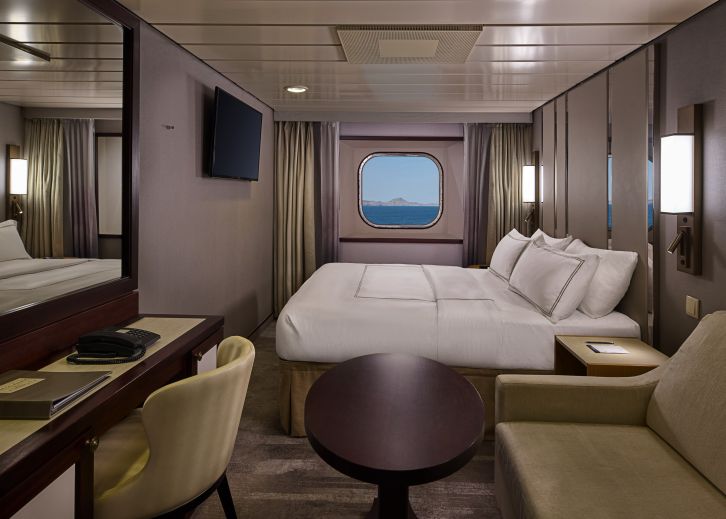
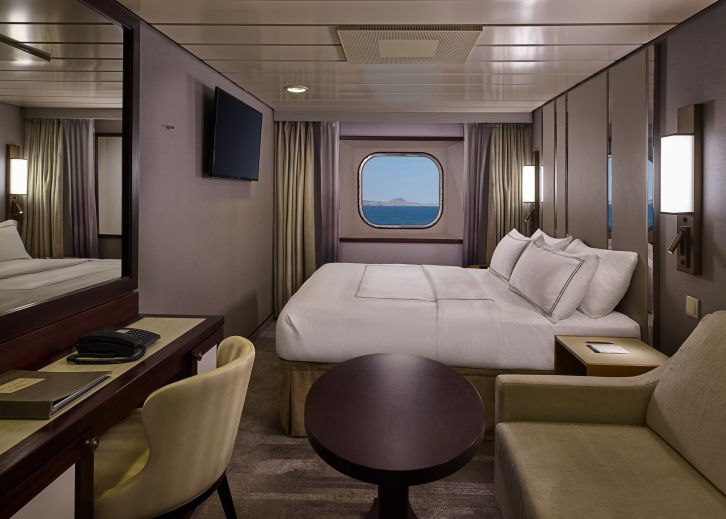
Explore the world in comfort and luxury in this stylish, elegant stateroom featuring all the amenities of a boutique hotel at sea. Relax with plush cotton robes, 24-hour room service, and more.
Stateroom Features
- Two lower beds convertible to one Queen size bed
- Flat-screen television
- Refrigerator with mini-bar
- Thermostat-controlled air conditioner
- Direct-dial telephone with voicemail
- Writing desk
- In-room safe
- Hand-held hairdryer
- USB ports under bedside reading lamps
- Stateroom: 158 sq. ft. (14.7 sq. m.)
Included Stateroom Amenities
- Complimentary AzAmazing Evenings® event (on most voyages)
- Gratuities
- Luxurious cotton bed linens with duvet
- Terry bathrobes and slippers
- Select standard spirits, international beers and wine
- 24-hour room service
- Bottled water, soft drinks, specialty coffees and teas
- Fresh-cut flowers
- Self-service laundry
- Tote bag
- Shuttle service to and from port communities, wher
- Use of umbrella
- Concierge services for personal guidance and reservations
- Shoe shine-service
- Turndown treats
- Daily news bulletin
FLOORPLANS
Facilities
- Queen or Twin Configuration
- Shower
- Room Service Available
- TV
- Safe
- Hair Dryer
- Telephone
- Desk
- Toiletries Provided
- Mini Bar (Additional Cost)
- Wi-Fi (Additional Cost)
- Air Conditioning
- Lounge Area
- Vanity Area
Oceanview Guarantee
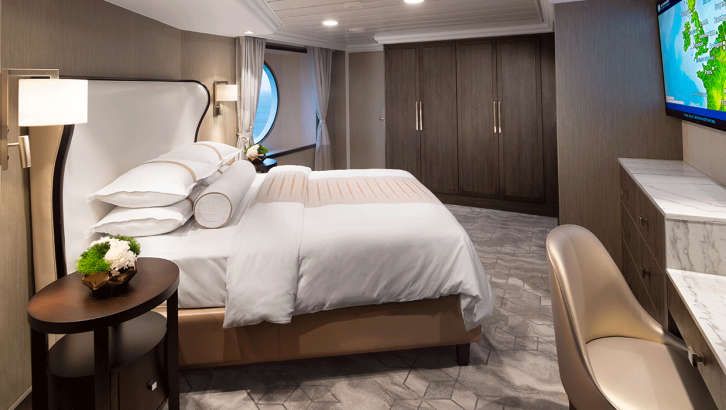
Revel in the polished style and stellar service of your own private retreat, boasting a modern and contemporary décor. Enjoy picturesque ocean views outside your window, and all the finer touches included in every stateroom.
Stateroom Features
- Two lower beds convertible to one Queen size bed
- Some staterooms feature sofa bed
- Flat-screen TV
- Refrigerator with mini-bar
- Thermostat-controlled air conditioner
- Direct-dial telephone with voicemail
- Writing desk
- In-room safe
- Handheld hairdryer
- USB ports under bedside reading lamps
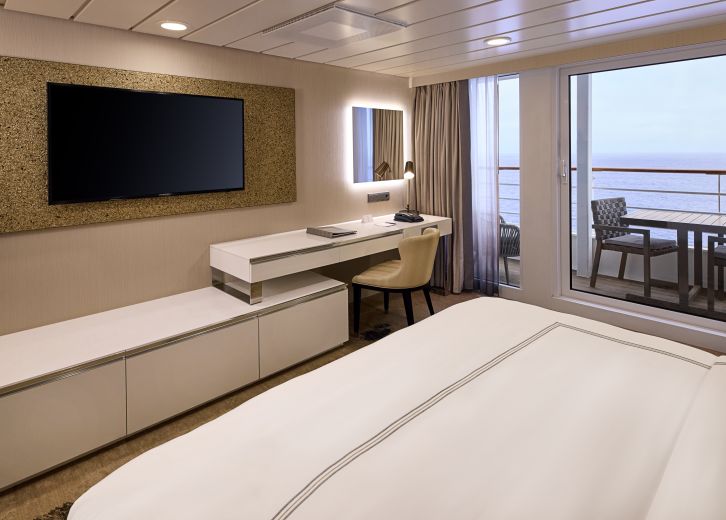
- 143 sq. ft. (13.3 sq m)Included
Included Stateroom Amenities
- Complimentary AzAmazing Evenings® event (on most voyages)
- Gratuities
- Luxurious cotton bed linens with duvet
- Terry bathrobes and slippers
- Select standard spirits, international beers and wine
- 24-hour room service
- Bottled water, soft drinks, specialty coffees and teas
- Fresh-cut flowers
- Self-service laundry
- Tote bag
- Shuttle service to and from port communities, wher
- Use of umbrella
- Concierge services for personal guidance and reservations
- Shoe shine-service
- Turndown treats
FLOORPLANS
Facilities
- Queen or Twin Configuration
- Shower
- Toiletries Provided
- Room Service Available
- TV
- Wi-Fi (Additional Cost)
- Safe
- Hair Dryer
- Telephone
- Desk
- Air Conditioning
- Mini Bar (Additional Cost)
- Lounge Area
- Vanity Area
Oceanview
Revel in the polished style and stellar service of your own private retreat, boasting a modern and contemporary décor. Enjoy picturesque ocean views outside your window, and all the finer touches included in every stateroom.
Stateroom Features
- Two lower beds convertible to one Queen size bed
- Some staterooms feature sofa bed
- Flat-screen TV
- Refrigerator with mini-bar
- Thermostat-controlled air conditioner
- Direct-dial telephone with voicemail
- Writing desk
- In-room safe
- Hand-held hairdryer
- USB ports under bedside reading lamps
- 143 sq. ft. (13.3 sq m)
- Complimentary AzAmazing Evenings® event (on most voyages)
- Gratuities
- Luxurious cotton bed linens with duvet
- Terry bathrobes and slippers
- Select standard spirits, international beers and wine
- 24-hour room service
- Bottled water, soft drinks, specialty coffees and teas
- Fresh-cut flowers
- Self-service laundry
- Tote bag
- Shuttle service to and from port communities, wher
- Use of umbrella
- Concierge services for personal guidance and reservations
- Shoe shine-service
- Turndown treats
FLOORPLANS
Facilities
- Queen or Twin Configuration
- Shower
- TV
- Safe
- Hair Dryer
- Telephone
- Desk
- Toiletries Provided
- Room Service Available
- Mini Bar (Additional Cost)
- Wi-Fi (Additional Cost)
- Air Conditioning
- Lounge Area
- Vanity Area


Veranda Guarantee
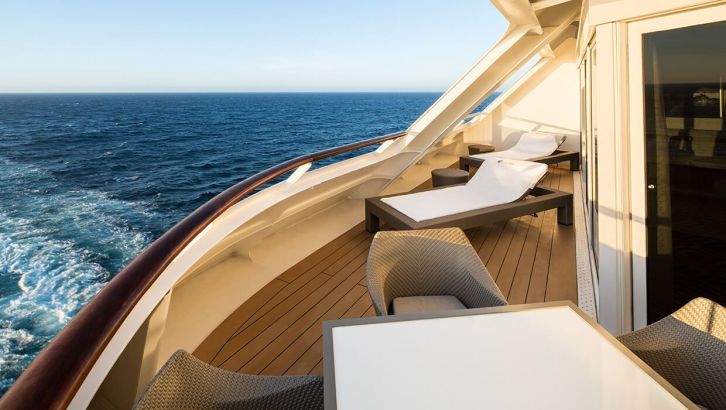
Refreshing sea breezes and stunning destination views come standard in our staterooms that offer your own private veranda. Greet the day with room service on your balcony, or toast to another stunning sunset. Polished touches and professional service perfectly compliment the warm, friendly attention you'll receive from our staff and crew.
Stateroom Features
- Veranda
- Two lower beds convertible to one Queen size bed
- Sitting area with flat-screen TV
- Refrigerator with mini-bar
- Thermostat-controlled air conditioner
- Direct-dial telephone with voicemail
- Writing desk
- In-room safe
- Hand-held hairdryer
- USB ports under bedside reading lamps
- Stateroom: 175 sq. ft. (16.3 sq. m.) | Veranda: 40 sq. ft. (3.7 sq. m.)
Included Stateroom Amenities
- Luxurious cotton bed linens with duvet
- Terry bathrobes
- 24-hour room service
- Tote bag
- Use of umbrella
- Shoe shine-service
- Turndown treats
- Daily news bulletin
FLOORPLANS
Facilities
- Queen or Twin Configuration
- Lounge Area
- Shower
- Toiletries Provided
- Room Service Available
- TV
- Wi-Fi (Additional Cost)
- Safe
- Hair Dryer
- Telephone
- Desk
- Air Conditioning
- Mini Bar (Additional Cost)
- Vanity Area
Veranda Plus
Introducing a new way to see the world with Azamara@. With our Club Veranda Plus Staterooms, enjoy spectacular ocean and destination views, plus a host of guest-favourite amenities—all at a great value. Everything you love about our Club Veranda Staterooms is included, plus extra perks and amenities to elevate your time on board.
Stateroom Features
- Veranda
- Two lower beds convertible to one Queen size bed
- Sitting area with flat-screen TV
- Mini-bar
- Thermostat-controlled air conditioner
- Direct-dial telephone with voice mail
- Writing desk
- In-room safe
- Hand-held hairdryer
- USB ports under bedside reading lamps
- Stateroom: 175 sq. ft. (16.3 sq. m.) | Veranda: 46-64 sq. ft. (4.3-6 sq. m.)
Included Stateroom Amenities
- Complimentary AzAmazing Evenings® event (on most voyages)
- Gratuities
- Luxurious cotton bed linens with duvet
- Terry bathrobes and slippers
- Select standard spirits, international beers and wine
- 24-hour room service
- Bottled water, soft drinks, specialty coffees and teas
- Fresh-cut flowers
- Self-service laundry
- Tote bag
- Shuttle service to and from port communities, wher
- Use of umbrella
- Concierge services for personal guidance and reservations
- Shoe shine-service
- Turndown treats
- Daily news bulletin
- Complimentary Internet (120 minutes or 25% off the unlimited internet package) per guest
- One free bag of laundry service per stateroom, every seven days
- One night of complimentary specialty dining for two, every seven days
- Priority embarkation and debarkation
- Complimentary in-room spirits
FLOORPLANS
Facilities
- Queen or Twin Configuration
- Shower
- Room Service Available
- TV
- Safe
- Hair Dryer
- Telephone
- Desk
- Lounge Area
- Toiletries Provided
- Wi-Fi (Additional Cost)
- Air Conditioning
- Vanity Area
Veranda
Refreshing sea breezes and stunning destination views come standard in our staterooms that offer your own private veranda. Greet the day with room service on your balcony, or toast to another stunning sunset. Polished touches and professional service perfectly compliment the warm, friendly attention you'll receive from our staff and crew.
Stateroom Features
- Veranda
- Two lower beds convertible to one Queen size bed
- Sitting area with flat-screen TV
- Refrigerator with mini-bar
- Thermostat-controlled air conditioner
- Direct-dial telephone with voicemail
- Writing desk
- In-room safe
- Hand-held hairdryer
- USB ports under bedside reading lamps
- Stateroom: 175 sq. ft. (16.3 sq. m.) | Veranda: 40 sq. ft. (3.7 sq. m.)
Included Stateroom Amenities
- Luxurious cotton bed linens with duvet
- Terry bathrobes
- 24-hour room service
- Tote bag
- Use of umbrella
- Shoe shine-service
- Turndown treats
- Daily news bulletin
FLOORPLANS
Facilities
- Queen or Twin Configuration
- Shower
- Room Service Available
- TV
- Safe
- Hair Dryer
- Telephone
- Desk
- Lounge Area
- Toiletries Provided
- Mini Bar (Additional Cost)
- Wi-Fi (Additional Cost)
- Air Conditioning
- Vanity Area
Veranda Plus Guarantee
Introducing a new way to see the world with Azamara@. With our Club Veranda Plus Staterooms, enjoy spectacular ocean and destination views, plus a host of guest-favourite amenities—all at a great value. Everything you love about our Club Veranda Staterooms is included, plus extra perks and amenities to elevate your time on board.
Stateroom Features
- Veranda
- Two lower beds convertible to one Queen size bed
- Sitting area with flat-screen TV
- Mini-bar
- Thermostat-controlled air conditioner
- Direct-dial telephone with voice mail
- Writing desk
- In-room safe
- Hand-held hairdryer
- USB ports under bedside reading lamps
- Stateroom: 175 sq. ft. (16.3 sq. m.) | Veranda: 46-64 sq. ft. (4.3-6 sq. m.)
Included Stateroom Amenities
- Luxurious cotton bed linens with duvet
- Terry bathrobes
- 24-hour room service
- Tote bag
- Use of umbrella
- Shoe shine-service
- Turndown treats
- Daily news bulletin
FLOORPLANS
Facilities
- Queen or Twin Configuration
- Lounge Area
- Shower
- Toiletries Provided
- Room Service Available
- TV
- Wi-Fi (Additional Cost)
- Safe
- Hair Dryer
- Telephone
- Desk
- Air Conditioning
- Vanity Area


Suite Guarantee
A spacious, comfortable home away from home. Suite price based on deck and location of the ship.
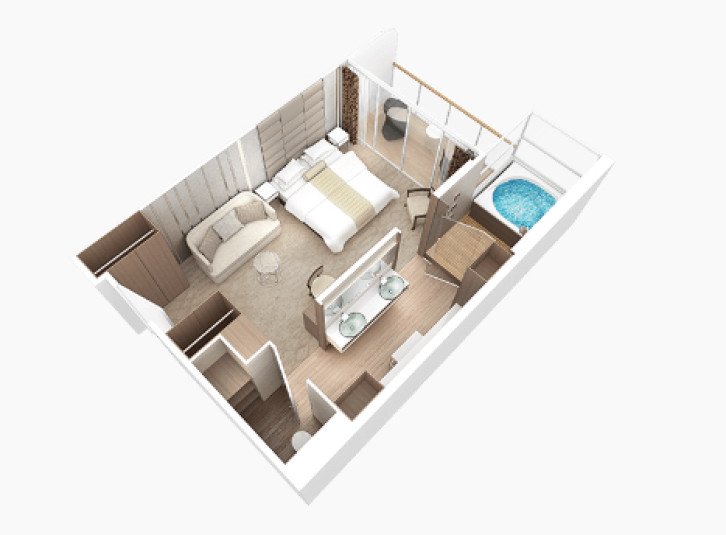
Spacious and comfortable, our Continent Suites feature fresh new décor inspired by natural elements. With two beds convertible to a queen, a cozy sitting area, breezy balcony and refreshed bathroom with a bathtub or shower, this is your wonderful, refined home away from home.
Facilities
- Bath
- Queen or Twin Configuration
- Lounge Area
- Vanity Area
- Shower
- Toiletries Provided
- Room Service Available
- Suite Benefits
- TV
- Free Wi-Fi
- Safe
- Hair Dryer
- Telephone
- Desk
- Air Conditioning
- Mini Bar (Additional Cost)
World Owner's Suite
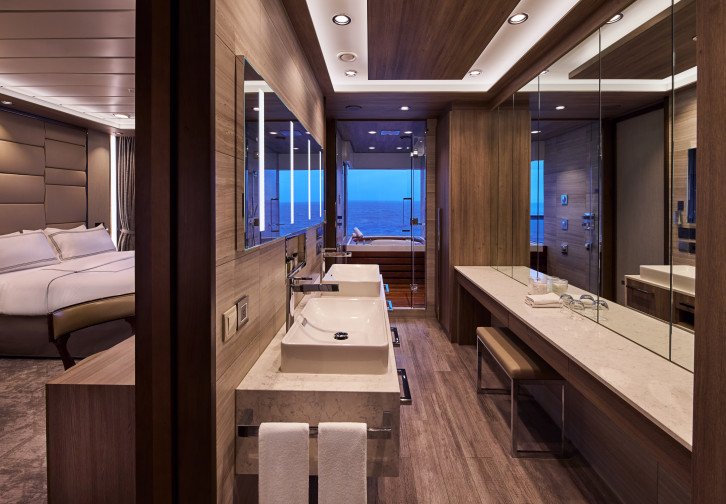
Our largest suites have been transformed with contemporary design elements that are both elegant and organic, with design that draws inspiration from nature—a sandy cliff, flowing river beds, exquisite white sand beaches, and rustling grasses. Enjoy a spacious living room, separate bedroom and all the amenities that come with our most luxurious suite.
Suite Features
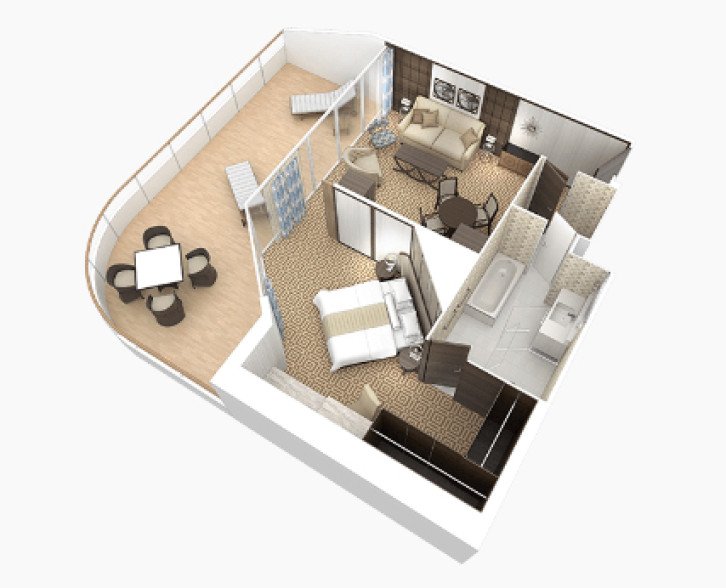
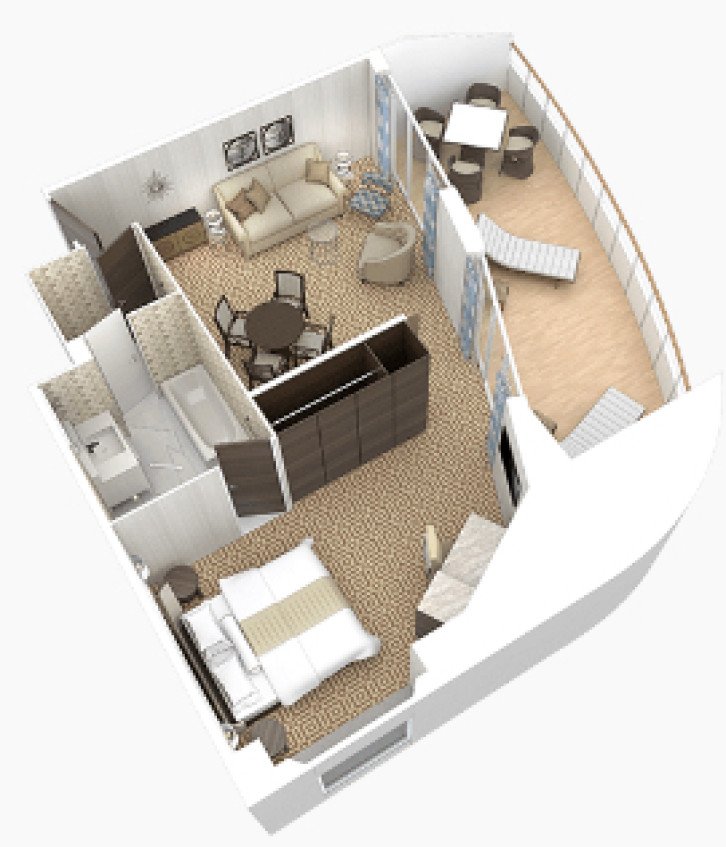
- Spacious living room with a separate master bedroom
- Master bedroom with one queen size bed and a flat-screen television
- Flat-screen television in living room
- Marble master bathroom with shower. Journey and Quest suites feature a tub
- Dressing room with vanity and ample closet space
- Floor-to-ceiling sliding glass doors in living room and master bedroom
- Mini-bar
- Thermostat-controlled air conditioner
- Direct-dial telephone with voice mail
- Writing desk
- In-room safe
- Hand-held hair dryer
- Stateroom: 560 sq. ft. (52 sq. m.) Veranda: 233 sq. ft. (21.7 sq. m.)
Included Suite Amenities (For cruises sailing before April 1, 2026)
- $300 Onboard Credit
- Unlimited Standard Wi-Fi
- Laundry - 2 bags/stateroom/week
- Exclusive Acamar Experience Dinner
- Dedicated butler and concierge service
- Full in-suite dining and daily evening hors d'oeuvres
- Complimentary Specialty Dining and exclusive breakfast at Aqualina
- In-room premium spirits and champagne
- Thalassotherapy Pool access
- Personalized assistance planning spa appointments and shore excursions
- Priority check-in
- News delivery
- Luxurious cotton bed linens with duvet
- Terry bathrobes
- 24-hour room service
- Tote bag
- Use of umbrella
- Shoeshine service
- Turndown treats
Included Suite Amenities (For cruises on or after April 1, 2026)
- Ultimate Beverage Package
- Unlimited Standard Starlink Wi-Fi
- Unlimited Laundry
- Exclusive Acamar Experience Dinner
- Dedicated butler and concierge service
- Full in-suite dining and daily evening hors d'oeuvres
- Complimentary Specialty Dining and exclusive breakfast at Aqualina
- In-room premium spirits and champagne
- Thalassotherapy Pool access
- Personalized assistance planning spa appointments and shore excursions
- Priority check-in
- News delivery
- Luxurious cotton bed linens with duvet
- Terry bathrobes
- 24-hour room service
- Tote bag
- Use of umbrella
- Shoeshine service
- Turndown treats
FLOORPLANS
Facilities
- Queen or Twin Configuration
- Shower
- Room Service Available
- Suite Benefits
- TV
- Free Wi-Fi
- Safe
- Hair Dryer
- Telephone
- Desk
- Lounge Area
- Vanity Area
- Toiletries Provided
- Mini Bar (Additional Cost)
- Air Conditioning
Ocean Suite
With a large living room and a separate bedroom—plus your own private veranda—your suite offers a restful retreat after your immersive experiences on land. Enjoy elegant, contemporary décor, and rich marble touches. You’ll be spoiled by the attention to detail in these beautiful suites, and of course, all the pampering too.
Suite Features
Spacious living room with a separate master bedroom
- Master bedroom with one queen size bed with a flat-screen television
- Flat-screen television in living room
- Marble master bathroom with shower. Journey and Quest suites feature a tub.
- Dressing room with vanity and ample closet space
- Floor-to-ceiling sliding glass doors in living room and master bedroom
- Mini-bar
- Thermostat-controlled air conditioner
- Direct-dial telephone with voice mail
- Writing desk
- In-room safe
- Hand-held hair dryer
- Stateroom: 440-501 sq. ft. (40.9-46.5 sq. m.) Veranda: 233 sq. ft. (21.7 sq. m.)
Included Suite Amenities (For cruises sailing before April 1, 2026)
- $300 Onboard Credit
- Unlimited Standard Wi-Fi
- Laundry - 2 bags/stateroom/week
- Exclusive Acamar Experience Dinner
- Dedicated butler and concierge service
- Full in-suite dining and daily evening hors d'oeuvres
- Complimentary Specialty Dining and exclusive breakfast at Aqualina
- In-room premium spirits and champagne
- Thalassotherapy Pool access
- Personalized assistance planning spa appointments and shore excursions
- Priority check-in
- News delivery
- Luxurious cotton bed linens with duvet
- Terry bathrobes
- 24-hour room service
- Tote bag
- Use of umbrella
- Shoeshine service
- Turndown treats
Included Suite Amenities (For cruises on or after April 1, 2026)
- Ultimate Beverage Package
- Unlimited Standard Starlink Wi-Fi
- Unlimited Laundry
- Exclusive Acamar Experience Dinner
- Dedicated butler and concierge service
- Full in-suite dining and daily evening hors d'oeuvres
- Complimentary Specialty Dining and exclusive breakfast at Aqualina
- In-room premium spirits and champagne
- Thalassotherapy Pool access
- Personalized assistance planning spa appointments and shore excursions
- Priority check-in
- News delivery
- Luxurious cotton bed linens with duvet
- Terry bathrobes
- 24-hour room service
- Tote bag
- Use of umbrella
- Shoeshine service
- Turndown treats
FLOORPLANS
Facilities
- Queen or Twin Configuration
- Shower
- Room Service Available
- TV
- Free Wi-Fi
- Safe
- Hair Dryer
- Telephone
- Desk
- Lounge Area
- Vanity Area
- Toiletries Provided
- Suite Benefits
- Mini Bar (Additional Cost)
- Air Conditioning
Spa Suite
Located next to the tranquil Sanctum Spa, our newest suites are the ultimate in contemporary design, comfort and pampering. With easy access to the Spa, open decks, swimming pool and our great restaurants, the Club Spa Suites surround you with organic, elegant décor, and the finest, most soothing amenities. Suites feature comfortable sitting area, daily delivery of healthy snacks, Frette plush robes and slippers, and in-room spa music. For the ultimate in serene surroundings, the spacious glass-enclosed spa soaking tub and separate rain shower bring the outside in, with views to the endless seas beyond. The perfect place to get away from it all, without being far from anything.
Suite Features
- Two lower beds convertible to one queen size bed
- Spacious glass-enclosed bathtub
- Separate rain shower
- Comfortable sitting area
- Flat-screen television in sitting area
- Floor-to-ceiling sliding glass doors
- Veranda
- Mini-bar
- Thermostat-controlled air conditioner
- Direct-dial telephone with voice mail
- Writing desk
- In-room safe
- Hand-held hair dryer
- Stateroom: 414 sq. ft. (38.5 sq. m.) Veranda: 40 sq. ft. (3.7 sq. m.)
Included Suite Amenities (For cruises sailing before April 1, 2026)
- $300 Onboard Credit
- Unlimited Standard Wi-Fi
- Laundry - 2 bags/stateroom/week
- Exclusive Acamar Experience Dinner
- Dedicated butler and concierge service
- Full in-suite dining and daily evening hors d'oeuvres
- Complimentary Specialty Dining and exclusive breakfast at Aqualina
- In-room premium spirits and champagne
- Thalassotherapy Pool access
- Personalized assistance planning spa appointments and shore excursions
- Priority check-in
- News delivery
- Luxurious cotton bed linens with duvet
- Terry bathrobes
- 24-hour room service
- Tote bag
- Use of umbrella
- Shoeshine service
- Turndown treats
- Afternoon In-Suite Tea Service
Included Suite Amenities (For cruises on or after April 1, 2026)
- Ultimate Beverage Package
- Unlimited Standard Starlink Wi-Fi
- Unlimited Laundry
- Exclusive Acamar Experience Dinner
- Dedicated butler and concierge service
- Full in-suite dining and daily evening hors d'oeuvres
- Complimentary Specialty Dining and exclusive breakfast at Aqualina
- In-room premium spirits and champagne
- Thalassotherapy Pool access
- Personalized assistance planning spa appointments and shore excursions
- Priority check-in
- News delivery
- Luxurious cotton bed linens with duvet
- Terry bathrobes
- 24-hour room service
- Tote bag
- Use of umbrella
- Shoeshine service
- Turndown treats
- Afternoon In-Suite Tea Service
FLOORPLANS
Facilities
- Queen or Twin Configuration
- Shower
- Room Service Available
- TV
- Safe
- Hair Dryer
- Telephone
- Desk
- Bath
- Lounge Area
- Vanity Area
- Toiletries Provided
- Suite Benefits
- Mini Bar (Additional Cost)
- Free Wi-Fi
- Air Conditioning
Continent Suite
Spacious and comfortable, our Continent Suites feature fresh new décor inspired by natural elements. With two beds convertible to a queen, a cozy sitting area, breezy balcony and refreshed bathroom with a bathtub or shower, this is your wonderful, refined home away from home.
Suite Features
- Two lower beds convertible to one queen size bed
- Spacious and comfortable sitting area
- Flat-screen television in sitting area
- Roomy bathroom with shower. Some also feature a tub.
- Floor-to-ceiling sliding glass doors
- Veranda
- Mini-bar
- Thermostat-controlled air conditioner
- Direct-dial telephone with voice mail
- Writing desk
- In-room safe
- Hand-held hair dryer
- Stateroom: 266 sq. ft. (24.7 sq. m.) Veranda: 60 sq. ft. (5.6 sq. m.)
Included Suite Amenities (For cruises sailing before April 1, 2026)
- 240 Minutes Standard Wi-Fi
- Laundry - 2 bags/stateroom/week
- Dedicated butler and concierge service
- Exclusive breakfast at Aqualina
- In-room premium spirits and champagne
- Thalassotherapy Pool access
- Personalized assistance planning spa appointments and shore excursions
- Priority check-in
- News delivery
- Luxurious cotton bed linens with duvet
- Terry bathrobes
- 24-hour room service
- Tote bag
- Use of umbrella
- Shoeshine-service
- Turndown treats
Included Suite Amenities (For cruises on or after April 1, 2026)
- Unlimited Basic Starlink Wi-Fi
- Laundry - 2 bags/stateroom/week
- Exclusive Acamar Experience Dinner
- Dedicated butler and concierge service
- Full in-suite dining and daily evening hors d'oeuvres
- Complimentary Specialty Dining and exclusive breakfast at Aqualina
- In-room premium spirits and champagne
- Thalassotherapy Pool access
- Personalized assistance planning spa appointments and shore excursions
- Priority check-in
- News delivery
- Luxurious cotton bed linens with duvet
- Terry bathrobes
- 24-hour room service
- Tote bag
- Use of umbrella
- Shoeshine-service
- Turndown treats
FLOORPLANS
Facilities
- Queen or Twin Configuration
- Shower
- Room Service Available
- TV
- Safe
- Hair Dryer
- Telephone
- Desk
- Bath
- Lounge Area
- Toiletries Provided
- Suite Benefits
- Mini Bar (Additional Cost)
- Air Conditioning
- Vanity Area
- Free Wi-Fi
- Wi-Fi (Additional Cost)
Meet Our Luxury Cruise Concierge
Our luxury cruise concierge have been on board a vast array of the finest ships at sea and are always happy to share their first-hand experiences to help curate your dream ultra-luxury voyage. From advising you on the best cruise lines and ships to helping you select from a variety of phenomenal destinations and itineraries, your dedicated concierge is on hand to ensure booking your next cruise is as seamless, smooth and tailored to you as possible.