Before English and Scottish settlers arrived in the 1600s, Belfast was a tiny village called Béal Feirste ("sandbank ford") belonging to Ulster's ancient O'Neill clan. With the advent of the Plantation period (when settlers arrived in the 1600s), Sir Arthur Chichester, from Devon in southwestern England, received the city from the English Crown, and his son was made Earl of Donegall. Huguenots fleeing persecution from France settled near here, bringing their valuable linen-work skills. In the 18th century, Belfast underwent a phenomenal expansion—its population doubled every 10 years, despite an ever-present sectarian divide. Although the Anglican gentry despised the Presbyterian artisans—who, in turn, distrusted the native Catholics—Belfast's growth continued at a dizzying speed. The city was a great Victorian success story, an industrial boomtown whose prosperity was built on trade, especially linen and shipbuilding. Famously (or infamously), the Titanic was built here, giving Belfast, for a time, the nickname "Titanic Town." Having laid the foundation stone of the city's university in 1845, Queen Victoria returned to Belfast in 1849 (she is recalled in the names of buildings, streets, bars, monuments, and other places around the city), and in the same year, the university opened under the name Queen's College. Nearly 40 years later, in 1888, Victoria granted Belfast its city charter. Today its population is nearly 300,000, tourist numbers have increased, and this dramatically transformed city is enjoying an unparalleled renaissance.This is all a welcome change from the period when news about Belfast meant reports about "the Troubles." Since the 1994 ceasefire, Northern Ireland's capital city has benefited from major hotel investment, gentrified quaysides (or strands), a sophisticated new performing arts center, and major initiatives to boost tourism. Although the 1996 bombing of offices at Canary Wharf in London disrupted the 1994 peace agreement, the ceasefire was officially reestablished on July 20, 1997, and this embattled city began its quest for a newfound identity.Since 2008, the city has restored all its major public buildings such as museums, churches, theaters, City Hall, Ulster Hall—and even the glorious Crown Bar—spending millions of pounds on its built heritage. A gaol that at the height of the Troubles held some of the most notorious murderers involved in paramilitary violence is now a major visitor attraction.Belfast's city center is made up of three roughly contiguous areas that are easy to navigate on foot. From the south end to the north, it's about an hour's leisurely walk.
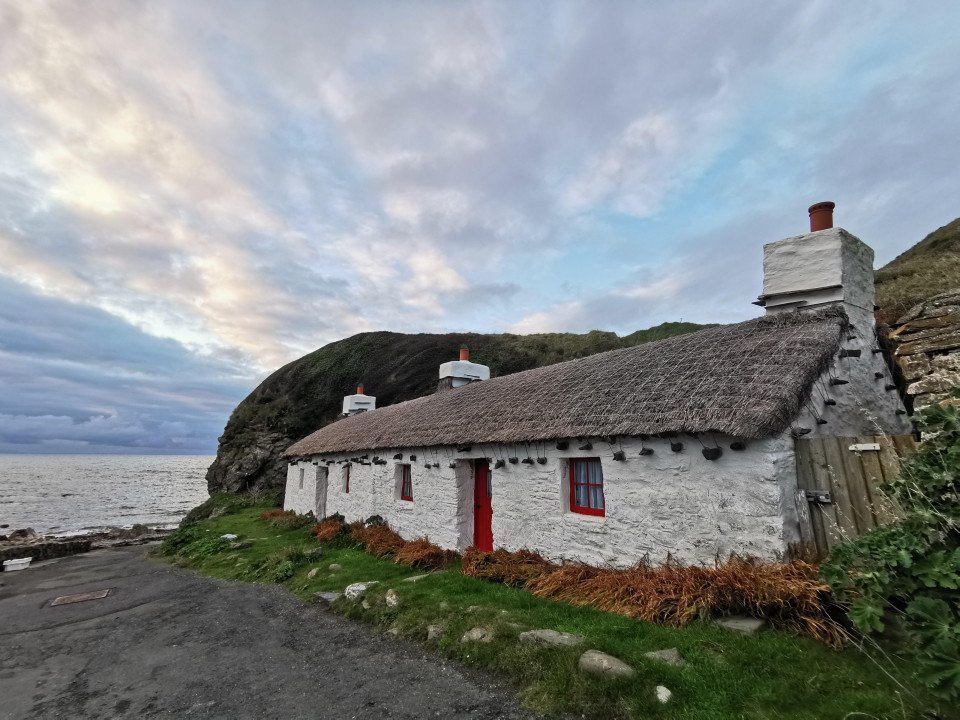
The Isle of Man, situated in the Irish Sea off the west coast of England, is a mountainous, cliff-fringed island and one of Britain’s most beautiful spots. Measuring just 30 miles by 13 miles, the Isle of Man remains semi-autonomous. With its own postage stamps, laws, currency, and the Court of Tynwald (the world’s oldest democratic parliament), the Isle of Man is rich with history and lore.Inhabited from Neolithic times, the island became a refuge for Irish missionaries after the 5th Century. Norsemen took the island during the 9th Century and sold it to Scotland in 1266. However, since the 14th Century, it has been held by England. Manx, the indigenous Celtic language, is still spoken by a small minority. The Isle of Man has no income tax, which has encouraged many Britains to regard the island as a refuge. Otherwise, it is populated by Gaelic farmers, fishermen, and the famous tailless manx cats. The varied landscape features austere moorlands and wooded glens, interspersed by fine castles, narrow-gauge railways, and scores of standing stones with Celtic crosses. The hilly terrain rises to a height of 2,036 feet at Mount Snaefell, which dominates the center of the island.
You'll always receive a welcome to remember, as the colourful cafes, houses and shops that line Tobermory's picturesque harbour salute your arrival. Located on the craggy Scottish Inner Hebrides, Tobermory serves as the capital of the Isle of Mull. There's a high chance you'll recognise the town’s colourfully-daubed buildings, as their charming exteriors have featured in countless TV shows - most notably in the children’s favourite, Balamory. There's always a new story to discover here – not least the legend that suggests there's a sunken Spanish galleon, brimming with lost gold, sitting just below the waves that roll around the harbour. Learn a little more of the area’s history at the Mull Museum, or head out to enjoy some of the fabulous wildlife watching opportunities on offer on a boat tour. You can spot majestic birds like white tail and golden eagles circling in the skies, or turn your attention to the waves, where friendly dolphins and Minke whales are regular visitors. Treat yourself to a sample of one of the island's finest exports before leaving, as you drop in at the Tobermory Distillery for some whiskey tasting. Established in 1798, it’s one of Scotland's oldest distilleries.
St Kilda is a remarkable uninhabited archipelago some 40 nautical miles beyond the Outer Hebrides. The stunning cliffs and sea stacks are home to the most important seabird breeding colony in northwest Europe. St Kilda is one of the few places in the world to have received dual World Heritage status from UNESCO in recognition of its Natural Heritage and cultural significance. Village Bay on the island of Hirta once supported a population of over 200, but the last islanders left in the 1930s. Recent restoration work on the village by the National Trust for Scotland offers a marvellous link with the past. One of the caretakers acts as shopkeeper and postmaster for any visitors who might like to send a postcard home from St. Kilda.
Founded by Dutch fishermen in the 17th century, Lerwick today is a busy town and administrative center. Handsome stone buildings—known as lodberries—line the harbor; they provided loading bays for goods, some of them illegal. The town's twisting flagstone lanes and harbor once heaved with activity, and Lerwick is still an active port today. This is also where most visitors to Shetland dock, spilling out of cruise ships, allowing passengers to walk around the town.
Exploring the sandstone cliff faces of the Isle of Noss will reveal ledges loaded with gannets, puffins, guillemots, shags, kittiwakes, Razorbills, fulmars and Great Skuas. The island was recognized as a National Nature Reserve in 1955, and has one of Europe’s largest and most diverse seabird colonies. Sheep have grazed the inland hillsides of Noss since the late 1800s and early 1900s when around twenty people lived on the island to manage the sheep farm. Along with the sheep, shaggy Shetland ponies graze the windblown slopes of Noss.
Tórshavn, the charming capital of the Faroe Islands, is a captivating blend of stunning landscapes and rich cultural heritage. With its picturesque harbour, colourful turf-roofed houses, and narrow streets, the city invites exploration and discovery. Visitors can immerse themselves in local culture through museums, enjoy traditional Faroese cuisine at cosy cafés, and engage in outdoor activities like hiking and birdwatching. Throughout the year, Tórshavn comes alive with festivals celebrating music and art, making it a vibrant destination that beautifully showcases the spirit and beauty of the Faroe Islands.
Klaksvik is the second-largest town in the Faroe Islands, located on the northern island of Borðoy. Known for its stunning natural scenery, Klaksvik is surrounded by dramatic mountains and picturesque fjords, making it a haven for outdoor enthusiasts. The town has a vibrant fishing industry and boasts a rich maritime history, reflected in its charming harbour and traditional wooden houses. Visitors can explore local culture through museums, art galleries, and festivals celebrating Faroese traditions. Klaksvik also serves as a gateway to nearby islands, offering opportunities for hiking, birdwatching, and experiencing the breathtaking landscapes of the Faroe Islands. With its unique blend of natural beauty and cultural heritage, Klaksvik is a captivating destination for travellers.
It’s hard to imagine, as you stroll Heimaey’s idyllic streets of white wooden houses, that this island was literally torn apart by a spectacular volcanic eruption, just over 40 years ago. The fact that you can visit incredible Heimaey at all is something of a miracle – because the oozing lava of the Eldfell volcano threatened to seal the harbour off completely. Fortunately, its advance was halted by gallons of seawater, pumped onto it by the plucky islanders, who saved their fishing industry in the process. Iceland's famous for its scenery, and the huge castles of volcanic rock that rise out of the sea's waves here are some of the country's most dramatic.
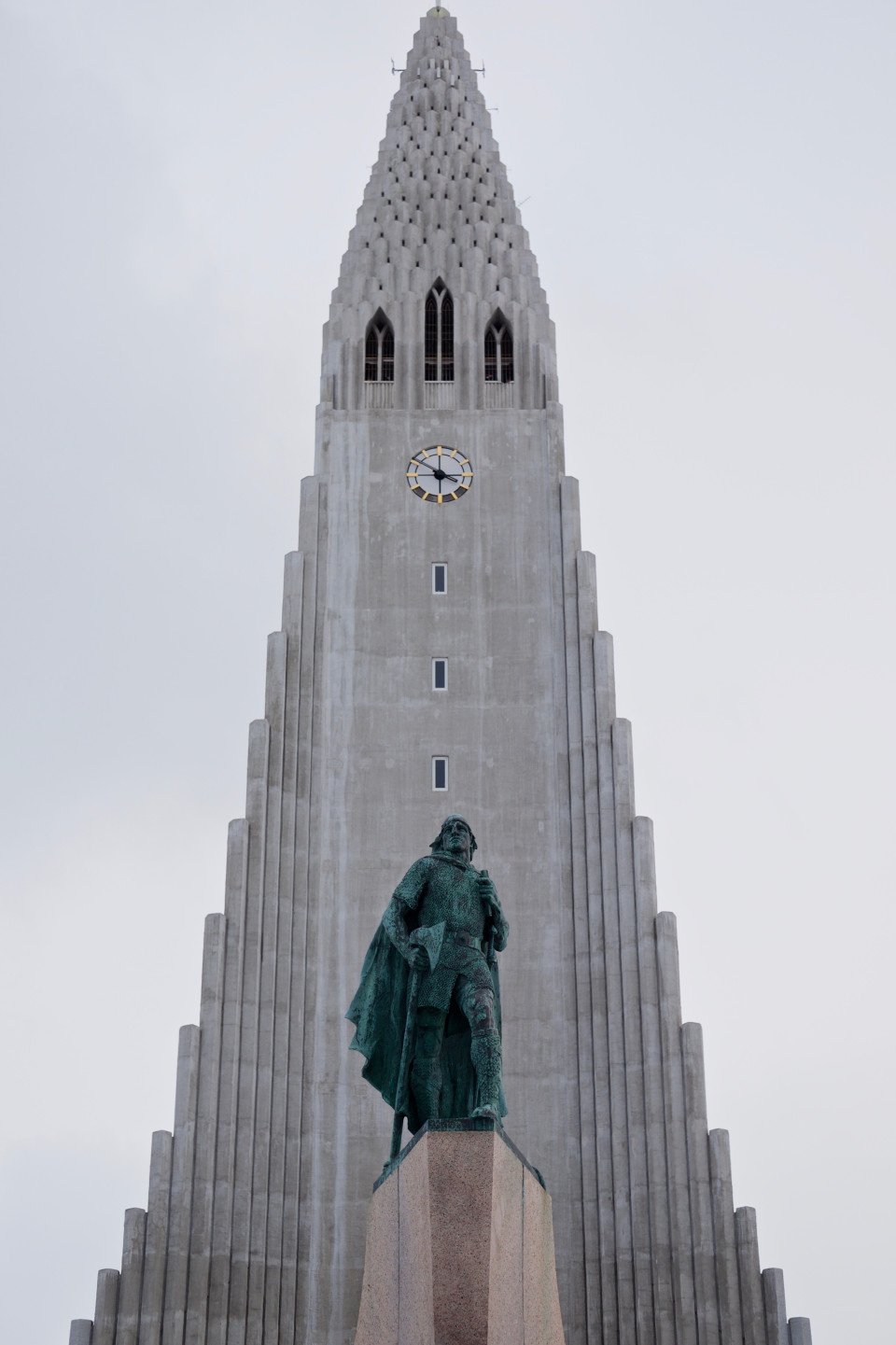
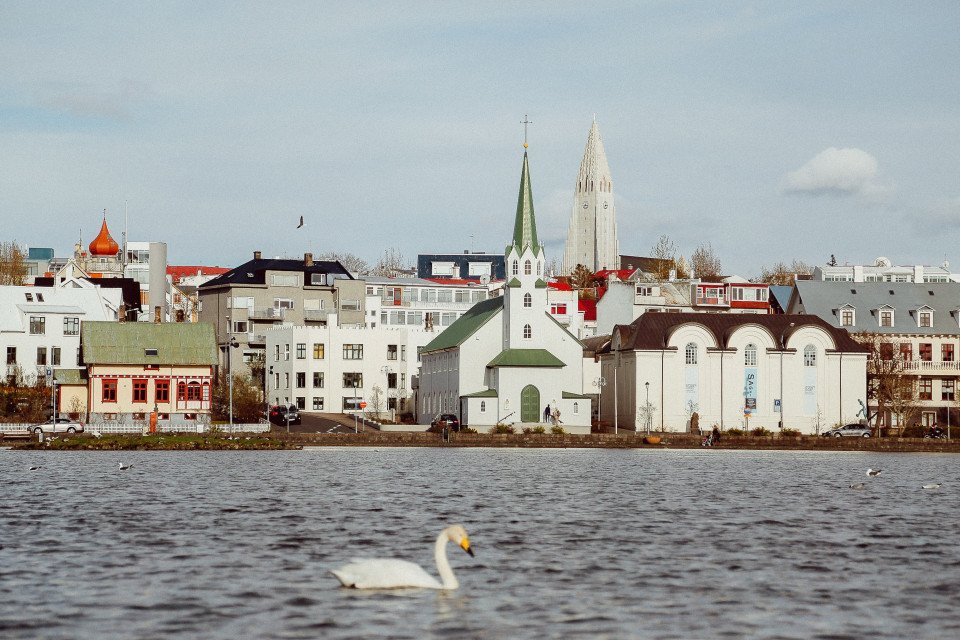
Sprawling Reykjavík, the nation's nerve center and government seat, is home to half the island's population. On a bay overlooked by proud Mt. Esja (pronounced eh-shyuh), with its ever-changing hues, Reykjavík presents a colorful sight, its concrete houses painted in light colors and topped by vibrant red, blue, and green roofs. In contrast to the almost treeless countryside, Reykjavík has many tall, native birches, rowans, and willows, as well as imported aspen, pines, and spruces.Reykjavík's name comes from the Icelandic words for smoke, reykur, and bay, vík. In AD 874, Norseman Ingólfur Arnarson saw Iceland rising out of the misty sea and came ashore at a bay eerily shrouded with plumes of steam from nearby hot springs. Today most of the houses in Reykjavík are heated by near-boiling water from the hot springs. Natural heating avoids air pollution; there's no smoke around. You may notice, however, that the hot water brings a slight sulfur smell to the bathroom.Prices are easily on a par with other major European cities. A practical option is to purchase a Reykjavík City Card at the Tourist Information Center or at the Reykjavík Youth Hostel. This card permits unlimited bus usage and admission to any of the city's seven pools, the Family Park and Zoo, and city museums. The cards are valid for one (ISK 3,300), two (ISK 4,400), or three days (ISK 4,900), and they pay for themselves after three or four uses a day. Even lacking the City Card, paying admission (ISK 500, or ISK 250 for seniors and people with disabilities) to one of the city art museums (Hafnarhús, Kjarvalsstaðir, or Ásmundarsafn) gets you free same-day admission to the other two.
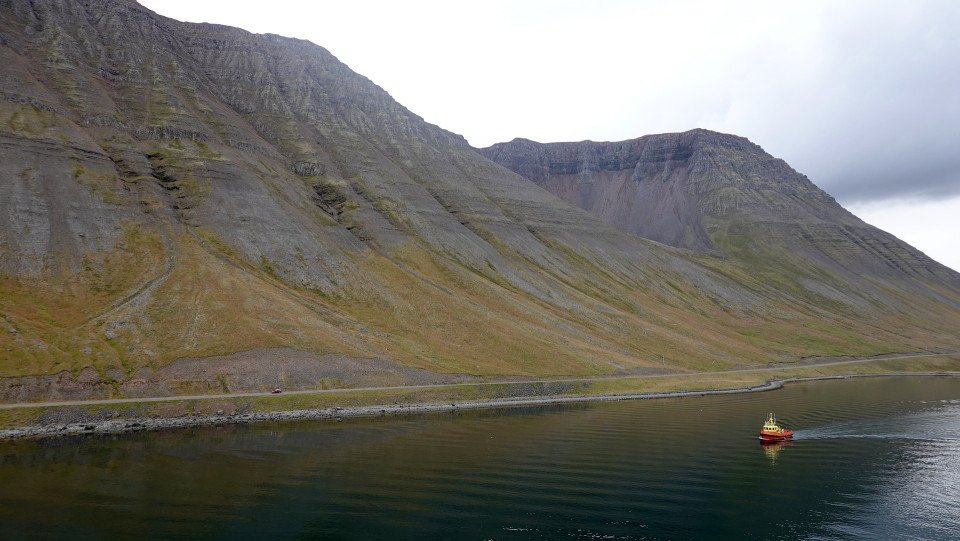
Two colossal terraces of sheer rock stand either side of this extraordinarily located town - which rides a jutting spit onto an immensity of black fjord water. Surprisingly, considering the remoteness of its location and its compact size, Isafjordur is a modern and lively place to visit, offering a great choice of cafes and delicious restaurants – which are well stocked to impress visitors. The town is a perfectly located base for adventures amongst Iceland's fantastic wilderness - with skiing, hiking and water-sports popular pursuits among visitors.
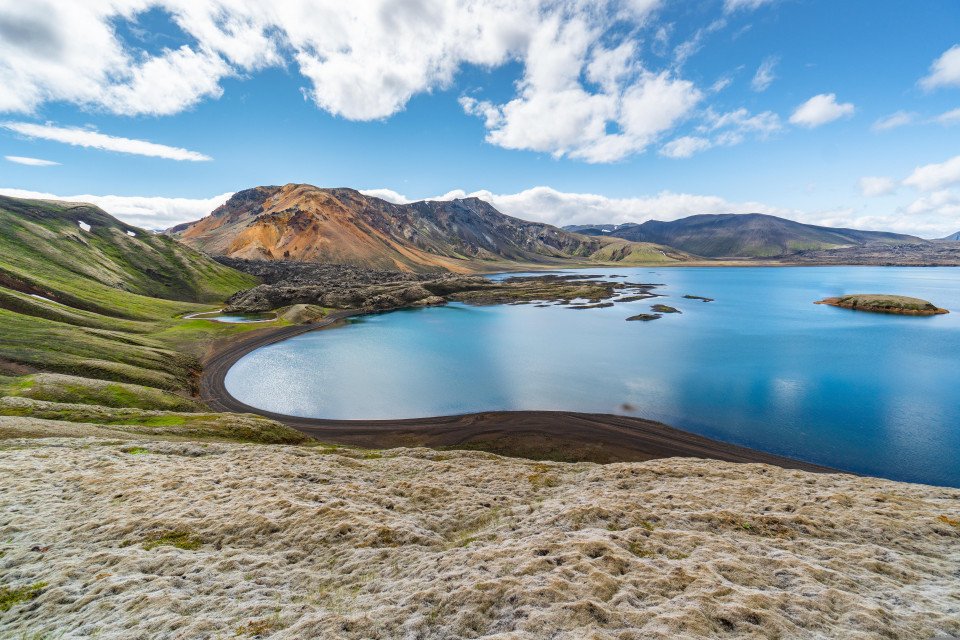
Described as one of the most remote islands in the world, Jan Mayen liesbetween Norway to the east and Greenland to the west. It is a rugged volcanicisland 34 miles long and is made up of two parts – the larger section to thenorth (Beerenbeg Volcano) and the longer but narrower section to the south. Amile-wide isthmus links these two parts. Geologically, the island was formed bya ‘hotspot’ where molten magma pushes up through the earth’s crust to createvolcanoes in the middle of nowhere. Politically, Jan Mayen is an integral partof Norway. The eighteen people living on the island work for either the NorwegianArmed Forces or the Norwegian Meteorological Institute. Their main purpose isto operate the Loran-C radio navigation system. From 1615 to 1638, the Dutchran a whaling station here. Today, the island is a nature reserve underNorwegian jurisdiction aimed at preserving the pristine Arctic island and themarine life, including the ocean floor.
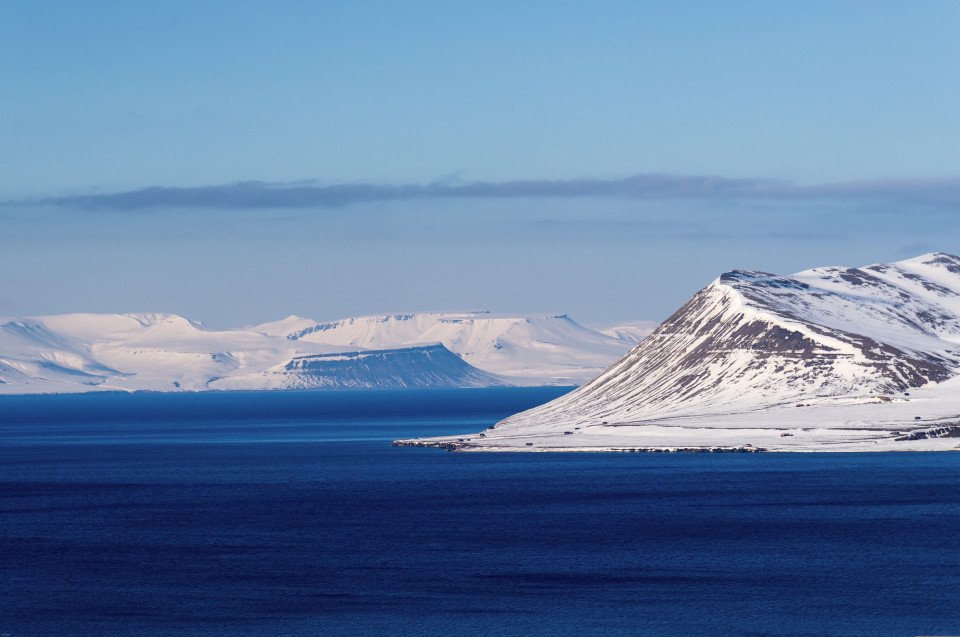
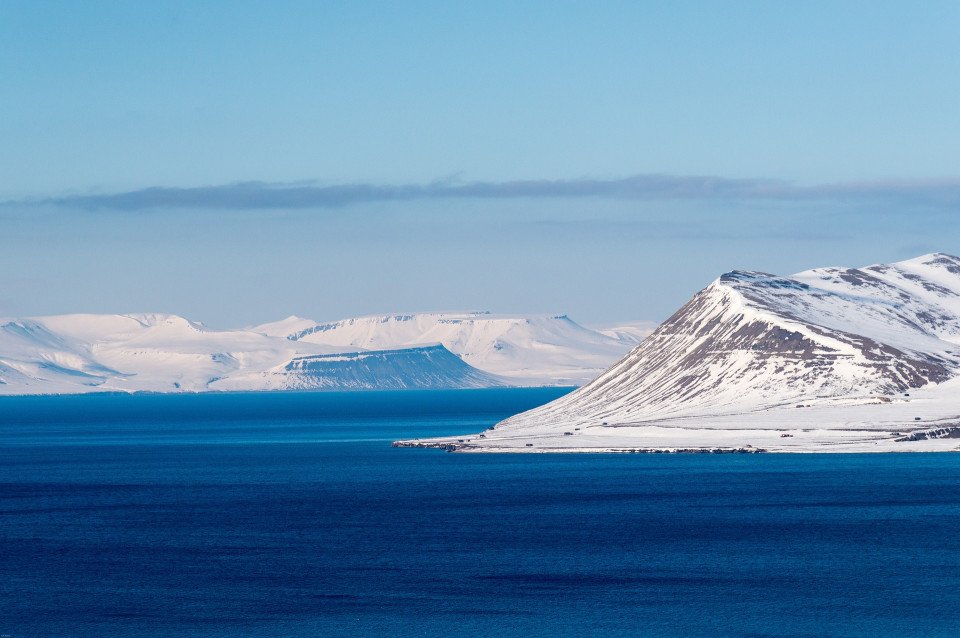
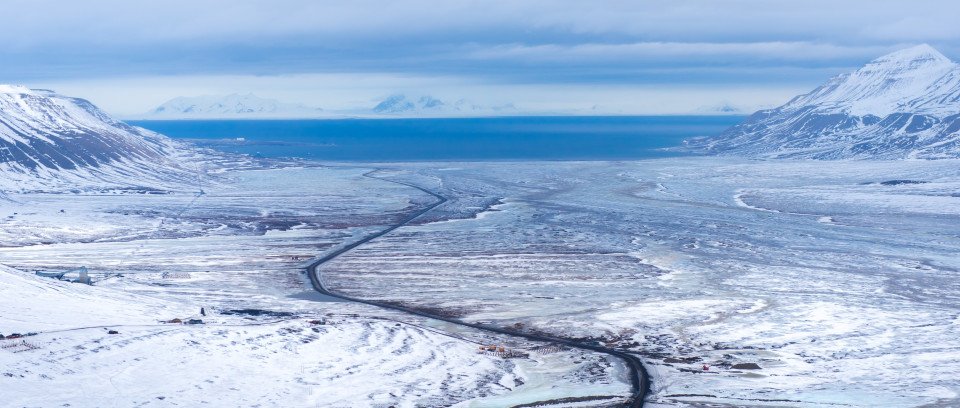
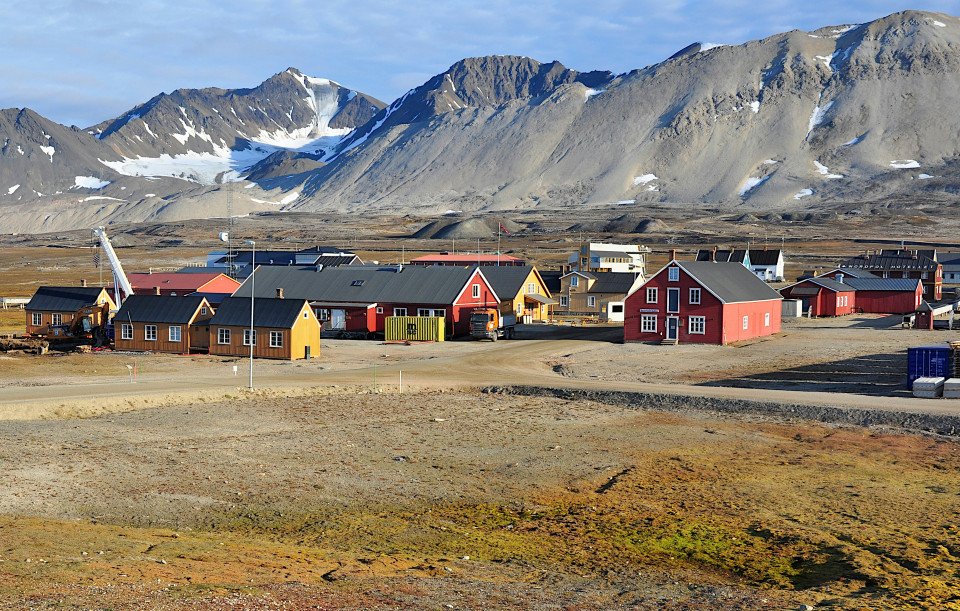
Longyearbyen is the biggest settlement in Svalbard. Seat of the Norwegian administration, it also has the best services and infrastructure in the archipelago. Located deep in the Adventfjord, a sidearm of the Isfjorden (Icefjord), Longyearbyen’s airport can be used all-year round, but its harbor is blocked by ice in winter. Most shops, hotels, restaurants and a hospital are within easy walking distance of the port. One of the most prominent buildings in town is the UNIS center, where several Norwegian universities have joined forces to operate and offer the northernmost higher education to both Norwegian and international students. Adjacent to UNIS, and well worth a visit, is the Svalbard Museum, covering the natural history and exploitation of Svalbard. Remnants of the former mining activity can be seen all around Longyearbyen and even in town.
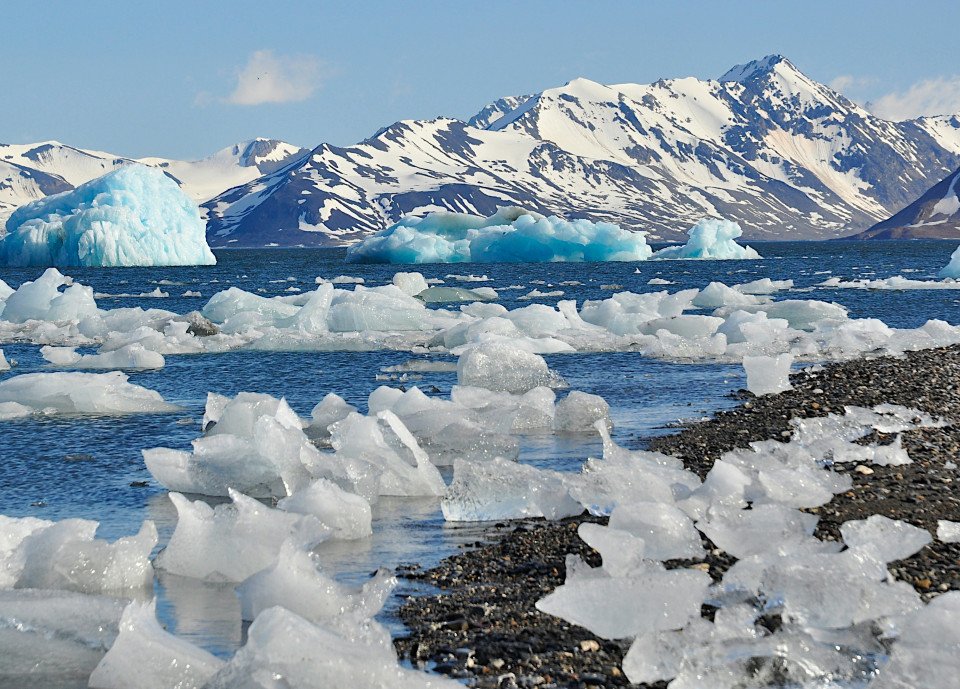
A flexible itinerary allows us to take advantage of favorable ice and weather conditions to travel through the northern stretches of Svalbard to points visited by famous polar explorers such as Andrée, Amundsen and Nobile. Destinations might include the narrow waterways and striking mountains of Krossfjord and Raudfjord. The ship may visit the historic settings of Ny Alesund, Ny London or Amsterdamoya. And of course, we hope to see distinctly Arctic wildlife from walrus hauled out in noisy groups on remote shorelines, to reindeer grazing alpine slopes, and from ptarmigan in their camouflaged hiding places, to mighty polar bears striding the shores in search of their next meal.
Patreksfjörður is a picturesque town located in the Westfjords region of Iceland, known for its stunning natural landscapes and rich cultural history. Nestled along the shores of a beautiful fjord, the town features charming wooden houses and offers breathtaking views of the surrounding mountains and coastline. Patreksfjörður is a gateway to explore the rugged beauty of the Westfjords, with nearby attractions including the dramatic Látrabjarg cliffs, which are home to a variety of seabirds, including puffins. The town also has a vibrant fishing industry and a welcoming community, with local restaurants serving fresh seafood. Visitors can enjoy outdoor activities such as hiking, birdwatching, and exploring the unique geological formations in the area. With its combination of stunning scenery and cultural experiences, Patreksfjörður is a captivating destination for travellers in Iceland.
Sprawling Reykjavík, the nation's nerve center and government seat, is home to half the island's population. On a bay overlooked by proud Mt. Esja (pronounced eh-shyuh), with its ever-changing hues, Reykjavík presents a colorful sight, its concrete houses painted in light colors and topped by vibrant red, blue, and green roofs. In contrast to the almost treeless countryside, Reykjavík has many tall, native birches, rowans, and willows, as well as imported aspen, pines, and spruces.Reykjavík's name comes from the Icelandic words for smoke, reykur, and bay, vík. In AD 874, Norseman Ingólfur Arnarson saw Iceland rising out of the misty sea and came ashore at a bay eerily shrouded with plumes of steam from nearby hot springs. Today most of the houses in Reykjavík are heated by near-boiling water from the hot springs. Natural heating avoids air pollution; there's no smoke around. You may notice, however, that the hot water brings a slight sulfur smell to the bathroom.Prices are easily on a par with other major European cities. A practical option is to purchase a Reykjavík City Card at the Tourist Information Center or at the Reykjavík Youth Hostel. This card permits unlimited bus usage and admission to any of the city's seven pools, the Family Park and Zoo, and city museums. The cards are valid for one (ISK 3,300), two (ISK 4,400), or three days (ISK 4,900), and they pay for themselves after three or four uses a day. Even lacking the City Card, paying admission (ISK 500, or ISK 250 for seniors and people with disabilities) to one of the city art museums (Hafnarhús, Kjarvalsstaðir, or Ásmundarsafn) gets you free same-day admission to the other two.
The town of Húsavík sits below Húsavíkurfjall mountain on the eastern shore of Skjálfandi bay. Just above the town is lake Botnsvatn, a popular place for outings. The lake is just the right size for a nice hike around it. The lakes surroundings are rich in vegetation and bird life and trout is said to be abundant, though small. Húsavík harbour lies below the bank right in the heart of town. The harbour once boasted a large fishing fleet, bustling with the activity of fishermen. It still serves as a fishing harbour but today's activity revolves more around the successful whale watching businesses. The first organised whale watching excursions in Iceland started from here in 1995. Since then, whale watching has become a major attraction and Húsavík continues to be the leading destination for whale watching. In addition to the tours, a fascinating whale museum is located right by the harbour. Húsavík is considered to be the oldest settlement in Iceland. The Swedish explorer, Gardar Svavarsson, spent one winter there in 870 AD during which time he built himself a house from which the settlement derives its name.
Grímsey Island is a small, picturesque island located north of the mainland of Iceland, straddling the Arctic Circle. Known for its stunning landscapes, the island features rugged cliffs, grassy meadows, and a rich variety of wildlife, including seabirds such as puffins and Arctic terns. Grímsey is accessible by ferry or small aircraft and offers a tranquil escape from the hustle and bustle of mainland life. The island is home to a small community, where visitors can experience local culture and hospitality. With its unique location, Grímsey provides opportunities for fishing, hiking, and observing the midnight sun in summer or the Northern Lights in winter. Its breathtaking scenery and peaceful atmosphere make Grímsey Island a hidden gem for nature lovers and adventurers alike.
Seyðisfjörður, a beautiful 19th-century Norwegian village on the east coast of Iceland, is regarded by many as one of Iceland's most picturesque towns, not only due to its impressive environment, but also because nowhere in Iceland has a community of old wooden buildings been preserved so well as here. Poet Matthías Johannessen called Seyðisfjörður a 'pearl enclosed in a shell'. The community owes its origins to foreign merchants, mainly Danes, who started trading in the fjord in the mid-19th century. But the crucial factor in the evolution of the village was the establishment of the Icelandic herring fishery by Norwegians in 1870-1900. The Norwegians built up a number of herring-fishing facilities, and in a matter of years the little community grew into a boom town. Today, about 800 people live in Seyðisfjörður. The local economy has long been based on the fisheries, while light industry also flourishes. Tourism is playing a growing role, as the picturesque town in its spectacular surroundings attracts more and more visitors. The car/passenger ferry Norrøna, which plies between continental Europe and Iceland every summer, docks at Seyðisfjörður every Thursday. Seyðisfjörður has been a cosmopolitan community from its foundation, and the ferry service has contributed to ensuring that it remains so.
Tórshavn, the charming capital of the Faroe Islands, is a captivating blend of stunning landscapes and rich cultural heritage. With its picturesque harbour, colourful turf-roofed houses, and narrow streets, the city invites exploration and discovery. Visitors can immerse themselves in local culture through museums, enjoy traditional Faroese cuisine at cosy cafés, and engage in outdoor activities like hiking and birdwatching. Throughout the year, Tórshavn comes alive with festivals celebrating music and art, making it a vibrant destination that beautifully showcases the spirit and beauty of the Faroe Islands.
Klaksvik is the second-largest town in the Faroe Islands, located on the northern island of Borðoy. Known for its stunning natural scenery, Klaksvik is surrounded by dramatic mountains and picturesque fjords, making it a haven for outdoor enthusiasts. The town has a vibrant fishing industry and boasts a rich maritime history, reflected in its charming harbour and traditional wooden houses. Visitors can explore local culture through museums, art galleries, and festivals celebrating Faroese traditions. Klaksvik also serves as a gateway to nearby islands, offering opportunities for hiking, birdwatching, and experiencing the breathtaking landscapes of the Faroe Islands. With its unique blend of natural beauty and cultural heritage, Klaksvik is a captivating destination for travellers.
It’s hard to imagine, as you stroll Heimaey’s idyllic streets of white wooden houses, that this island was literally torn apart by a spectacular volcanic eruption, just over 40 years ago. The fact that you can visit incredible Heimaey at all is something of a miracle – because the oozing lava of the Eldfell volcano threatened to seal the harbour off completely. Fortunately, its advance was halted by gallons of seawater, pumped onto it by the plucky islanders, who saved their fishing industry in the process. Iceland's famous for its scenery, and the huge castles of volcanic rock that rise out of the sea's waves here are some of the country's most dramatic.
Sprawling Reykjavík, the nation's nerve center and government seat, is home to half the island's population. On a bay overlooked by proud Mt. Esja (pronounced eh-shyuh), with its ever-changing hues, Reykjavík presents a colorful sight, its concrete houses painted in light colors and topped by vibrant red, blue, and green roofs. In contrast to the almost treeless countryside, Reykjavík has many tall, native birches, rowans, and willows, as well as imported aspen, pines, and spruces.Reykjavík's name comes from the Icelandic words for smoke, reykur, and bay, vík. In AD 874, Norseman Ingólfur Arnarson saw Iceland rising out of the misty sea and came ashore at a bay eerily shrouded with plumes of steam from nearby hot springs. Today most of the houses in Reykjavík are heated by near-boiling water from the hot springs. Natural heating avoids air pollution; there's no smoke around. You may notice, however, that the hot water brings a slight sulfur smell to the bathroom.Prices are easily on a par with other major European cities. A practical option is to purchase a Reykjavík City Card at the Tourist Information Center or at the Reykjavík Youth Hostel. This card permits unlimited bus usage and admission to any of the city's seven pools, the Family Park and Zoo, and city museums. The cards are valid for one (ISK 3,300), two (ISK 4,400), or three days (ISK 4,900), and they pay for themselves after three or four uses a day. Even lacking the City Card, paying admission (ISK 500, or ISK 250 for seniors and people with disabilities) to one of the city art museums (Hafnarhús, Kjarvalsstaðir, or Ásmundarsafn) gets you free same-day admission to the other two.
Before English and Scottish settlers arrived in the 1600s, Belfast was a tiny village called Béal Feirste ("sandbank ford") belonging to Ulster's ancient O'Neill clan. With the advent of the Plantation period (when settlers arrived in the 1600s), Sir Arthur Chichester, from Devon in southwestern England, received the city from the English Crown, and his son was made Earl of Donegall. Huguenots fleeing persecution from France settled near here, bringing their valuable linen-work skills. In the 18th century, Belfast underwent a phenomenal expansion—its population doubled every 10 years, despite an ever-present sectarian divide. Although the Anglican gentry despised the Presbyterian artisans—who, in turn, distrusted the native Catholics—Belfast's growth continued at a dizzying speed. The city was a great Victorian success story, an industrial boomtown whose prosperity was built on trade, especially linen and shipbuilding. Famously (or infamously), the Titanic was built here, giving Belfast, for a time, the nickname "Titanic Town." Having laid the foundation stone of the city's university in 1845, Queen Victoria returned to Belfast in 1849 (she is recalled in the names of buildings, streets, bars, monuments, and other places around the city), and in the same year, the university opened under the name Queen's College. Nearly 40 years later, in 1888, Victoria granted Belfast its city charter. Today its population is nearly 300,000, tourist numbers have increased, and this dramatically transformed city is enjoying an unparalleled renaissance.This is all a welcome change from the period when news about Belfast meant reports about "the Troubles." Since the 1994 ceasefire, Northern Ireland's capital city has benefited from major hotel investment, gentrified quaysides (or strands), a sophisticated new performing arts center, and major initiatives to boost tourism. Although the 1996 bombing of offices at Canary Wharf in London disrupted the 1994 peace agreement, the ceasefire was officially reestablished on July 20, 1997, and this embattled city began its quest for a newfound identity.Since 2008, the city has restored all its major public buildings such as museums, churches, theaters, City Hall, Ulster Hall—and even the glorious Crown Bar—spending millions of pounds on its built heritage. A gaol that at the height of the Troubles held some of the most notorious murderers involved in paramilitary violence is now a major visitor attraction.Belfast's city center is made up of three roughly contiguous areas that are easy to navigate on foot. From the south end to the north, it's about an hour's leisurely walk.
The Isle of Man, situated in the Irish Sea off the west coast of England, is a mountainous, cliff-fringed island and one of Britain’s most beautiful spots. Measuring just 30 miles by 13 miles, the Isle of Man remains semi-autonomous. With its own postage stamps, laws, currency, and the Court of Tynwald (the world’s oldest democratic parliament), the Isle of Man is rich with history and lore.Inhabited from Neolithic times, the island became a refuge for Irish missionaries after the 5th Century. Norsemen took the island during the 9th Century and sold it to Scotland in 1266. However, since the 14th Century, it has been held by England. Manx, the indigenous Celtic language, is still spoken by a small minority. The Isle of Man has no income tax, which has encouraged many Britains to regard the island as a refuge. Otherwise, it is populated by Gaelic farmers, fishermen, and the famous tailless manx cats. The varied landscape features austere moorlands and wooded glens, interspersed by fine castles, narrow-gauge railways, and scores of standing stones with Celtic crosses. The hilly terrain rises to a height of 2,036 feet at Mount Snaefell, which dominates the center of the island.
You'll always receive a welcome to remember, as the colourful cafes, houses and shops that line Tobermory's picturesque harbour salute your arrival. Located on the craggy Scottish Inner Hebrides, Tobermory serves as the capital of the Isle of Mull. There's a high chance you'll recognise the town’s colourfully-daubed buildings, as their charming exteriors have featured in countless TV shows - most notably in the children’s favourite, Balamory. There's always a new story to discover here – not least the legend that suggests there's a sunken Spanish galleon, brimming with lost gold, sitting just below the waves that roll around the harbour. Learn a little more of the area’s history at the Mull Museum, or head out to enjoy some of the fabulous wildlife watching opportunities on offer on a boat tour. You can spot majestic birds like white tail and golden eagles circling in the skies, or turn your attention to the waves, where friendly dolphins and Minke whales are regular visitors. Treat yourself to a sample of one of the island's finest exports before leaving, as you drop in at the Tobermory Distillery for some whiskey tasting. Established in 1798, it’s one of Scotland's oldest distilleries.
St Kilda is a remarkable uninhabited archipelago some 40 nautical miles beyond the Outer Hebrides. The stunning cliffs and sea stacks are home to the most important seabird breeding colony in northwest Europe. St Kilda is one of the few places in the world to have received dual World Heritage status from UNESCO in recognition of its Natural Heritage and cultural significance. Village Bay on the island of Hirta once supported a population of over 200, but the last islanders left in the 1930s. Recent restoration work on the village by the National Trust for Scotland offers a marvellous link with the past. One of the caretakers acts as shopkeeper and postmaster for any visitors who might like to send a postcard home from St. Kilda.
Founded by Dutch fishermen in the 17th century, Lerwick today is a busy town and administrative center. Handsome stone buildings—known as lodberries—line the harbor; they provided loading bays for goods, some of them illegal. The town's twisting flagstone lanes and harbor once heaved with activity, and Lerwick is still an active port today. This is also where most visitors to Shetland dock, spilling out of cruise ships, allowing passengers to walk around the town.
Exploring the sandstone cliff faces of the Isle of Noss will reveal ledges loaded with gannets, puffins, guillemots, shags, kittiwakes, Razorbills, fulmars and Great Skuas. The island was recognized as a National Nature Reserve in 1955, and has one of Europe’s largest and most diverse seabird colonies. Sheep have grazed the inland hillsides of Noss since the late 1800s and early 1900s when around twenty people lived on the island to manage the sheep farm. Along with the sheep, shaggy Shetland ponies graze the windblown slopes of Noss.
Tórshavn, the charming capital of the Faroe Islands, is a captivating blend of stunning landscapes and rich cultural heritage. With its picturesque harbour, colourful turf-roofed houses, and narrow streets, the city invites exploration and discovery. Visitors can immerse themselves in local culture through museums, enjoy traditional Faroese cuisine at cosy cafés, and engage in outdoor activities like hiking and birdwatching. Throughout the year, Tórshavn comes alive with festivals celebrating music and art, making it a vibrant destination that beautifully showcases the spirit and beauty of the Faroe Islands.
Klaksvik is the second-largest town in the Faroe Islands, located on the northern island of Borðoy. Known for its stunning natural scenery, Klaksvik is surrounded by dramatic mountains and picturesque fjords, making it a haven for outdoor enthusiasts. The town has a vibrant fishing industry and boasts a rich maritime history, reflected in its charming harbour and traditional wooden houses. Visitors can explore local culture through museums, art galleries, and festivals celebrating Faroese traditions. Klaksvik also serves as a gateway to nearby islands, offering opportunities for hiking, birdwatching, and experiencing the breathtaking landscapes of the Faroe Islands. With its unique blend of natural beauty and cultural heritage, Klaksvik is a captivating destination for travellers.
It’s hard to imagine, as you stroll Heimaey’s idyllic streets of white wooden houses, that this island was literally torn apart by a spectacular volcanic eruption, just over 40 years ago. The fact that you can visit incredible Heimaey at all is something of a miracle – because the oozing lava of the Eldfell volcano threatened to seal the harbour off completely. Fortunately, its advance was halted by gallons of seawater, pumped onto it by the plucky islanders, who saved their fishing industry in the process. Iceland's famous for its scenery, and the huge castles of volcanic rock that rise out of the sea's waves here are some of the country's most dramatic.
Sprawling Reykjavík, the nation's nerve center and government seat, is home to half the island's population. On a bay overlooked by proud Mt. Esja (pronounced eh-shyuh), with its ever-changing hues, Reykjavík presents a colorful sight, its concrete houses painted in light colors and topped by vibrant red, blue, and green roofs. In contrast to the almost treeless countryside, Reykjavík has many tall, native birches, rowans, and willows, as well as imported aspen, pines, and spruces.Reykjavík's name comes from the Icelandic words for smoke, reykur, and bay, vík. In AD 874, Norseman Ingólfur Arnarson saw Iceland rising out of the misty sea and came ashore at a bay eerily shrouded with plumes of steam from nearby hot springs. Today most of the houses in Reykjavík are heated by near-boiling water from the hot springs. Natural heating avoids air pollution; there's no smoke around. You may notice, however, that the hot water brings a slight sulfur smell to the bathroom.Prices are easily on a par with other major European cities. A practical option is to purchase a Reykjavík City Card at the Tourist Information Center or at the Reykjavík Youth Hostel. This card permits unlimited bus usage and admission to any of the city's seven pools, the Family Park and Zoo, and city museums. The cards are valid for one (ISK 3,300), two (ISK 4,400), or three days (ISK 4,900), and they pay for themselves after three or four uses a day. Even lacking the City Card, paying admission (ISK 500, or ISK 250 for seniors and people with disabilities) to one of the city art museums (Hafnarhús, Kjarvalsstaðir, or Ásmundarsafn) gets you free same-day admission to the other two.
Two colossal terraces of sheer rock stand either side of this extraordinarily located town - which rides a jutting spit onto an immensity of black fjord water. Surprisingly, considering the remoteness of its location and its compact size, Isafjordur is a modern and lively place to visit, offering a great choice of cafes and delicious restaurants – which are well stocked to impress visitors. The town is a perfectly located base for adventures amongst Iceland's fantastic wilderness - with skiing, hiking and water-sports popular pursuits among visitors.
Described as one of the most remote islands in the world, Jan Mayen liesbetween Norway to the east and Greenland to the west. It is a rugged volcanicisland 34 miles long and is made up of two parts – the larger section to thenorth (Beerenbeg Volcano) and the longer but narrower section to the south. Amile-wide isthmus links these two parts. Geologically, the island was formed bya ‘hotspot’ where molten magma pushes up through the earth’s crust to createvolcanoes in the middle of nowhere. Politically, Jan Mayen is an integral partof Norway. The eighteen people living on the island work for either the NorwegianArmed Forces or the Norwegian Meteorological Institute. Their main purpose isto operate the Loran-C radio navigation system. From 1615 to 1638, the Dutchran a whaling station here. Today, the island is a nature reserve underNorwegian jurisdiction aimed at preserving the pristine Arctic island and themarine life, including the ocean floor.
Longyearbyen is the biggest settlement in Svalbard. Seat of the Norwegian administration, it also has the best services and infrastructure in the archipelago. Located deep in the Adventfjord, a sidearm of the Isfjorden (Icefjord), Longyearbyen’s airport can be used all-year round, but its harbor is blocked by ice in winter. Most shops, hotels, restaurants and a hospital are within easy walking distance of the port. One of the most prominent buildings in town is the UNIS center, where several Norwegian universities have joined forces to operate and offer the northernmost higher education to both Norwegian and international students. Adjacent to UNIS, and well worth a visit, is the Svalbard Museum, covering the natural history and exploitation of Svalbard. Remnants of the former mining activity can be seen all around Longyearbyen and even in town.
A flexible itinerary allows us to take advantage of favorable ice and weather conditions to travel through the northern stretches of Svalbard to points visited by famous polar explorers such as Andrée, Amundsen and Nobile. Destinations might include the narrow waterways and striking mountains of Krossfjord and Raudfjord. The ship may visit the historic settings of Ny Alesund, Ny London or Amsterdamoya. And of course, we hope to see distinctly Arctic wildlife from walrus hauled out in noisy groups on remote shorelines, to reindeer grazing alpine slopes, and from ptarmigan in their camouflaged hiding places, to mighty polar bears striding the shores in search of their next meal.
Patreksfjörður is a picturesque town located in the Westfjords region of Iceland, known for its stunning natural landscapes and rich cultural history. Nestled along the shores of a beautiful fjord, the town features charming wooden houses and offers breathtaking views of the surrounding mountains and coastline. Patreksfjörður is a gateway to explore the rugged beauty of the Westfjords, with nearby attractions including the dramatic Látrabjarg cliffs, which are home to a variety of seabirds, including puffins. The town also has a vibrant fishing industry and a welcoming community, with local restaurants serving fresh seafood. Visitors can enjoy outdoor activities such as hiking, birdwatching, and exploring the unique geological formations in the area. With its combination of stunning scenery and cultural experiences, Patreksfjörður is a captivating destination for travellers in Iceland.
Sprawling Reykjavík, the nation's nerve center and government seat, is home to half the island's population. On a bay overlooked by proud Mt. Esja (pronounced eh-shyuh), with its ever-changing hues, Reykjavík presents a colorful sight, its concrete houses painted in light colors and topped by vibrant red, blue, and green roofs. In contrast to the almost treeless countryside, Reykjavík has many tall, native birches, rowans, and willows, as well as imported aspen, pines, and spruces.Reykjavík's name comes from the Icelandic words for smoke, reykur, and bay, vík. In AD 874, Norseman Ingólfur Arnarson saw Iceland rising out of the misty sea and came ashore at a bay eerily shrouded with plumes of steam from nearby hot springs. Today most of the houses in Reykjavík are heated by near-boiling water from the hot springs. Natural heating avoids air pollution; there's no smoke around. You may notice, however, that the hot water brings a slight sulfur smell to the bathroom.Prices are easily on a par with other major European cities. A practical option is to purchase a Reykjavík City Card at the Tourist Information Center or at the Reykjavík Youth Hostel. This card permits unlimited bus usage and admission to any of the city's seven pools, the Family Park and Zoo, and city museums. The cards are valid for one (ISK 3,300), two (ISK 4,400), or three days (ISK 4,900), and they pay for themselves after three or four uses a day. Even lacking the City Card, paying admission (ISK 500, or ISK 250 for seniors and people with disabilities) to one of the city art museums (Hafnarhús, Kjarvalsstaðir, or Ásmundarsafn) gets you free same-day admission to the other two.
The town of Húsavík sits below Húsavíkurfjall mountain on the eastern shore of Skjálfandi bay. Just above the town is lake Botnsvatn, a popular place for outings. The lake is just the right size for a nice hike around it. The lakes surroundings are rich in vegetation and bird life and trout is said to be abundant, though small. Húsavík harbour lies below the bank right in the heart of town. The harbour once boasted a large fishing fleet, bustling with the activity of fishermen. It still serves as a fishing harbour but today's activity revolves more around the successful whale watching businesses. The first organised whale watching excursions in Iceland started from here in 1995. Since then, whale watching has become a major attraction and Húsavík continues to be the leading destination for whale watching. In addition to the tours, a fascinating whale museum is located right by the harbour. Húsavík is considered to be the oldest settlement in Iceland. The Swedish explorer, Gardar Svavarsson, spent one winter there in 870 AD during which time he built himself a house from which the settlement derives its name.
Grímsey Island is a small, picturesque island located north of the mainland of Iceland, straddling the Arctic Circle. Known for its stunning landscapes, the island features rugged cliffs, grassy meadows, and a rich variety of wildlife, including seabirds such as puffins and Arctic terns. Grímsey is accessible by ferry or small aircraft and offers a tranquil escape from the hustle and bustle of mainland life. The island is home to a small community, where visitors can experience local culture and hospitality. With its unique location, Grímsey provides opportunities for fishing, hiking, and observing the midnight sun in summer or the Northern Lights in winter. Its breathtaking scenery and peaceful atmosphere make Grímsey Island a hidden gem for nature lovers and adventurers alike.
Seyðisfjörður, a beautiful 19th-century Norwegian village on the east coast of Iceland, is regarded by many as one of Iceland's most picturesque towns, not only due to its impressive environment, but also because nowhere in Iceland has a community of old wooden buildings been preserved so well as here. Poet Matthías Johannessen called Seyðisfjörður a 'pearl enclosed in a shell'. The community owes its origins to foreign merchants, mainly Danes, who started trading in the fjord in the mid-19th century. But the crucial factor in the evolution of the village was the establishment of the Icelandic herring fishery by Norwegians in 1870-1900. The Norwegians built up a number of herring-fishing facilities, and in a matter of years the little community grew into a boom town. Today, about 800 people live in Seyðisfjörður. The local economy has long been based on the fisheries, while light industry also flourishes. Tourism is playing a growing role, as the picturesque town in its spectacular surroundings attracts more and more visitors. The car/passenger ferry Norrøna, which plies between continental Europe and Iceland every summer, docks at Seyðisfjörður every Thursday. Seyðisfjörður has been a cosmopolitan community from its foundation, and the ferry service has contributed to ensuring that it remains so.
Tórshavn, the charming capital of the Faroe Islands, is a captivating blend of stunning landscapes and rich cultural heritage. With its picturesque harbour, colourful turf-roofed houses, and narrow streets, the city invites exploration and discovery. Visitors can immerse themselves in local culture through museums, enjoy traditional Faroese cuisine at cosy cafés, and engage in outdoor activities like hiking and birdwatching. Throughout the year, Tórshavn comes alive with festivals celebrating music and art, making it a vibrant destination that beautifully showcases the spirit and beauty of the Faroe Islands.
Klaksvik is the second-largest town in the Faroe Islands, located on the northern island of Borðoy. Known for its stunning natural scenery, Klaksvik is surrounded by dramatic mountains and picturesque fjords, making it a haven for outdoor enthusiasts. The town has a vibrant fishing industry and boasts a rich maritime history, reflected in its charming harbour and traditional wooden houses. Visitors can explore local culture through museums, art galleries, and festivals celebrating Faroese traditions. Klaksvik also serves as a gateway to nearby islands, offering opportunities for hiking, birdwatching, and experiencing the breathtaking landscapes of the Faroe Islands. With its unique blend of natural beauty and cultural heritage, Klaksvik is a captivating destination for travellers.
It’s hard to imagine, as you stroll Heimaey’s idyllic streets of white wooden houses, that this island was literally torn apart by a spectacular volcanic eruption, just over 40 years ago. The fact that you can visit incredible Heimaey at all is something of a miracle – because the oozing lava of the Eldfell volcano threatened to seal the harbour off completely. Fortunately, its advance was halted by gallons of seawater, pumped onto it by the plucky islanders, who saved their fishing industry in the process. Iceland's famous for its scenery, and the huge castles of volcanic rock that rise out of the sea's waves here are some of the country's most dramatic.
Sprawling Reykjavík, the nation's nerve center and government seat, is home to half the island's population. On a bay overlooked by proud Mt. Esja (pronounced eh-shyuh), with its ever-changing hues, Reykjavík presents a colorful sight, its concrete houses painted in light colors and topped by vibrant red, blue, and green roofs. In contrast to the almost treeless countryside, Reykjavík has many tall, native birches, rowans, and willows, as well as imported aspen, pines, and spruces.Reykjavík's name comes from the Icelandic words for smoke, reykur, and bay, vík. In AD 874, Norseman Ingólfur Arnarson saw Iceland rising out of the misty sea and came ashore at a bay eerily shrouded with plumes of steam from nearby hot springs. Today most of the houses in Reykjavík are heated by near-boiling water from the hot springs. Natural heating avoids air pollution; there's no smoke around. You may notice, however, that the hot water brings a slight sulfur smell to the bathroom.Prices are easily on a par with other major European cities. A practical option is to purchase a Reykjavík City Card at the Tourist Information Center or at the Reykjavík Youth Hostel. This card permits unlimited bus usage and admission to any of the city's seven pools, the Family Park and Zoo, and city museums. The cards are valid for one (ISK 3,300), two (ISK 4,400), or three days (ISK 4,900), and they pay for themselves after three or four uses a day. Even lacking the City Card, paying admission (ISK 500, or ISK 250 for seniors and people with disabilities) to one of the city art museums (Hafnarhús, Kjarvalsstaðir, or Ásmundarsafn) gets you free same-day admission to the other two.
This holiday is generally suitable for persons with reduced mobility. For customers with reduced mobility or any medical condition that may require special assistance or arrangements to be made, please notify your Cruise Concierge at the time of your enquiry, so that we can provide specific information as to the suitability of the holiday, as well as make suitable arrangements with the Holiday Provider on your behalf.
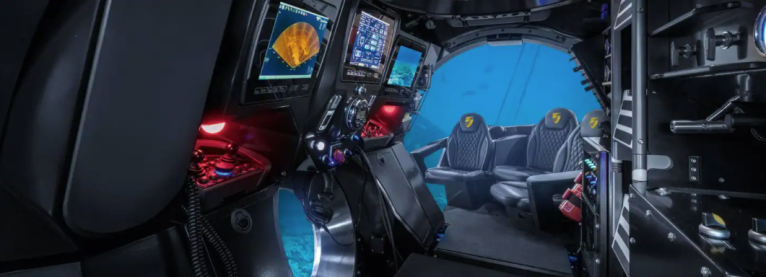
Seabourn Pursuit Ship Facts
Seabourn Pursuit was launched in 2023
The gross tonnage is 23000
The width of Seabourn Pursuit is 26 meters
The maximum speed of the ship is 22 knots per hour
The length of Seabourn Pursuit is 170 meters
The currency taken on Seabourn Pursuit is USD
Seabourn Pursuit has 120 cabin crew members
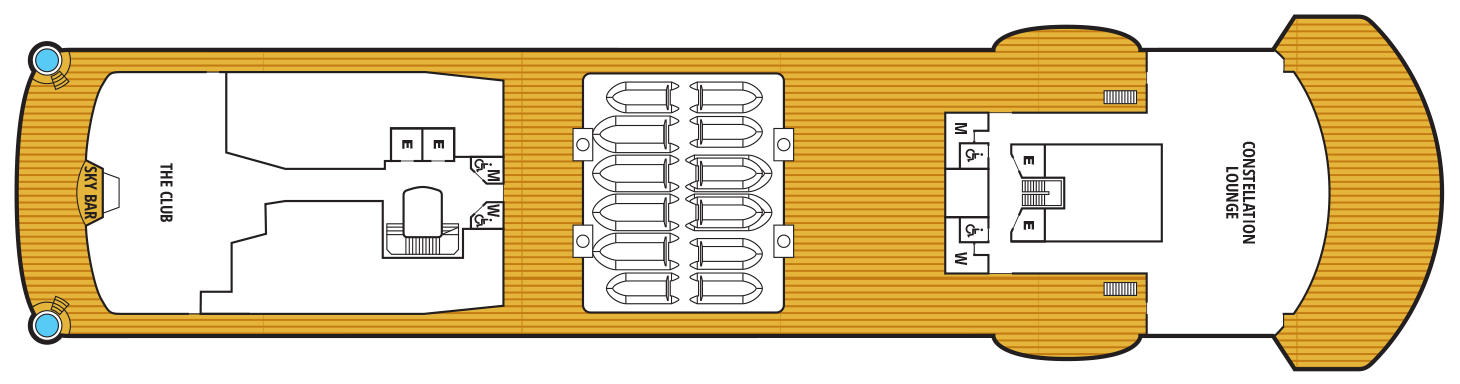
The ship has 8 decks
Seabourn Pursuit has 132 cabins on board
It also has 3 wheelchair cabins on board
Explore Seabourn Pursuit
Seabourn Pursuit Cabins & Suites
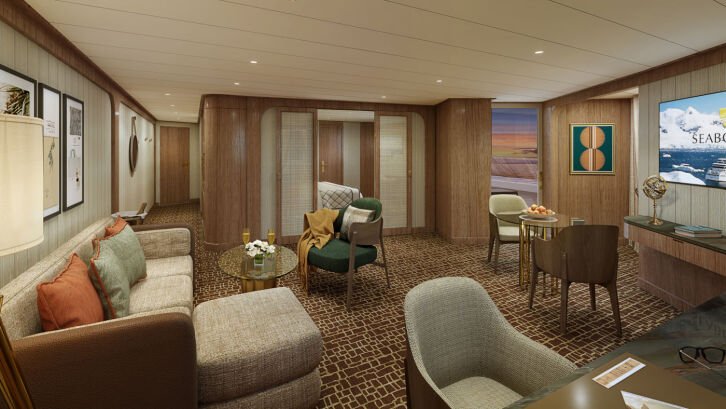
Grand Wintergarden Suite
Wintergarden Suites feature large windows, dining for six, whirlpool bathtub, guest bath, convertible sofa bed for one, pantry with wet bar, glass-enclosed solarium with tub and day bed, two closets and two flat-screen TVs. Complimentary Internet/Wi-Fi service.
Wintergarden Suite Features
Large windows
Glass door to private veranda
Comfortable living area
Dining for four
Separate bedroom
Queen-size bed or two twin beds
Walk-in closet
Two flat-screen TVs
Complimentary Internet/Wi-Fi service.
Fully stocked bar and refrigerator
Makeup vanity
Guest bath
Bathroom with whirlpool bathtub
*Wheelchair accessible suites are roll-in shower only.
Signature Suites feature expansive ocean views, forward-facing windows, dining for four to six, bathroom with whirlpool bathtub, guest bath, pantry with wet bar, and two flat-screen TVs. Complimentary Internet/Wi-Fi service.
Owner's Suites on feature a comfortable living area; private veranda; queen-size bed or two twin beds; extra-large walk-in closet for expedition gear; personal safe; interactive flat-screen TV with music and movies; fully stocked bar and refrigerator; writing desk with personalized stationery; makeup vanity; spacious bathroom with double vanities, tub and shower, plush robes, slippers, hairdryer and 110/220V AC outlets.
Penthouse Spa Suites on board feature a comfortable living area, glass door to private veranda, queen-size-bed or two twin beds; walk-in closet with personal safe, interactive flat-screen TV, fully stocked bar and refrigerator and spacious marble bath with double vanities.
Penthouse Spa Suite
Large windows
Glass door to private veranda
Comfortable living area
Large windows
Glass door to private veranda
Comfortable living area
Dining table for two
Breathtaking ocean views right from your bed
Queen-size bed or two twin beds
Walk-in closet
Two flat-screen TVs
Fully stocked bar and refrigerator
Makeup vanity
Spacious bathroom with separate tub and shower
*Wheelchair accessible suites are roll-in shower only.
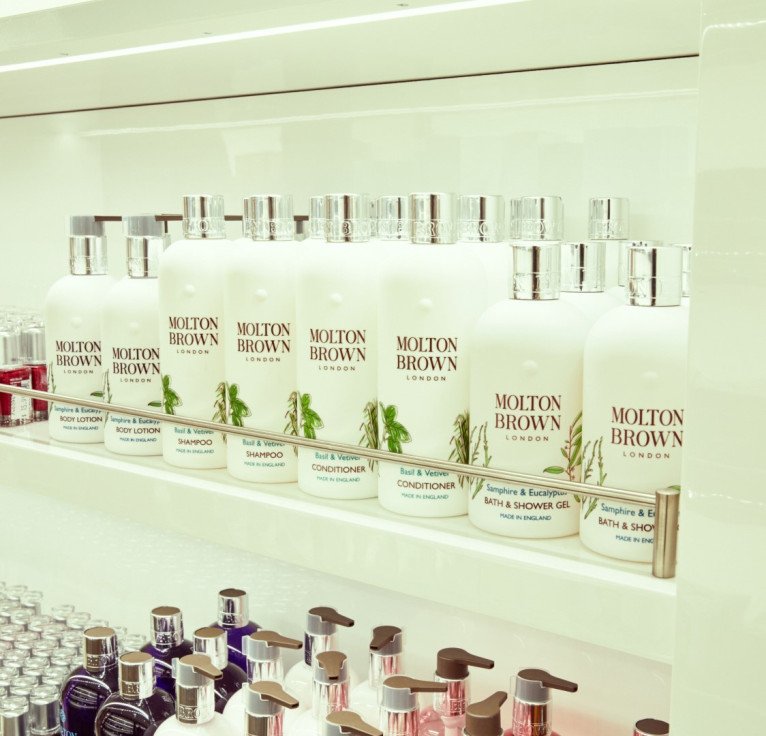
Approximate total space: 527 sq. ft. (49 sq. m.) including veranda of 97 sq. ft. (9 sq. m.) All Penthouse Suites feature a comfortable living area; private veranda; queen-size bed or two twin beds; walk-in closet; personal safe; interactive TV with music and movies; fully stocked bar and refrigerator; writing desk with personalized stationery; makeup vanity; spacious bathroom, separate tub and shower, plush robes, slippers, luxury health and beauty products, hairdryer and 110/220V AC outlets.
Penthouse Suite Feautures
Dining table for two to four
Separate bedroom
Glass door to veranda
Two flat-screen TVs
Fully stocked bar
Spacious bathroom with tub, shower and large vanity
Approximate total space: 355 sq. ft. (33 sq. m.) including veranda of 75 sq. ft. (7 sq. m.)* Suites on Seabourn Venture feature a comfortable living area; private veranda; queen-size bed or two twin beds; extra-large walk-in closet for expedition gear; personal safe; interactive flat-screen TV with music and movies; fully stocked bar and refrigerator; writing desk with personalized stationery; makeup vanity; spacious bathroom with double vanities, tub and shower, plush robes, slippers, hairdryer and 110/220V AC outlets.
Veranda Suite Features
A large picture window
Glass door to private veranda
Comfortable living area
Dining table for two to four
Queen-size bed or two twin beds
Walk-in closet
Interactive flat-screen television with music and movies
Fully stocked bar and refrigerator
Makeup vanity
Spacious bathroom with separate tub and shower
*Wheelchair accessible suites are roll-in shower only.
All Veranda Spa Suites onboard Seabourn Pursuit feature a comfortable living area; private veranda; queen-size bed or two twin beds; walk-in closet; personal safe; interactive TV with music and movies; fully stocked bar and refrigerator; writing desk with personalised stationery; makeup vanity; spacious bathroom, separate tub and shower, plush robes, slippers, luxury health and beauty products, hairdryer and 110/220V AC outlets.
Veranda Spa Suite Feautures
A large picture window
Glass door to private veranda
Comfortable living area
Dining table for two to four
Queen-size bed or two twin beds
Walk-in closet
Interactive flat-screen television with music and movies
Fully stocked bar and refrigerator
Makeup vanity
Spacious bathroom with separate tub and shower
*Wheelchair accessible suites are roll-in shower only.
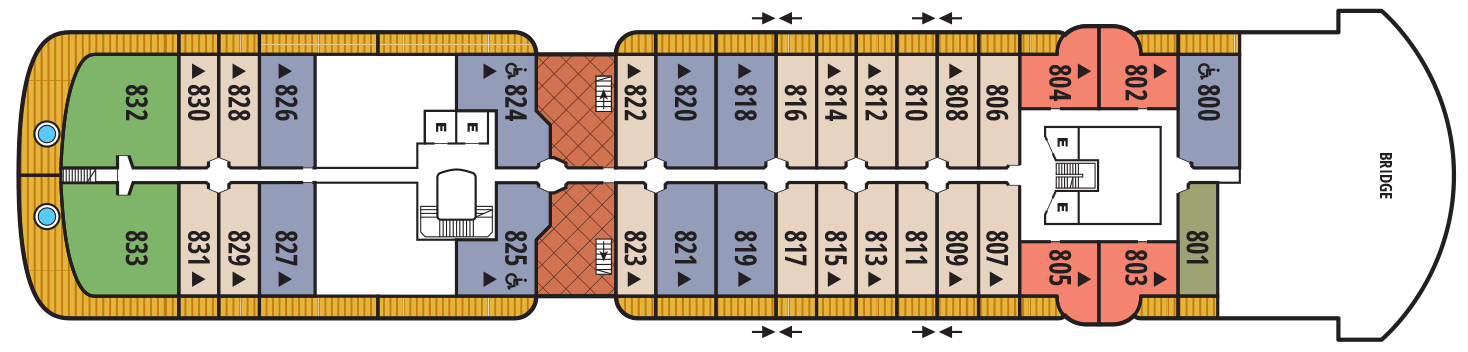
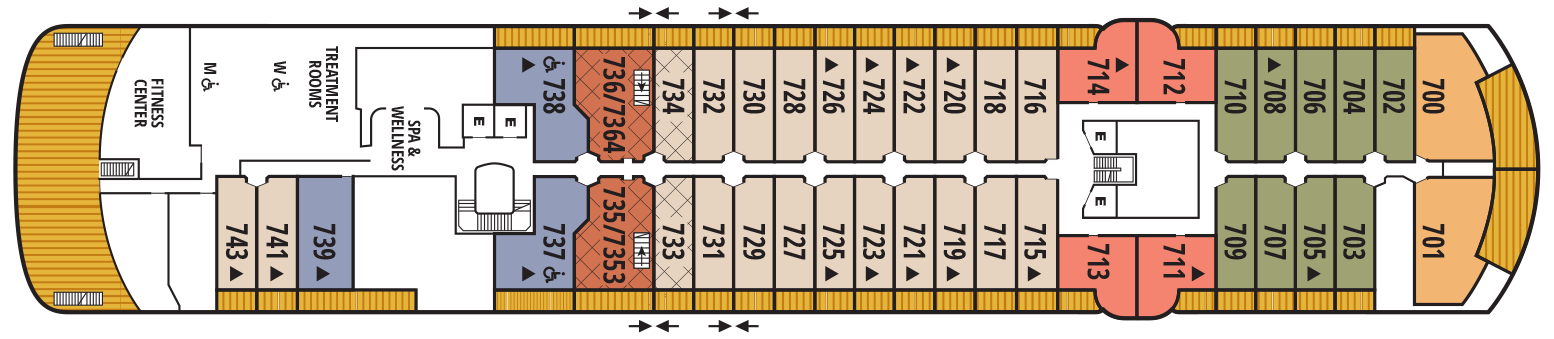
Suites 513-516, 611-614, 711-714, 802-805; Total space: 417 sq. ft. (39 sq. m.) incl. veranda of 85 sq. ft. (8 sq. m.) All Panorama Veranda Suites feature a comfortable living area; private veranda; queen-size bed or two twin beds; walk-in closet; personal safe; interactive TV with music and movies; fully stocked bar and refrigerator; writing desk with personalized stationery; makeup vanity; spacious bathroom, separate tub and shower, plush robes, slippers, luxury health and beauty products, hairdryer and 110/220V AC outlets. *Some veranda sizes vary.
Panorama Penthouse Suite Features
Large windows
Glass door to private veranda
Comfortable living area
Large windows
Glass door to private veranda
Comfortable living area
Dining table for two
Breathtaking ocean views right from your bed
Queen-size bed or two twin beds
Walk-in closet
Two flat-screen TVs
Fully stocked bar and refrigerator
Makeup vanity
Spacious bathroom with separate tub and shower
*Wheelchair accessible suites are roll-in shower only.
Spacious bathroom with tub, shower and large vanity
Veranda Guarantee
Approximate total space: 355 sq. ft. (33 sq. m.) including veranda of 75 sq. ft. (7 sq. m.)* Suites on Seabourn Pursuit feature a comfortable living area; private veranda; queen-size bed or two twin beds; extra-large walk-in closet for expedition gear; personal safe; interactive flat-screen TV with music and movies; fully stocked bar and refrigerator; writing desk with personalized stationery; makeup vanity; spacious bathroom with double vanities, tub and shower, plush robes, slippers, hairdryer and 110/220V AC outlets.
Specialist Cruise Concierge and Expedition Specialist
Jo
Luxury Product Executive
Andrew W
Sales Manager for SixStarCruises
Laura W EXPEDITION TEST
Senior Specialist Cruise Concierge and Expedition Specialist
test
fghjkl
SixStarCruises
Claire
Specialist Cruise Concierge and Expedition Specialist
Hi, I'm Claire, a Specialist Cruise Concierge & Expedition Specialist. I’m going into my 15th year working in the travel industry and I love it more than ever! The best part about working in travel is the experiences and opportunities you get. I love creating unforgettable trips for my customers and listening to their stories from their travels when they return home.
My favourite cruise line is definitely Regent Seven Seas Cruises. They are the highest standard of luxury I have ever experienced; the staff were amazing, the food was excellent and our suite was so spacious. Everything about the cruise with Regent was just pure luxury and I can't wait to travel with them again!
Visiting the British Isles during my expedition cruise on board Seabourn Encore was also a dream moment for me. We had such an amazing experience, using the zodiacs to get up close and personal with the incredible wildlife whilst enjoying the luxury of sailing with Seabourn.
My favourite region in the world is around the Adriatic and the Mediterranean; the food, the beaches and the atmosphere in Italy and the Greek Islands are just beautiful.
Sailed With:
✔Seabourn
✔Regent Seven Seas Cruises
✔Silversea
✔Oceania Cruises
✔Atlas Ocean Voyages
✔AE Expeditions
Destinations Visited:
✔United Kingdom
✔Mediterranean
✔Canaries
✔Scandinavia
✔Antarctica
Experience
Ship:Seabourn Venture
Date:June 2023
Summary
My expedition around the British Isles was an incredible experience. It was wonderful to enjoy the adventure whilst still experiencing the luxury of Seabourn. I'm going into my 15th year working in the travel industry and this was the best trip I've ever done.
The welcome/safety meeting onboard is where we first met the crew. There are 24 Expedition Team Members on-board, ranging from academics, scientists and naturalists. Their knowledge, passion and enthusiasm really showed throughout the whole cruise, the tours and the lectures. You can tell they are genuinely excited to be there.
We spotted plenty of puffins and seals while exploring the Isle of Man and Isles of Scilly on zodiac excursions, led by members of the expedition team. They were always on hand to share their knowledge and expertise so we could learn more about the incredible creatures we were seeing. We had Luciano Bernacchi, the Expedition Leader, guiding our zodiac excursion. We sailed around the coast of the Calf of Man, taking our Swarovski binoculars (which are available to all guests) to spot the variety of different wildlife.
There are 24 zodiacs on board, varying in size. I was surprised by how sturdy they are on the water, even at speed. The guide gauges how fast you want to go, either a leisurely ride or a full-on jet ride as they’re taking you to and from the shore.
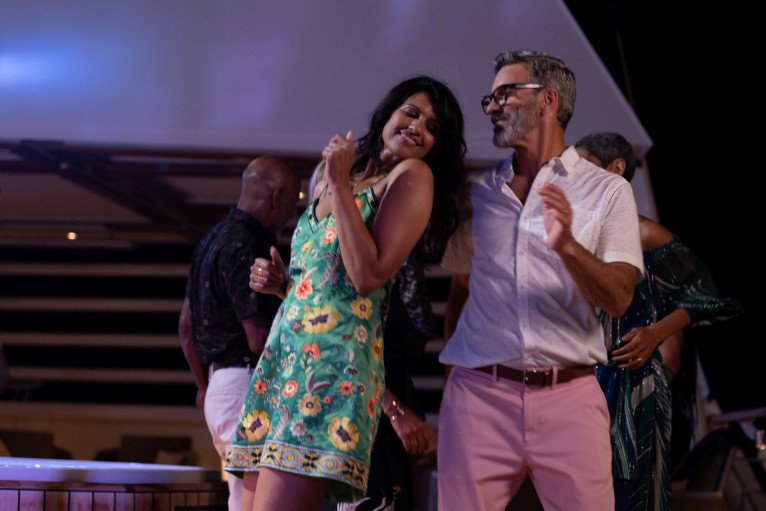
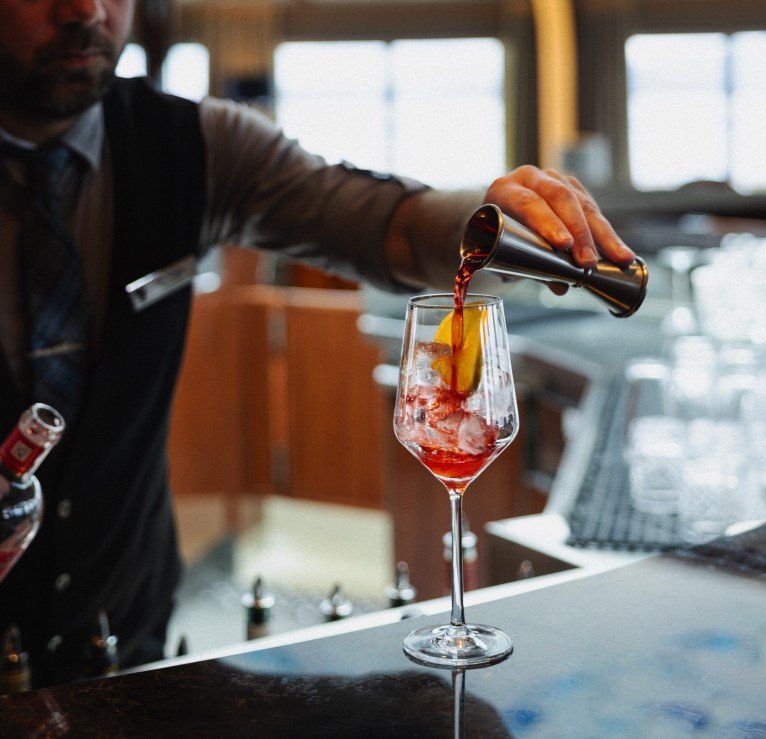
The onboard experience was phenomenal; exquisite dining and expedition talks really do bring the day’s activities and excursions to life. The relaxed ambience on board provided the perfect respite from a busy day of exploring. Expedition cruising with Seabourn truly combines the best of exploration and ultra-luxury cruising.
One of the notable differences with an Expedition cruise is that the schedule is fluid, plans can and do change depending on sightings, the weather and many other factors - safety will always come first. Seabourn talked about one of their Expedition cruises where the captain stopped the ship at 1am as there was a polar bear right beside them, and guests were woken up to take pictures!
The Seabourn Venture ship itself has a very different feel compared to ocean ships; you really feel like you're staying in a luxury ski lodge. There were only 160 guests onboard, with maximum capacity of the ship holding 264 passengers. There are no formal nights and the dress code is much more relaxed. There are two main restaurants on board: the Colonnade, for more relaxed dining and The Restaurant, which is perfect if you want something a little more formal. We had breakfast delivered to the suite and dined on the veranda several times.
All in all, we had a fantastic trip. It really helped me get an even better understanding of the product and just how special the expedition cruises are. I cannot wait for my next one!
If you have been looking into expedition cruising, enjoy a bit of adventure, or would like some more information, I would be happy to speak with you in more detail about the operations behind the expeditions and how it all works on board.
Highlights
My favourite moment has to be using the zodiacs and getting up close and personal to the all the wildlife! It was incredible to enjoy the adventure whilst experiencing the luxury of Seabourn.
Recommendations/Advice
Seabourn have Parker jackets, designed exclusively for them by Helly Hansen. We ordered our Seabourn Expedition Parkers six days before travelling, which I'd recommend, as they were then waiting for us in the suite when we embarked. Mine was a little on the large side, however, and this was easy to change at the Parker Exchange the following day. The parker is multi-layered and perfect for zodiac tours.
Jo
Luxury Product Executive
Hi, I’m Jo, a Senior Product Executive for SixStarCruises. I have travelled to all seven continents, and I absolutely love travel! I get so excited talking about all the incredible destinations I have explored in the world.
My favourite country in the world is New Zealand; I spent four weeks travelling around both the north and south islands and fell in love with its tranquility and beauty. From the coastlines right through to the mountains and lakes, the scenery is simply stunning; it’s so quiet and unspoiled and there is so much to see and do, whether you’re wanting to explore the beautiful wildlife and nature or participate in exhilarating sports. My favourite experiences were taking a helicopter ride up to Franz Josef glacier, dolphin watching, discovering glow worms in the caves in Waitomo and sailing on Milford Sound. Seeing the mesmerising colours of the geothermal pools near Rotatua is also a must!
I’ve road tripped through the United States which was amazing, but I’d really recommend Canada if you’re considering North America. Toronto is amazing, and Vancouver is one of my favourite cities! I also travelled on the Rocky Mountaineer rail, which you need to add to your bucket list if you haven’t experienced it! Banff is also another must-see destination; it was absolutely breathtaking.
Sailed With:
✔Regent Seven Seas Cruises
✔Silversea
Destinations Visited:
✔Antarctica
✔Australia & New Zealand
✔Asia & Indian Ocean
✔Canada
✔Mexico
✔Caribbean
Experience
Ship:Silver Endeavour
Summary
Something that makes a Silversea Expedition so special is the destinations that they allow you to explore. Visiting the Polar Regions is something that not everyone can say they've experienced, so when I was offered the opportunity to sail around Antarctica on-board Silver Endeavour, I felt extremely lucky! An Expedition Cruise is something I've always dreamed of experiencing and it's safe to say it went beyond all of my expectations!
Silversea boasts the largest group of Expedition Ships in the industry and each vessel with its' individual amenities and a history of exploration that dates back to 1995, is a testament to Silversea's success at providing passengers with unforgettable expedition experiences.
Despite its' smaller size, like the rest of the ships in Silversea's fleet, you'll never be short of ways to entertain yourself on-board Silver Endeavour. When it comes to meal times, take your pick of four delightful dining options including Silversea's signature, The Restaurant, as well as The Grill and Il Terrazzino serving up authentic Italian dishes. If you'd prefer a light bite, the Arts Café is the perfect place to grab something to eat and enjoy a quiet catch up with your fellow passengers.
We spent our time on-board staying in Silver Suite, which is a firm favourite amongst Silversea guests, featuring a private veranda boasting stunning ocean views, spacious living and dining areas and a personal butler service that made our voyage feel extra special. No matter which suite you choose to stay in, you can be sure to find everything you need to experience ultimate comfort at sea!
Embarking from St George Island, we were so excited for our first landing in Orne Harbour. It was there that we took our first steps onto the Antarctic Peninsula, taking a hike to see colonies of chinstrap penguins and phenomenal views. That same afternoon we headed out on our first zodiac cruise at Whilhelmina Bay, during which we saw dramatic icebergs and humpback whales, which was an unbelievable start to our voyage.
Highlights
It's hard to put into words how truly breath-taking Antarctica as a destination is. Kayaking through the pristine waters of Paradise Harbour, paddling through icebergs and seeing penguins up close was truly incredible. In true Silversea style we were welcomed back aboard the zodiac with champagne, hot chocolate and cookies! They truly go above and beyond to make every stage of your voyage incredible.
From taking a stroll along snow covered plains and stopping in awe of the elephant seals posing with their huge, beautiful eyes to leaping into 1C water for the polar plunge, it was an exceptional trip beyond anything I could have ever wished for.
Stepping aboard alongside Specialist Cruise Concierge, Katie, I was immediately in awe of not only Silver Endeavour's beauty but also Silversea's staff who gave us the warmest welcome! The ship is simply stunning with clean fresh décor and beautiful spaces, all built with a purpose. The staff were amazing and what stood out most was that they were as excited as us to be there as we departed, spotting whales and taking in the breath-taking scenery.
Another highlight of our Antarctic trip was the day we headed out on a kayak excursion. Taking a short zodiac out, we slid into the 2 man kayaks and then we were off to explore the tranquil waters of Paradise Bay and Skintorp Cove. It was phenomenal, the water was so still and calm and we kayaked in our group of 12, led by two guides Tommy and Tyler for around 4km, before stopping still for a moment to take in the calm and quiet, which was simply amazing.
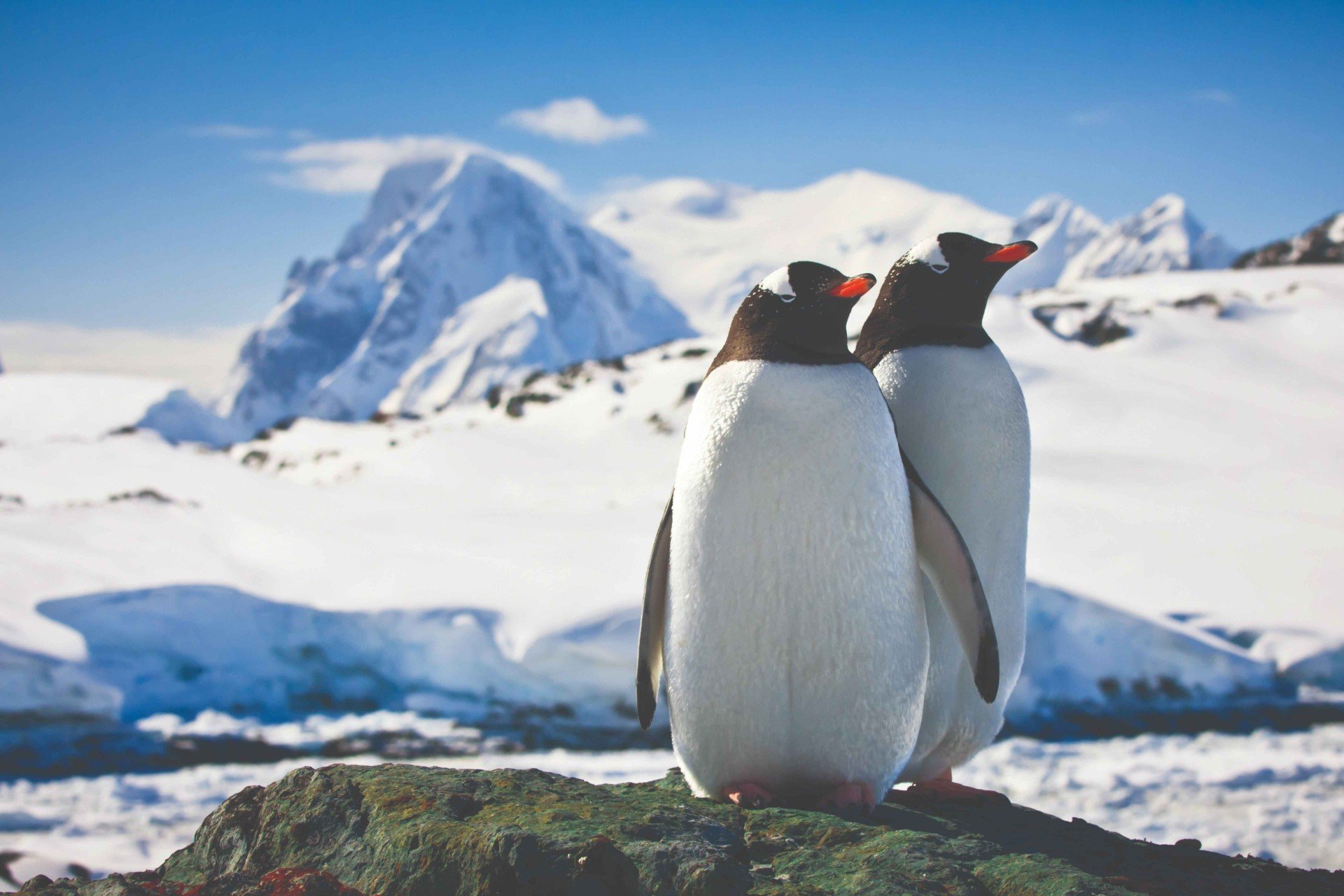
The next morning's activity was at Peterman island, so we took a short zodiac to shore where the knowledgeable on-board expedition team had designed three trails, one out to see colonies of Gentoo penguins, another up to an amazing view point and finally to see some more colonies of Adelie penguins, which was a real bucket list ticker for us!
Recommendations/Advice
Whilst you are waiting for the the polar plunge in the mud room, take advantage of a small tipple on offer whilst waiting to warm your inside up a little! The atmosphere in the mud room is great - the staff are there to encourage you, music is playing and there is a nervous excited feeling among those waiting. When it is your turn, staff will take your robe and keep it safe for when you are out of the water.
It is a little scary walking down the last steps in your swim things, getting the belt tied on and stepping on to the zodiac! Make sure that you get a good video of you doing it and if you want something specific let them know. My video isn’t the best, so I wish I had been a little more bold and said what I would have liked! Make sure you ask for some of the scenery to be captured and which way round you want the camera etc. When it comes to jumping, just go for it – jump in, don’t just step if you can. The photos will be much better!
When you get out, the staff are waiting with your robe and a towel ready to get warm, and you can again have a little tipple of your choice to warm back up! Some people headed straight for the sauna on board to warm up, which was very popular. I opted to dash back to the Suite for a lovely warm shower and dry dressing gown. The shower and warmth felt lovely!
My top tip would be to ask your butler to have a bottle of champagne on ice for when you get back to the suite, which you can crack open and toast to you successfully doing the polar plunge!
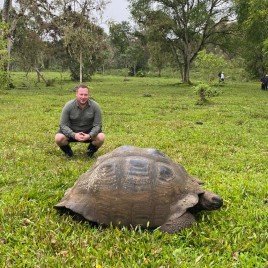
Hi, I'm Andrew, Sales Manager for Six Star Cruises. The best part about working in travel is the amazing opportunities I've been offered. I'm lucky enough to have discovered many destinations across the globe that I would have never been able to explore if I didn't work in travel.
Each day is just an incredible as the next in the Galápagos; you never know what you are going to see and the scenery is just stunning, you could blink and miss something incredible.
This really is a once in a lifetime experience where no day is the same, and I can honestly say this was the most incredible trip I have ever taken in my life. The Galápagos Islands are an absolute must for your bucket list!
Celebrity Flora is a luxury yacht holding a maximum of 100 guests which is considerably smaller than any ocean cruise liner, so you have a much more intimate experience where you can get to know who you're travelling with.
The Galápagos itinerary is packed with either one or two islands being visited per day and up to three excursions. There aren't any sea days on this itinerary, and because you don’t want to miss out on any opportunities to see the wildlife, you tend to do all three everyday. We did all the activities offered, and they are catered to all ages which is great. Because of this, the evenings are laid back and relaxed which is nice.
You have a 7PM overview of the day, then at 7:15, you sign up for the activities for the following day. Dinner then starts at 7:30 and most people tend to retire to their suites once they have eaten.
It is an early start most mornings, with the first tour usually beginning around 8AM to 8:30AM, but you do enjoy around three to four hours free time in the afternoon to relax on the top deck.
The staff on Celebrity are phenomenal - I have been on a lot of cruises and this was the best service I have ever received. They knew you by name when you boarded, had your drinks ready for you after the first day, remembering exactly what you preferred. It honestly felt like the staff and guests were one big family, and they went above and beyond in every aspect.
Highlights
Swimming with penguins, sharks and sea turtles was a memory that I will never forget. Although I'd have to say that my main highlight was the Giant Tortoise Ranch. These animals are just incredible to witness, and having the opportunity to be surrounded by them in the wild and walking with them was simply mesmerising.
Recommendations/Advice
My main advice is to immerse yourself in every opportunity to explore. The itinerary is very busy, being only a week to two weeks, so make the most of every moment you have while on your trip.
When packing, comfort is key, due to the itinerary. I'd recommend packing some water shoes or closed toed sandals for the wet landings (As you will be disembarking onto the beach with water around knee height). And make sure you bring a good camera for all of the great pictures that you will capture! Walking shoes or sturdy trainers are also important for the walks and hikes to ensure you're as comfortable as possible.
Senior Specialist Cruise Concierge and Expedition Specialist
Hi, I'm Laura, a Senior Specialist Concierge for SixStarCruises. Working in travel means getting to learn about new and incredible destinations I’ve yet to explore - my bucket list gets bigger every day I come to work! I also love being able to help customers tick off places on their bucket lists; being a part of helping someone create memories that will last for a lifetime is such a great feeling.
My favourite cruise line is Silversea because of the relaxed atmosphere and elegant dining on board. I also love the low guest-to-space ratio, which makes the ship feel incredibly spacious and the cruise much more enjoyable.
My favourite cruise destination is without a doubt the Arctic, where I watched a polar bear walking along the ridge before swimming in front of us through the water - what an amazing experience!
Sailed With:
✔AE Expeditions
✔Silversea
✔Seabourn
✔Celebrity Cruises
✔Scenic Ocean Cruises
Destinations Visited:
✔Antarctica
✔Australia & New Zealand
✔North America
Experience
Ship:Greg Mortimer
Date:June 2023
Summary
I travelled on a 12-night Arctic expedition on board Greg Mortimer - a trip that should be on anyone’s bucket list. The morning after embarkation in Svalbard, we had about an hour of free time, where I took the opportunity to walk on the top deck and enjoy the scenery. During the lecture we were given a Polar Bear Safety briefing, they advised us in detail on what we would do as a collective group if we were out on the Zodiacs/on land should we encounter one of these amazing creatures.
We all enjoyed a Zodiac landing in Recherchefjord the next day, I opted for the long walk and thoroughly enjoyed it. We were able to see some of the flowers that we had been advised about the day before in the lecture. The terrain was very spongy underfoot but still quite rocky. We saw several varieties of birds such as king eiders, guillemots, purple sandpipers and kittiwakes.
Being able to wake up with the ship stationary and surrounded by ice was so peaceful and tranquil. Everyone was on polar bear watch and eager to find this magnificent animal.
Much to our surprise, we then saw a pod of about 40-50 Beluga whales, it was unbelievable, the whales were too far to photograph to get a clear image of these beautiful animals, but the sight was magnificent.
We then had our daily recap, and they gave us some further information about Beluga whales.
After dinner we then went to enjoy our evening…but then we heard ‘Ding Ding Starboard Side!’ – there was a buzz in the air as we ran to any viewing platform we could find and grabbing the binoculars and cameras for our first glimpse of the one thing we had all been searching for… the polar bear! It was a mesmerising moment seeing how gracefully this beautiful animal walked along the shore one through the water and onto the sheet ice whilst it stalked the seals it had hoped to catch. We were all in awe of its beauty and watched this magnificent polar bear until the early hours of the morning.
Highlights
Watching a polar bear walking along the ridge, before entering the water and swimming in front of us - what an amazing experience! Walking out onto a floating ice sheet where polar bears roam was another experience I will treasure for the rest of my life. The childlike excitement from the passengers as they’re making snow angels in the ice was just magical. Each day is different to the next, and every moment is more surreal and spectacular than you could ever imagine. We also enjoyed a Zodiac cruise around Yoldiabukta Bay.
We had an unbelievable time, admiring the pointed mountain backdrops and tidewater glaciers. We were in awe of the amazing walrus we were able to see as they really are huge! It was incredible how close we were able to get to these amazing animals.
We were also taken to a beautiful landing spot where we were able to see many of the Arctic birds – kittiwakes, Brünnich’s guillemot and northern fulmars. It was stunning! We were even lucky enough to see some puffins!
test
fghjkl
1
Sailed With:
✔Silversea
Destinations Visited:
✔Dubai & Emirates
Customer Reviews
OUR ACCREDITATIONS
Expedition Award 7
Expedition Award 8
Expedition Award 2
Expedition Award #1
LET US GUIDE YOU TEST
Get your free Antarctica guide TEST
TESTING Our expedition cruising guide to Antarctica covers everything you need to know, including when to go, where to visit, what to wear, and how to get there.
Request a call back from one of our luxury cruise specialist concierge
We would love to help you plan your next luxury cruise holiday. Our team are luxury cruise experts with first hand experience of our partner cruise lines. Simply request a call back and one of our luxury cruise experts will be in touch at a time to suit you.
If you would like to contact our service team, you can select a service call back below, or alternatively we’re available on live chat where our team are ready and waiting to help.
If you request a call back for now we’ll get back to you within 15 minutes, we’ll be calling you from 0161 333 4459 so you can recognise our call.